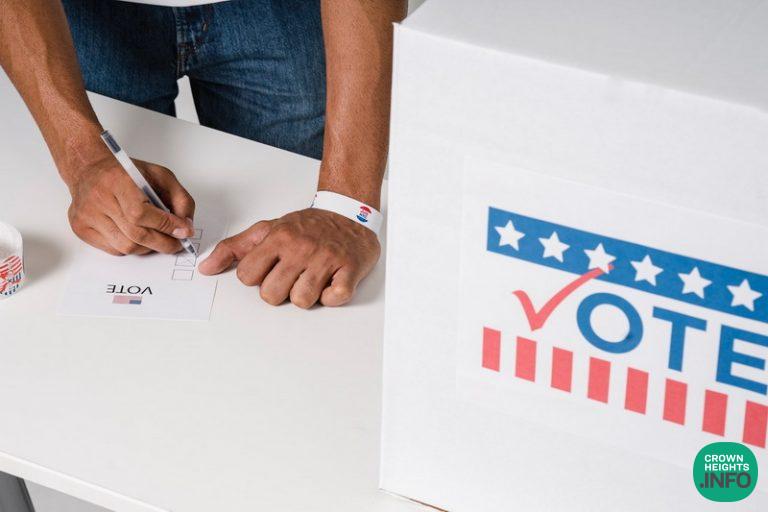
Op-Ed: Where Is the ‘Get Out the Vote’ Campaign?
With New York’s election for Governor approaching, the community’s once-prominent voter-mobilization efforts appear less visible than in previous cycles. What is going on?



With New York’s election for Governor approaching, the community’s once-prominent voter-mobilization efforts appear less visible than in previous cycles. What is going on?





I see him on the street and wave hi to him, but as a grown-up, I feel shy to walk over to him and share with him how much I appreciate him and why.


This Yom Kippur, as Jews around the world prepare for the holiest day of the Jewish year, I find myself thinking about something that extends far beyond the Jewish community. We desperately need Yom Kippur.


As we prepare and navigate our homes and families through Tishrei, we can do so with intention, asking ourselves: How do I want my children and family to experience Yom Tov, and what do I want them to remember about the Yom Tov they experienced in our family?


There are some addresses that become more than just buildings. They become symbols of the problems a neighborhood can no longer afford to ignore.


The shocking silence from our local leadership is just as concerning as the future of Southern Crown Heights, but I am optimistic that with a unified community approved plan of action hopefully we can turn things around.

One of the tremendous Berachos we have today is accessibility. There are so many incredible podcasts and interviews being produced today by some of the best people around the world. But I keep coming back to one simple question: How can I listen to them?


A Patient’s Guide to Symptoms, Diagnosis and Treatment.

My father was frightened that I might grow up being more husky than he had envisioned. In an attempt to scare me into losing weight, he told me that I would eventually have to buy two seats on an airplane. I don’t think he intended to hurt me. He was worried about me. He wanted what he thought was best for his child. But good intentions don’t always prevent us from hurting someone.


It’s 6:15 pm on a Tuesday. Dinner’s on the stove, your phone is buzzing with a message from your sister, and your six-year-old is curled into the couch cushions, eyes locked on a tablet, completely somewhere else. You call her name once. Twice. Nothing. On the third try, you finally reach over and turn it off, and the sound that comes out of her could wake the whole block. If you know this moment, you are not failing. You are parenting in 2026.


People are shaped by the attitudes, language, and examples around them. A single public voice can attract others; a group can make an idea seem normal; and eventually, what was once seen as destructive can be presented as admirable.


A major new development planned at the corner of Troy Avenue and East New York Avenue is raising concerns among Crown Heights residents about the direction of development in the neighborhood.


We convince ourselves that endlessly scrolling through updates means we are carrying the burden of our fellow Yidden. But when it drains our simcha and leaves us paralyzed with anxiety, we have to ask: who is this really serving?

When I was younger and just starting shidduchim, I had a very clear picture of what I was looking for. Like many girls, I had my preferences, my expectations, and the things I thought were important in finding my bashert. One of those things was age.

As I entered adulthood, I began noticing the timing. Whenever I felt fear about something, my body would begin to react. My body would feel tight. My joints and back would start hurting. Other symptoms would arise as well. I noticed that when I felt anxious — a word I did not even know at the time — my body would hurt so much. It felt unbearable.

For years, green card applicants never had to think twice about using Medicaid or other public benefits. That is about to change.

This week is Shabbos Nachamu. We also lein Parshas Vo’eschanon, the highlight of which is the Aseres Hadibros. Much has been written and said about both and the fact that they occur together. So, it’s quite understandable that two pesukim in our parsha do not get as much attention.



 7


