
A Day in the Sun: A Lesson in Post Success Aspirations
Where do you go when you reach the top? What awaits you when you finally arrive at “The land that I shall show you?”
 1
by Rabbi Yoseph Kahanov - Jax., FL


Where do you go when you reach the top? What awaits you when you finally arrive at “The land that I shall show you?”





Our Parsha introduces the iconic biblical giant; our patriarch Avraham, with the words “Lech L’cha!” “And G-d said to Avram, ‘Go to [for] yourself from your land and from your birthplace and from your father’s house to the land that I will show you!’” (Breishis 12:1)


My first ever trip to Crown Heights, I am filled with excitement. My heart races as my thoughts and prayers begin to align. Each stop draws me closer and closer to the meeting point, the springboard for the night, a synagogue named Chevra Ahavas Yisroel. This synagogue is frequented by singles and young marrieds, inspired types, warm types, sincere types.

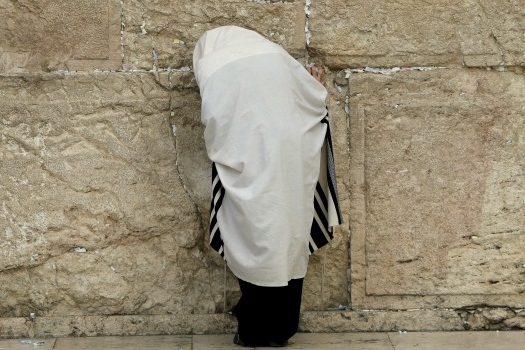
The “Baal Teshuva movement”; the phenomena of those born into homes void of Jewish practice, committing themselves to observance of Torah laws, began in the early 1950’s. One individual, a man who in keeping with his newfound lifestyle adopted the Hebrew name Avraham, is commonly identified as the prototypical, if not the original, Baal Teshuva. As an innovator his story offers insights into this flourishing trend, including a plan of action and a refutation of common myths.

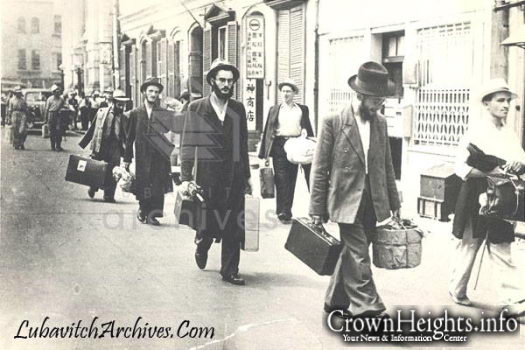
Students of the Lubavitcher Yeshiva in Otwock, fleeing the Nazis after the invasion of Poland in WWII, arrive in Kobe, Japan. They would later make their way to Shanghai, China and remain there for the duration of the war. Can you identify those in the photo?

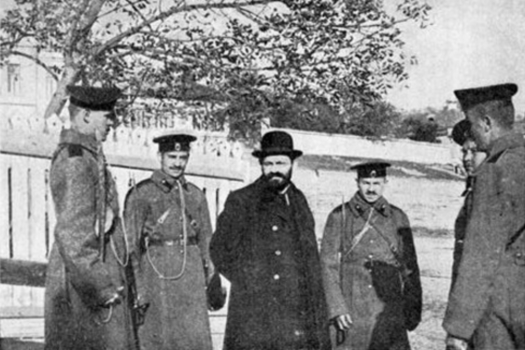
The trial of Mendel Beilis—a Jewish factory manager in Kiev, Ukraine, accused of murdering a Christian child to use his blood to bake matzah for Passover—began 100 years ago this month. Reported on closely by the international press, the world watched the unfolding—with reactions ranging from liberal astonishment to Jewish anguish to anti-Semitic satisfaction—of what was to be the last major blood-libel case of the 20th century.


A new letter from the Rebbe to President Ronald Reagan sheds light on the Rebbe’s approach to education – not just for Jews, but for all humankind.
Rabbi Shmuel Lesches, Maggid Shiur in Yeshiva Gedola of Melbourne, Australia, has compiled a guide to the laws of Hoshanah Rabbah, Shmini Atzeres and Simchas Torah for the benefit of the wider Lubavitch community.

Rabbi Shmuel Lesches, Maggid Shiur in Yeshiva Gedola of Melbourne, Australia, has compiled a guide to the laws of Sukkos (up to – but not including – Hoshanah Rabbah) and Eruv Tavshilin for the benefit of the wider Lubavitch community.
[Update: Guide from Crown Heights Badatz Added]


The Jewish Youth Library of Ottawa, Canada, directed by Dr. Yosef and Devora Caytak, recently hosted a Shabbaton for over two hundred people, with Rabbi Shmuel Lew of London, UK as a guest speaker. He told a fascinating and amusing story of a Yom Kippur he spent at the North Pole.


40 years ago, residents of Kfar Chabad were shocked to see their neighbors – while still in their tallis and kittel – riding hastily in buses. News began to trickle through the village that a war had just broken out, and all reserves were being called to duty. The war has been etched into the collective Jewish history as the Yom Kippur War.
Rabbi Shmuel Lesches, Maggid Shiur in Yeshiva Gedola of Melbourne, Australia, has compiled a guide to the laws of Kaporos, Erev Yom Kippur and Yom Kippur for the benefit of the wider Lubavitch community.
Rabbi Shmuel Lesches, Maggid Shiur in Yeshiva Gedola of Melbourne, Australia, has compiled a guide to the laws of Rosh Hashana and the Ten Days of Teshuva, Blowing Shofar and Tzom Gedalia for the benefit of the wider Lubavitch community.
[Update: Guide from Crown Heights Badatz Added]
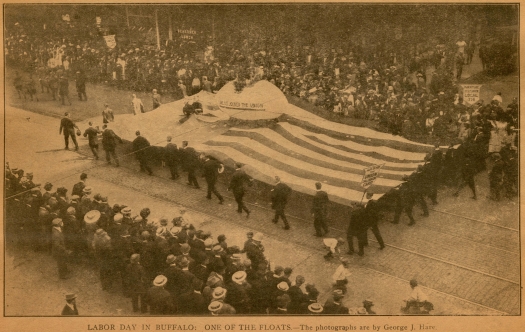
It’s Labor Day once again, which brings up some very important questions: Where is the best Labor Day sale? Where did I put my dark hats?
Rabbi Shmuel Lesches, Maggid Shiur in Yeshiva Gedola of Melbourne, Australia, has compiled a guide to the laws of the week of Selichos, Erev Rosh Hashana, and Eruv Tavshilin, for the benefit of the wider Lubavitch community.

“Unity, unity,” what a beautiful idea. Its virtues issue forth from the mouths of politicians and clergymen. Its praises roll from of lips of leaders, activists and ordinary folk of all ilk and class. The word conjures up images of an idyllic state of existence – a world in which there is no strife nor struggle – where humanity is bound by a single objective with a single mind and a single heart.

With the founding of the State of Israel in 1948, the Henry Ford Motor Company realized that the new state would need a huge number of vehicles for the military and the government, and it announced plans to build a car assembly plant in Israel.