Halacha and the Parasha - Parashas Tetsave
Halacha and the Parasha: Parashas Tetsave
Halacha and the Parasha – Parashas Tetsave


Halacha and the Parasha – Parashas Tetsave





Rebbe, How is reward and punishment, Gan Eden and Gehonim to be interpreted? I find Reform Judaism too simplified and liberal, but I cannot follow the Orthodox services. What should I do?” The Avner Institute presents an insightful yechidus with a professor and group of students from a university in New York, winter 1962.

The Rebbe says:
1. Regarding the building of the Mishkan (the Tabernacle) in this week’s Torah portion the Torah says, “You should make the beams for the Tabernacle of acacia wood (Atzay Shittim), standing upright”.
2. The Previous Rebbe explained that the Hebrew word for, “acacia”, which is, “Shittim”, also means, “turning away”. In other words, there is a middle path which is the path of logic and reason, and the turning away from the middle path is called, “Shittim”, from the word, “Shtoos – Senselessness”.
However, there are two types of ways to be senseless. One way is to turn away from the middle path of logic and be senseless in the opposite way of holiness, as the Talmud states, “A person only commits a transgression because a spirit of senselessness entered him”, and another way is to turn away from the middle path of logic and be senseless in a holy way, as the Talmud states, “The senselessness of this Sage has helped him”.

Halacha and the Parasha – Parashas Trumah.

We are pleased to present our thirty – fifth online class in the “Torah in Ten” series, presented by the editor-in-chief of Kol Menachem, Rabbi Chaim Miller.

In this weeks Halacha and the Parasha – Parashas Mishpatim – we discuss the matter of jury duty.
This Thursday, 22 Shevat, marks the passing of Rebbetzin Chaya Mushka Schneerson (1901-1988) of righteous memory, wife of the Lubavitcher Rebbe. The Avner institute is pleased to present two charming encounters related by Rabbi Shmuel Lew, Headmaster of the Lubavitch Senior Girls School, London, U.K., whose family over the years had warm relations with the Rebbetzin.

The Rebbe says:
1. Our Sages comment on a verse in this week’s Torah portion which reads, “And Yisro (Jethro) said, “Blessed is Hashem (G-d) Who rescued you (the Jewish people)”, and say, “It is a blemish in Moshe Rabbeinu (Moses our teacher) and the Jewish people who did not say, ‘Blessed’, until Yisro came and said, ‘Blessed’”.
However we must understand what this means because, as we read in last week’s Torah portion, Moshe Rabbeinu and the Jewish people did indeed thank Hashem when they sang to Him as they were walking through the Yam Suf (the sea of reeds)! Why do our Sages say that “it is a blemish in Moshe Rabbeinu and the Jewish people”?

n this weeks Halacha and the Parasha – Parashas Yisro.

We are pleased to present our thirty-third online class in the “Torah in Ten” series, presented by the editor-in-chief of Kol Menachem, Rabbi Chaim Miller.

Beginning the week of February 6th, tens of thousands of Jews from around the globe are expected to attend JLI’s new course, Toward a Meaningful Life, which be running simultaneously in over 300 cities across North America and around the world.
A Rebbe is far more than a Rabbi. The latter is a person who is knowledgeable about Jewish laws and practices. The Rebbe, on the other hand, not only possesses such revealed knowledge, but is also an expert on the inner essence of life, the concealed knowledge. The Rebbe is often described as a person touched by G-d, someone who possesses immense powers to sustain the lives of his followers, his Chassidim, on earthly and spiritual planes. The Chassidim, in turn, feel dependent on their Rebbe for guidance and help in accessing Divine grace about all matters — spiritual and mundane (Dr Joseph H. Berke: A Tale of Two Orphans)
- - - - - - - - - - - - - - - - - - - - - - - - - -
“They believed in G-d and in Moshe His servant” (Exodus 14:31)
A Rebbe is far more than a Rabbi. The latter is a person who is knowledgeable about Jewish laws and practices. The Rebbe, on the other hand, not only possesses such revealed knowledge, but is also an expert on the inner essence of life, the concealed knowledge. The Rebbe is often described as a person touched by G-d, someone who possesses immense powers to sustain the lives of his followers, his Chassidim, on earthly and spiritual planes. The Chassidim, in turn, feel dependent on their Rebbe for guidance and help in accessing Divine grace about all matters — spiritual and mundane (Dr Joseph H. Berke: A Tale of Two Orphans)
– – – – – – – – – – – – – – – – – – – – – – – – – –“They believed in G-d and in Moshe His servant” (Exodus 14:31)

Yud Shevat (the tenth of the Hebrew month of Shevat) marks the anniversary of the passing of the Previous Lubavitcher Rebbe, Yosef Yitzchak Schneersohn. For Chassidim today, however, the primary significance of Yud Shevat is that it is the day on which the Rebbe, Menachem Mendel Schneerson, accepted the reins of Chabad leadership 60 years ago.
In honor of 60 years CrownHeights.info and the Avner Institute would like to present a vividly powerful description of a memorable event that took place in 770 over 40 years ago: the completion of the “Sefer Torah to Greet Moshiach,” commissioned by the Previous Rebbe in 1942, and finally completed on the eve of Yud Shevat, which that year also happened to be Erev Shabbos. With special thanks to Rabbi Yossi Lew, Chabad emissary to Atlanta, Georgia, and Dean of the Atlanta Semicha Program.
n this weeks Halacha and the Parasha – Parashas Beshalach – We discuss the matter of showing respect to Malchus.
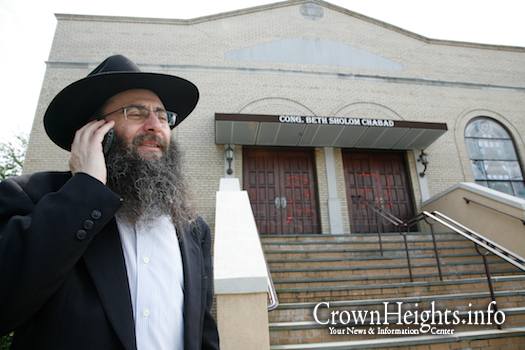
Chabad of Mineola’s Rabbi Anchelle Perl urges the President of the USA proclaim a “National Day of Reflection” and that the entire Senate & Congress adjourn for a week.
As the planks flexed under his weight, while crossing the old rickety bridge, the frightened pedestrian prayed for mercy: “Dear G-d, if only I will make it across the span, I shall give 50% of my worth to charity, for what good is my wealth if I’m to lose my life?”

Most of us have by now come to know who Ted Williams is. Just in case there are those reading this that have not chanced upon his internet video that has garnered over five million views and his subsequent life story, here it is in a nutshell. Ted Williams, born and raised in Brooklyn, was a former radio personality who ran into hard times with drugs, alcohol and the law which sadly spiraled out of control leaving him homeless and perhaps even worse – hopeless. Despite his negligence and the consequences that he suffered as a result he held onto that rather dormant sense of hope that one day he would be given another chance to succeed.


 1


