The Weekly Sedra – Shemot

This week’s section begins the awesome saga of the 210 year imprisonment and miraculous escape of an entire nation. Never even vaguely similar in history has anything occurred nor has any religion or nation even claimed so; the scope and depth of these events simply defies human imagination.

But, after all, the story of Exodus is not understood from the beginning.

Why did the Jews have to go into slavery?

Premium Post
Starting Today: 40% Off the Second Item at ATICA for the Kinus

Mazal Tov's View More

The Weekly Sedra – Vayechi

This week’s section begins on a strange note: The Patriarch Jacob on his deathbed gathers his twelve sons around him for a final message but he didn’t succeed.

The Talmud tells us (Pesachim 56a) that Jacob wanted to reveal the end of days to his sons (i.e. the date of the arrival of Moshiach) but the Shechina (G-d’s presence) left him and he wasn’t able to”

Does this make sense? First of all, what is so important about the date when Moshiach will arrive? Second, why couldn’t he tell? It’s only a date, certainly he didn’t forget it! And it couldn’t be that G-d told him not to reveal it. Exactly the opposite – the Shchina departed from him!

Taking a Break from Politics

Menachem Brod – Col.Org.Il

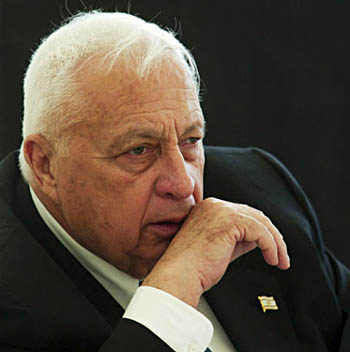
“The value of political leaders and heads of political parties is a matter of controversy. There are those who regard them highly and others dislike them. At this time it is fitting that all politics be put aside” – according to the weekly editorial of Rabbi Menachem Brod in this week’s ‘ Sichas Hashavua’, published by Tsach.

“It is interesting that there is hardly a person that can explain this weird phenomenon: We are suddenly introduced to a great leader, a man of vision, brave, strong minded, a perfect family man, classical music fan, and such that has an amazing sense of humor and other unique characteristics. This person emerges like a meteor in the darkness. Since his arrival two years ago he has become the great leader, the father of the nation and has recently earned other generously bestowed titles.

The Weekly Sedra – Vayigash

This week’s section VaYigash, which means ‘And he approached’, is the finale of the traumatic saga of Josef and his brothers.

It begins with Judah approaching Josef to beg for mercy and interestingly the only one of Josef’s brothers that is really highlighted in the entire section is Judah. The others are barely mentioned.

The Zohar and books of Chassidut explain the reason; Judah represents Moshiach (who will come from the tribe of Judah) while Josef is a preparatory stage before Moshiach and this section hints at the future ‘Geula’ (redemption of the world) through Moshiach.

So we see later (46:4) when G-d encourages Jacob to go down to Egypt and says, “…and I will take you up and take you up”. The first ‘taking up’ refers to the redemption from Egypt and the second to the future redemption.

Didan Notzach!

Chabad.org

Click Here to watch part of the Farbrengen where Chassidim are singing Didan Notzach
Click Here to watch the Sicha the Rebbe said about Didan Notzach

The 5th of Tevet is celebrated as a day of rejoicing in the Chabad-Lubavitch community. On this date in 1986, U.S. Federal Court issued a decision in favor of Agudas Chassidei Chabad (“Union of Chabad Chassidim”) regarding the ownership of the priceless library of the 6th Rebbe of Chabad-Lubavitch, Rabbi Yosef Yitzchak Schneersohn. The ruling was based on the idea that a Rebbe is not a private individual but a communal figure synonymous with the body of Chassidim. The Lubavitcher Rebbe (Rabbi Yoseph Yitzchak’s son-in-law and successor) urged that the occasion be marked with time devoted to study from Torah books (“sefarim”).

SichosInEnglish.org
In Those Days – In Our Times – Didan Notzach
5th Day Of Teves, 5747

On the 5th of Teves 5747, the verdict in the case of the Previous Rebbe’s library was handed down and great rejoicing enveloped Chassidim all over the world.

After Minchah on that day the Rebbe, spoke about the lesson we must learn from the suffering and the pain of undesirable phenomena.

Candles and Champagnes

By Israel Krasnianski, Brooklyn, New York
On the coincidence of Chanukah and the secular New Year

Tug of holidays

It is during the holiday season, more than any other time throughout the course of the year, that we feel what it means to be an outsider in American society. This year, for the first time in forty six years Christmas and the Solar New Year coincide with the Jewish festival of lights, Chanukah. And although we always feel that the Christian holidays coincide with Chanukah annually, this is only because for reasons unknown to myself, Christmas seems to last for an entire month and a half while Chanukah begins with the first day and ends on the eighth, without the three weeks before and two weeks after of pre and post but still holiday season excuses for partying.

This weekend, more than any other of the year, we Jews will feel the strain of two forces tugging on us: 1) Chanukah and Shabbat (The ultimate combination of light) – and 2) New Year’s Eve; forcing us to in the very least contemplate what we are celebrating: our Judaism or our secularity?

The Weekly Sedra – Chanukah/Mikaitz

This week’s section always coincides with the holiday of Chanukah.

‘Mikaitz’ means ‘At the end’ and refers to the end of Joseph’s imprisonment. But it also hints at Moshiach and the raising of the dead.

In fact, so do Josef’s release and Chanukah.

First of all; all of them, Moshiach, Josef’s release and Chanukah are miracles without precedence and totally above nature, but they affect the entire world.

Josef’s miraculous rise from prison to become ruler of the entire world is like Moshiach who will elevate the Jews from exile, spiritually rule the world and eventually raise the dead.

The Weekly Sedra – Vayeishev

This week’s section begins on a wonderful note; the story of Joseph and his brothers.

Rashi (the foremost elucidator of the Torah) compares the perfunctory listing of all the kings of Esav in the end of last week’s section to the exquisite detail here with two similes:

Just as one sifts through tons of sand to find one small diamond so the Torah sifts through the Kings of the nations and stops when it comes to Josef and his brothers.

And, just as a huge pile of chaff can be set aflame by one spark so the kings of Esav will be consumed by the spark of Josef.

The Weekly Sedra – Vayishlach

In this weeks portion we read about the confrontation between of Jacob and his brother Esau.

At first glance this is not very important.

Who cares what happened some four thousand years ago between two brothers in an isolated spot in the Middle East? Important events are things like Napoleon at Waterloo or the Japanese at Pearl Harbor!

But in fact our story is much more important. As famous as these occurrences were, they brought no significant change in the nature of man.

But the meeting of Yaakov and Esau refers to the battle of man for meaning and identity.

The Arrest and Liberation of Rabbi DovBer of Lubavitch

Chabad.org

Rabbi Pinchas Reizes was a chassid of the second Rebbe of Chabad-Lubavitch, Rabbi Dovber of Lubavitch (known as the “Mittler Rebbe”). When Rabbi Pinchas passed away, his only heir was a nephew, who unfortunately was a complete scoundrel.

Among the items that came into the nephew’s possession was a letter written by the Rebbe to his uncle, asking Rabbi Pinchas to serve on a special committee to disburse funds for charity. The sum cited in the letter was 4,000 rubles.

The Weekly Sedra – Vayeitzei

This week’s section tells the story of how Lavan; the arch-evil charlatan, duped the holy founder of Judaism, Yaakov into working non-stop for twenty years.

Interestingly the Torah tells us that instead being punished for this crime, Lavan is left in peace while Yaakov after wasting twenty years of his life has to settle for a mere fraction of his due.

This does not seem fair, and certainly not very Biblical. Where is the divine retribution? Where is the justice? How could Yaakov get such a raw deal and why does the Torah tell us about it? What is the point? Why didn’t G-d just do a few miracles?

The Weekly Sedra – Toldot

This week’s section introduces us to the struggle between the holy patriarch Yaakov and his evil twin brother Esav.

This eventually would become the eternal conflict between the Jews and gentiles (i.e. the Church, the athiests etc.) that will be resolved only by the Moshiach himself.

But interestingly, the works of Chassidut and Kabala explain that the way that Moshiach will settle it is by revealing the fact that, in his essence, Esav is really holier that Yaakov!

The Weekly Sedra – Chayei Sarah

This week’s section deals mostly with the difficulties of Abraham.

First, those that he had in buying a grave for his wife and then the even greater ones finding a bride for his son Yitzchak (Isaac).

If you think about it, this seems to makes no sense. Abraham wasn’t just an ordinary person. He was a Biblical character, the father of Judaism, devoted every instant and with every fiber of his being to serving the Creator.

Why didn’t G-d make life easy for him?

The Weekly Sedra – Vayeira

This week we continue to live with Abraham, the father of Judaism. in an action-packed portion.

One of the most bizarre episodes here is how G-d annihilates an evil cluster of cities called “Sadom and Amora” through an Angel. But equally as strange; before sending the Angel He says to Himself….

“Can I conceal from Abraham what I am about to do?” (18:17)

The Torah then tells us in length how Abraham unsuccessfully pleaded and bargained with G-d for mercy on the cities with no results.

This apparently makes no sense.

Recycling and All That Garbage

L’Chaim Weekly

Glass, paper, plastic, aluminum. Many cities throughout the United States and countries around the world have instituted environmentally beneficial recycling. Put out your bottles, cans, jars (sorted or unsorted – depending on location) and bundle your newspapers and magazines. Earn extra “goodie points” if you reuse shopping bags, “throwaway” aluminum pans, and scrap paper..

Just like adult children who have recently begun caring for their elderly parents, we’ve gotten serious about caring for “mother” earth. And though it takes some getting used to, and perhaps even “infringes” on our freedom, we need to do it all the same.

Take a quick look in the garbage can (your own – we’re not suggesting you look in trash around Hollywood in the hopes of writing a book about celebrity rubbish.) What you’ll find, of course, is that which you don’t need.

The Weekly Sedra – Lech-Lecha

The end of this week’s portion tells us about the Covenant (Brit) of Circumcision that G-d made with Abraham almost four thousand years ago.

Since then Jews have been making the same sign in the flesh of all their male children as an eternal reminder that we too are G-d’s people. The G-d of Abraham.

As we say in the blessing before performing the circumcision:

“Blessed are You G-d…….who commanded to bring him (this Jewish child) into the Covenant of AVRAHAM our patriarch”

The Weekly Sedra – Noach

This week’s section is probably the strangest story ever told.

The entire human, animal and bird population of the world (save a few that got into the ark) got drowned by the Creator of the universe! Because they got Him angry!

But even stranger is; what is this story doing in the Torah? The Torah is the book of the Jews and the flood story contains no commandments or Jewish messages or even one Jewish characters. Indeed, the first Jew, Abraham, was born three hundred years after the flood!