

How to Reduce Kids’ Screen Time Without the Tears
by Chana Kaiman, LCSW-RPT
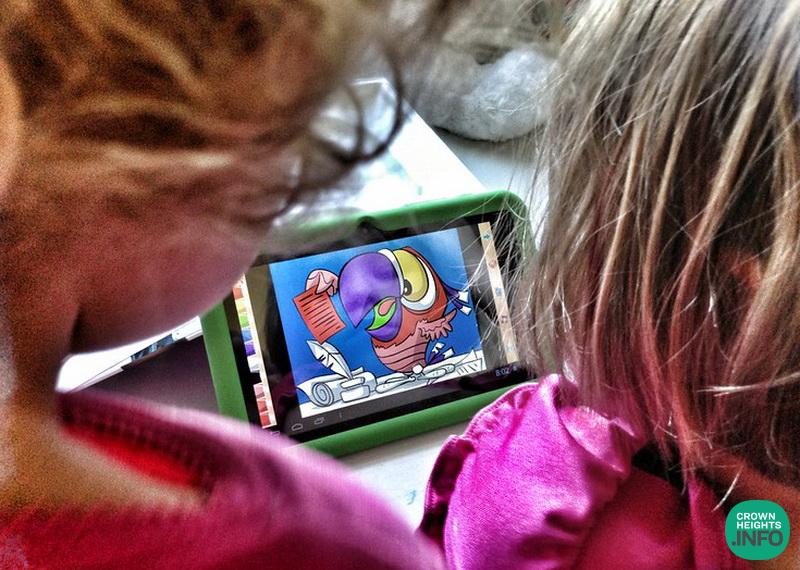
It’s 6:15 pm on a Tuesday. Dinner’s on the stove, your phone is buzzing with a message from your sister, and your six-year-old is curled into the couch cushions, eyes locked on a tablet, completely somewhere else. You call her name once. Twice. Nothing. On the third try, you finally reach over and turn it off, and the sound that comes out of her could wake the whole block.
If you know this moment, you are not failing. You are parenting in 2026.
Every family on this block, from the brownstones on Union to the buildings on Nostrand, is fighting some version of this same battle. The tablets, the phones, the shows that autoplay one episode into the next like they were designed to never let go, because they were. Screens aren’t competing fairly for your child’s attention. They’re built by very smart people whose whole job is to make sure your kid doesn’t want to look away.
So no, this isn’t about willpower. It’s about strategy, and it’s about remembering what screens replaced in the first place: real conversation, real boredom that turns into real imagination, real hands doing real things alongside the people who love them. Here’s how Crown Heights parents are taking their evenings back and building a fuller, richer family life in the space that opens up.
Start With Connection, Not Confrontation
Ms. D. who’s raised three kids in the same Crown Heights apartment for almost twenty years, put it simply: “You can’t fight a screen with a rule. You have to fight it with something better.”
Kids don’t cling to screens because they love screens. They cling because screens are easy. No waiting, no negotiating, no boredom. If you want your child to let go of the tablet, you need to offer something that feels just as good, or better: your attention.
Before the transition even starts, get down on their level for two minutes. Ask about their day. Make eye contact. This isn’t a delay tactic, it’s the foundation. A child who feels seen is far more willing to be redirected than a child who feels ignored and then suddenly interrupted.
Give the Warning Before the Ending
Nobody likes being cut off mid-sentence, kids included. The tears often aren’t about the screen itself. They’re about the abruptness.
Try a twostep warning. “Five more minutes, then we’re done.” Then, a little later, “One more minute, let’s find a good stopping point.” Letting them choose where to stop, at the end of the show or the end of the level, hands them a small piece of control. And small pieces of control go a long way toward avoiding a full-blown standoff.
Fill the Space with Real Life
Taking something away and leaving a void is a recipe for whining. Taking something away and filling that space with real connection, real skills, and real people is where the transformation happens. The goal isn’t just to survive the moment the screen goes off. It’s to build a home life so rich that your child stops reaching for the tablet in the first place.
Read and write together. A nightly chapter book, a shared journal where you and your child take turns writing a line each day, even just sounding out the words on a cereal box together over breakfast. These small rituals do something screens can’t. They slow down time and put you and your child in the same imaginative world at the same moment.
Let them get bored enough to play on their own. This one is hard, because the whining right before independent play kicks in can be loud. But that stretch of not knowing what to do is exactly where imagination lives. Give them a corner, a bin of open-ended toys, blocks, dolls, art supplies, and permission to be bored for a little while before you swoop in. Independent play is a muscle, and like any muscle, it only grows with use.
Bring them into the work of the house. Setting the table, folding laundry, watering the plants, helping cook dinner. These aren’t chores to a young child, they’re an invitation into the grown-up world, and kids often light up when they’re trusted with something real. It builds competence and pride in a way that no amount of screen time ever will.
Send them out to help someone else. Bringing a plate of food to a neighbor, checking in on a bubby or zaide, helping an elderly couple down the block carry their groceries up the stoop. These moments teach a child that they have something to give, not just something to consume, and they root your family in the wider community that raised you.
Protect real time together as a family. A Friday night table with the phones tucked away, a weekend walk, a standing game night. The culture of a family isn’t built in the big moments, it’s built in the small, repeated ones. The more those repeated moments happen away from a screen, the more naturally your child will come to expect that connection, not content, is where the good stuff happens.
Make It a Rhythm, Not a Rule
Kids don’t fight what they can predict. If screen time only shows up randomly, as a bribe, a babysitter, a “just this once,” every ending feels like a negotiation. But if it’s part of a known rhythm, screens after homework, off before dinner, reading before bed, the boundary starts to enforce itself.
Post it somewhere visible, like a simple chart on the fridge. When the chart says it’s time, not just mom or dad, kids are far less likely to push back. They’re arguing with a clock, not with you.
Model It
This one stings a little, but it matters most. Kids notice when the phone comes out at the dinner table. They notice when “five more minutes” applies to your screen too. You don’t need to be perfect, just visible. Narrate it out loud. “I’m putting my phone away now so we can talk.” That single sentence teaches more than any rule you could set, and it’s the same sentence that gives your child permission to put down their own screen and pick up a book, a chore, or a conversation instead.
When the Kid Isn’t Six Anymore
Everything above works beautifully for a six-year-old. A ten-year-old is a different negotiation entirely, and if you’re trying to walk back screen time that’s already become a habit, you’re not managing a moment anymore. You’re renegotiating a relationship.
A few things shift at this age. By ten, kids can reason, and they know when a rule was decided for them versus with them, so sit down together and talk about what a fair daily amount looks like, when it happens, and what has to come first, homework, chores, being outside, helping around the house. A limit your child helped build is a limit they’re far more likely to respect, even grudgingly.
Get specific about where the screens actually live. Bedrooms and mealtimes are the two biggest battlegrounds. Devices that charge overnight in the kitchen instead of the bedroom don’t just cut down on hours, they protect the sleep that screen time quietly steals. The dinner table stays a no phones zone for everyone, parents included.
Go gradual instead of cold turkey. If your ten-year-old is used to hours a day, yanking it to zero overnight almost guarantees a war. Step it down, an hour less this week, a clearer stopping point next week and use the newly opened hours for something real. A ten-year-old is old enough to babysit younger siblings for twenty minutes, run an errand for a grandparent, or take real ownership of a family project, and that sense of responsibility often does more to pull them away from a screen than any restriction could.
Talk about the why, not just when. At this age, kids can handle real conversations about sleep, mood, and what too much scrolling actually does to a brain. You don’t need to lecture. A short, honest explanation of why you’re doing this goes further with a ten-year-old than any rule posted on the fridge.
And expect pushback anyway. A ten-year-old will negotiate harder than a six-year-old ever could. That’s not defiance, that’s development. Stay warm, stay firm, and remember you’re not trying to win the argument in the moment. You’re building the habit that outlasts it.
When the Tears Come Anyway
Some days, no strategy in the world stops the meltdown, and that’s okay. A young child’s brain isn’t fully equipped to regulate disappointment yet. Stay calm, stay close, and let the feeling move through them. You’re not failing when they cry. You’re teaching them that big feelings are survivable, and that you’ll stay steady even when they can’t.
The Real Win
This isn’t about screens being evil. It’s about making sure they’re not the loudest voice in your child’s day, and about rebuilding a family culture where reading together, playing alone, helping around the house, and showing up for a neighbor all feel just as natural as reaching for a device. Every small, calm transition you handle now, the ones nobody else on the block sees, is building a kid who knows boredom isn’t dangerous, who can sit with a feeling, who knows how to give as much as they receive, and who trusts that when you say almost time, you mean it.
About the Contributor
Chana Kaiman, LCSW-RPT, is a Licensed Clinical Social Worker and Registered Play Therapist specializing in child, adolescent, and family therapy. She holds advanced training in Child-Centered Play Therapy, Filial Play, Adlerian Play Therapy, trauma-informed care, and Internal Family Systems (IFS), and her clinical work blends neuroscience and somatics with a deeply Torah-rooted approach to emotional wellness.
Chana serves as the Education & School Relations Lead at the Bereishis Foundation, where she develops educator training and parent programming that weave contemporary mental health practices with Chassidus-based perspectives on the inner world of the child. Her private practice in Brooklyn supports children navigating anxiety, learning challenges, trauma, behavioral concerns, and low self-esteem, and she’s known for creating a warm, relational space grounded in safety and curiosity.
The Bereishis Foundation helps families afford therapy they couldn’t otherwise access and builds proactive emotional resilience in Jewish youth, partnering with a network of therapists who lower their rates to make care possible. To learn more or support the foundation’s work, visit bereishisfoundation.org, or reach Chana directly at chana@bereishisfoundation.org.











anony
https://www.chabad.org/multimedia/video_cdo/aid/2974977/jewish/Farbrengen-with-the-Rebbe-Tammuz-12-5741-1981.htm
Timestamp 18:31