


Alleged “Rebbe Maharash Desk” and Fraudulent Chabad Artifacts at Kiflayim Letushiya Auction
by CrownHeights.info
An old scam has returned as a current auction on the BidSpirit platform looks to sell several items being marketed as historic belongings of the Chabad Rebbeim, while in fact they may just be ordinary antiques with no connection whatsoever to Lubavitch history.
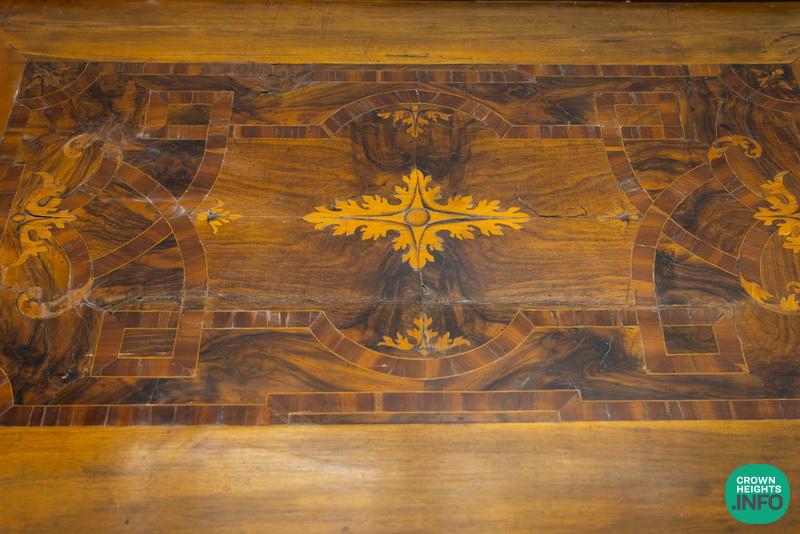
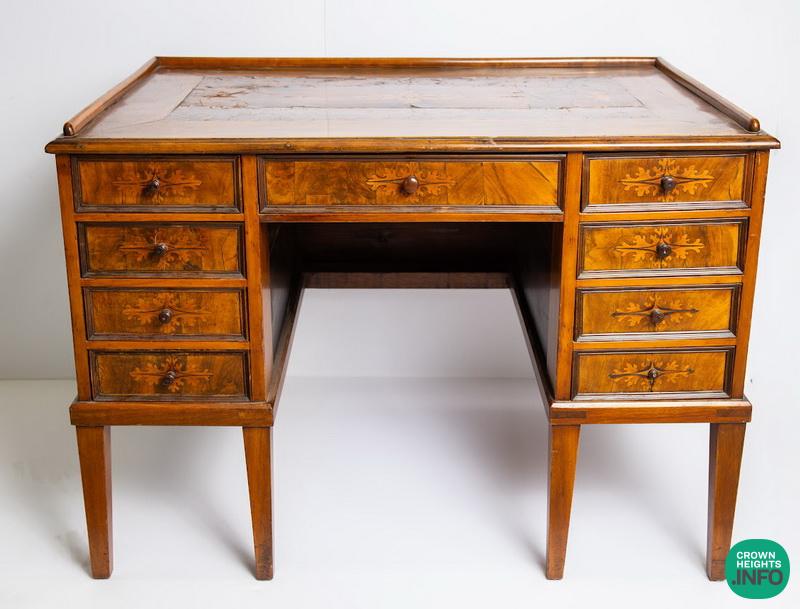
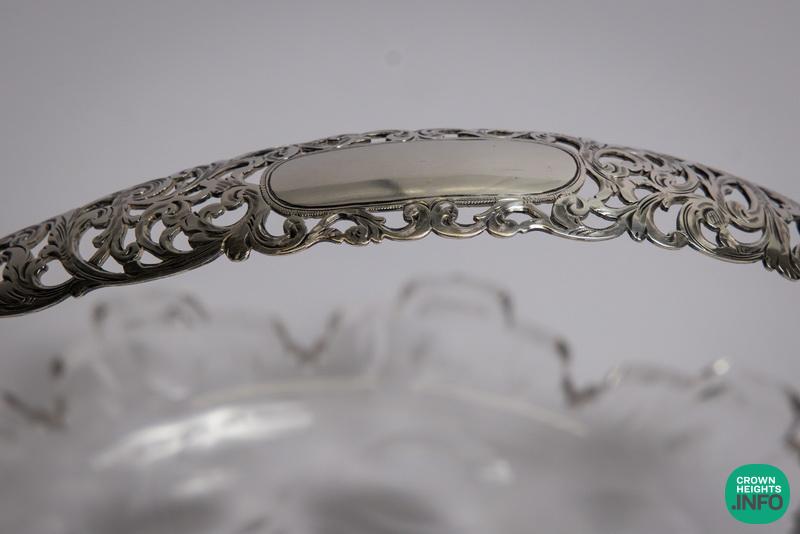
At the center of the allegations are two items currently listed by the Israeli auction house “Kiflayim Letushiya”: an ornate writing desk described as having belonged to the Rebbe Maharash and a cut-glass serving tray attributed to the Frierdiker Rebbe.
Investigators comparing the auction photographs to archived antique marketplace listings say the items appear to be identical to pieces previously sold by Corky’s Antiques, a longtime Colorado antique shop specializing in Victorian-era American and European furniture.
The desk in question was previously listed through the Ruby Lane marketplace as a “19th-century Marquetry Kneehole Walnut Desk,” while the glass item appeared as a “European Cut Glass 19th-century Bowl.” Both listings originated from the Denver antique dealer, which has spent decades dealing in general antique furnishings rather than Judaica or Chabad memorabilia.
According to evidence reviewed by investigators, distinctive physical characteristics — including drawer grain patterns, hardware placement, exact measurements, and even a visible crack running across the desk’s top surface — appear to match perfectly between the Colorado antique listings and the current BidSpirit auction photographs.
The findings have raised serious questions about the authenticity of the items and whether fabricated provenance may have been attached to otherwise ordinary antiques in order to dramatically inflate their value among collectors seeking historic Chabad artifacts.
The controversy is not emerging in a vacuum.
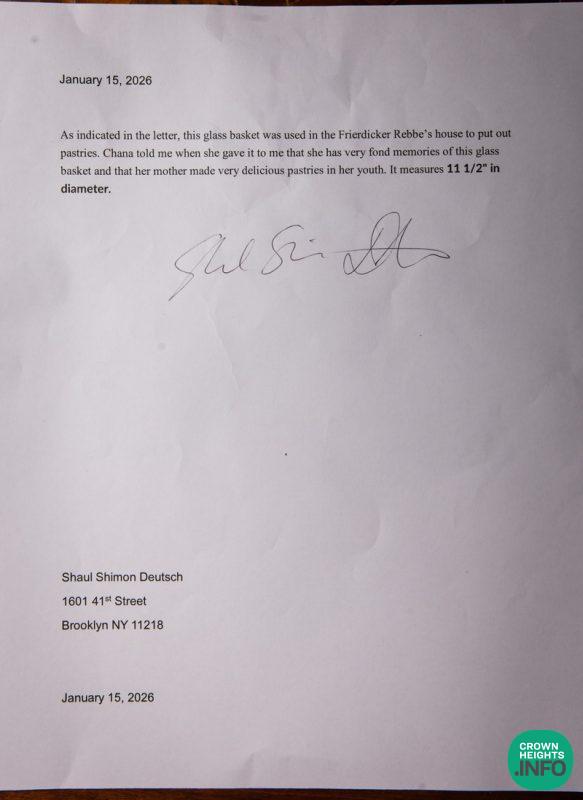
For several years, members of the Chabad community and Judaica collectors have voiced concerns over a stream of alleged artifacts connected to the Rebbeim and members of Beis Harav that have appeared at various auctions. Many of the items were reportedly tied to a single seller identified as Shaul Shimon Deutsch, whose “verification” of the item’s “authenticity” has been routinely debunked.
Previous investigations into the seller uncovered what critics described as forged authentication documents allegedly accompanying some of the items. One widely discussed example involved a purported letter attributed to the Frierdiker Rebbe’s grandson, Mr. Barry Gurary. The document included a New Jersey phone number using the 973 area code — an area code that did not exist until 1997 — despite the letter itself being dated 1990.
Despite prior public scrutiny and concerns raised within the Judaica auction world, the current auction on BidSpirit contains an extensive collection of items claimed to have belonged to various Chabad Rebbeim and members of their households.
Among the items listed are carpets, shtenders, household furnishings, crystal vessels, cookware, clothing items, a fur coat, hats, silver-plated objects, suitcases, and even a purported Sefer Torah connected to the Frierdiker Rebbe. Other listings include coins and dollar bills allegedly distributed by the Lubavitcher Rebbe, along with various personal artifacts said to originate from Beis Harav.
Critics say the pattern follows a familiar formula: ordinary antiques or collectibles are paired with unverifiable or allegedly fabricated provenance documents and then marketed to emotionally invested buyers eager to own a tangible connection to the Rebbeim.
The auction house itself, Kiflayim Letushiya, is relatively unknown within the established Judaica auction industry and lacks the longstanding reputation associated with larger firms such as Kedem Auction House or Genazym. Nonetheless, by operating through BidSpirit — a major online auction platform serving Jewish collectors worldwide — the listings have gained broad visibility throughout the Chabad community.
Observers have also pointed to the auction house’s own terms and conditions, which reportedly disclaim responsibility for verifying the authenticity of items and state that descriptions are based on information provided by consignors.
With the Judaica collectibles market continuing to expand rapidly in recent years, experts warn that the financial incentives for fraudulent provenance claims have become increasingly significant. Authentic items connected to the Rebbeim can command enormous sums, creating what some describe as a highly vulnerable environment for deception.
Community members are now urging potential bidders to exercise extreme caution and independently verify any claims of provenance before participating in the auction.
Several individuals involved in reviewing the evidence are reportedly calling for the disputed lots to be suspended pending further investigation and for all documentation related to the items’ origins to be preserved.












Useless
Just out of curiosity has anybody ever inquired with all the vitamins come from have been investigated? Who would have possession of some of these items and then want to get rid of it for money so quick?
Mordche
The links don’t work anymore seems like it was actually fake bc they pulled the auction. Crazy bc it could mean that everything else he sold was fake!!!