Slovenia Becomes the Latest Country With Permanent Chabad Presence
by Motti Wilhelm – chabad.org
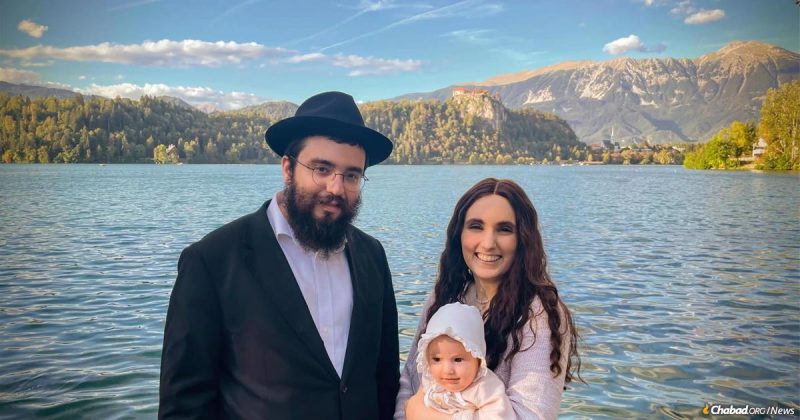
Slovenia is set to become the latest country in the world with a permanent Chabad presence, as Rabbi Yossi and Rochele Krinsky prepare to establish a new Chabad center in the small Central European nation. The new location was announced at the gala banquet of the 2026 International Conference of Chabad-Lubavitch Emissaries, Slovenia now joining the more than 100 countries already hosting Chabad centers.
Slovenia has a Jewish history dating back nearly 2,000 years to the days of ancient Rome. Today, however, its Jewish community numbers in the low hundreds, and the country has never had a permanent Chabad presence.
Until now, the country’s Jewish needs have been served by Rabbi Ariel Haddad of Chabad of Trieste, Italy, who would cross the border several times a year to visit the community. But with the Jewish population growing, and the recent opening of an Israeli embassy, the need for a full-time Chabad emissary has become increasingly apparent.
The Krinskys visited Slovenia over the summer, where they quickly discovered a Jewish community eager for connection. For their first event, a barbecue and gathering for Jews in the capital, Ljubljana, they expected about 15 people. Instead, some 60 showed up.
Rosh Hashanah programming also drew a crowd, including many Israelis who had little idea how many fellow Jews were living in the country.
“Some of the people who came might never have attended a Jewish event back home,” Rabbi Krinsky said. “But in a place like Slovenia, something inside them pushed them to seek out other Jews. They were genuinely excited to discover that there were Rosh Hashanah programs and other Jews to celebrate with. In fact, many of them were the ones urging us to establish a Chabad center in Ljubljana.”
The Krinskys will join a network of 6,500 Chabad-Lubavitch emissaries serving Jewish communities around the world, many of whom gathered this weekend for the International Conference of Chabad-Lubavitch Emissaries.
“The extraordinary reach of the shluchim begins with something deeply personal: a husband and wife willing to build their lives around caring for every Jew, even if that means going where few others would go,” said Rabbi Mendy Kotlarsky of Merkos 302 at the International Conference of Chabad-Lubavitch Emissaries. “Again and again, we have watched shluchim arrive in places where Jewish life was thought to be fading or even lost, build the infrastructure a community needs, and eventually hear the sounds of Jewish children singing where there was once silence.
“Each family makes that sacrifice individually, but together they form a critical network of care and support for the Jewish people across the world. The Rebbe [Rabbi Menachem Mendel Schneerson, or righteous memory] entrusted us with reaching every Jew, wherever they may be, and the establishment of a permanent Chabad outpost in Slovenia marks another milestone in that mission. We are deeply honored to welcome this new country to the growing map of shlichus, as together we work toward a world transformed through goodness, holiness and ultimately the coming of Moshiach.”

Building on a Rich Past
Slovenia’s Jewish community has experienced centuries of upheaval, with periods of growth followed by persecution and decline. Though its Jewish population never exceeded 2,500, the country was once home to a thriving center of Jewish life and Torah scholarship.
Among the most prominent figures associated with Slovenia was Rabbi Yisrael Isserlin, the 15th-century halachic authority known as the Terumas HaDeshen. He lived for a time in Maribor, in present-day Slovenia, and his rulings became an important source for the Shulchan Aruch, where they continue to be studied and cited today.
Following World War II, under Communist rule, Slovenia’s Jewish population dwindled to fewer than 100. The community began to recover after the fall of Communism and Slovenia’s independence from Yugoslavia in 1991, with growth accelerating in recent years.
Slovenia’s independence also brought an exchange with the Rebbe. In 1991, as the country fought a brief war following its declaration of independence, a non-Jewish individual wrote to the Rebbe expressing his hope for a Slovenian victory. The Rebbe responded by asking for the writer’s name, saying he would “mention him in prayer to have his heart’s desires fulfilled, to have freedom for his nation and to bear good news.”
As the Jewish community grew, Rabbi Haddad began looking for a way to establish a permanent Chabad presence in the country. With the help of Chabad headquarters in New York, he was introduced to the Krinskys, who were in search of a community to serve.
Both had grown up on shlichus, Rabbi Krinsky in Lithuania and Mrs. Krinsky in Sweden. Once the connection was made, it wasn’t long before they decided that Slovenia would become their new home.
“Just a few years ago, we couldn’t have imagined this happening,” Rabbi Haddad said. “Now it’s a reality, and it has become an absolute necessity. We’re opening a new chapter in a story that’s still being written.”
To support Chabad of Slovenia, click here.