


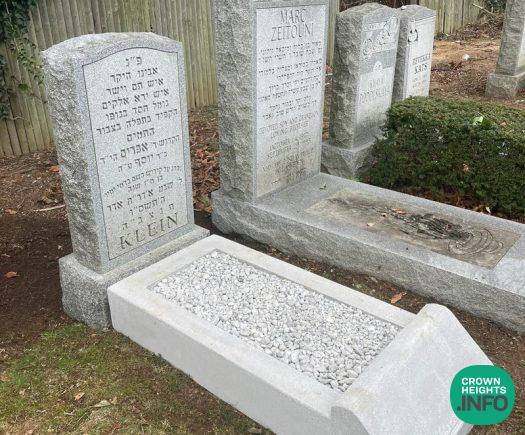
Why Do We Place Stones On A Matzeiva?
What is the source and reason of the Jewish people placing a stone on a matzeiva (headstone) and is this a Chabad custom?
It is brought in the Talmud[1] that when a person who is in Cherem (excommunication) dies, beis din (rabbinical court) places a big stone on his coffin signifying that he was in cherem as a disgrace and testimony to his sin and the fact that he died while in Cherem.
Nonetheless we see the widespread the Jewish custom is to place stones on the matzeiva of any person as a sign of respect etc.
Some wish to explain the source of the custom as being that historically it once was that there were no gravestones as we know them today, rather graves were marked by way of piles of stones and being that the elements would eventually topple these piles of stones, the visitors of the matzeiva would come and to some degree rebuild the matzeiva by replacing a stone somewhat rebuilding the pile marking the kever (burial spot).
From a halachic perspective, the custom is quoted by Rabbi Yehudah Ashkenazi of Titkin, who authored the famous commentary on Shulchan Aruch, the Beer Heitiv[2] who passingly mentions the custom of placing a stone while listing other practices such as tearing grass etc. while visiting jewish graves but the overall halachic sourcing for the practice, in truth is virtually absent all together.
Symbolically there are those that like to suggest that the Hebrew word for stone (אבן) is an acronym for Father, Son, Grandchild (אב בן נכד) but this to seems more anecdotal.
Another (perhaps apocryphal) explanation exists amongst the chevra kadishas of Jerusalem that a few hundred years ago during the Turkish occupation of Eretz Yisroel, there was once found a murdered Arab man on the outskirts of Jerusalem on Shabbos. Immediately the word went out and the blood libel began that it was the Jews that had murdered this individual and left his body and the outskirts of the city.
Immediately the expulsion of all Jews of Jerusalem. One of the elderly kabbalists of Jerusalem heard of the imposing danger and decided to use a kabbalistic practice of writing one of G-ds sacred names, and placing it on the forehead of the murdered.
When he did this sure enough the murdered man came back to life, pointed at the true murderer and then returned and died.
Seeing this justice came about it being who was the true murder and the decree was canceled.
Nonetheless the kabbalist instructed the chevra kadisha (burial society) to place a stone on his matzeiva (as was practised for a person who was excommunicated) as a final form of teshuva (repentance) for his breaking of shabbos.
Originally the chevra kadisha refused arguing that this would be disrespectful, until later a compromise came about that there should be stones placed on all of the matzeivos of Jerusalem as sure enough the custom became widespread throughout the jewish world as it is today.
It is worth mentioning that this explanation is in line with the seeming contradiction that was cited above that we find in the Talmud as regards nonetheless this explanation is lacking a truly authoritative source.
Multiple testimonials testify that the Rebbe did not practice this custom[3] and seemingly (although perhaps up for interpretation[4]), even wrote of it to not be appropriate[5]. Nonetheless the practice is somewhat accepted amongst Anash, some chassidim practicing it[6] and others refrain.[7]
Practically, seemingly unless one specifically has a custom otherwise, it would seem more appropriate following the custom of the Rebbe Nasi Doreinu and in place plucking grass and tossing over the shoulder three times consecutively as a latent reference to Techiyas HaMeisem[8], the revival of the dead in the messianic era. [9]
נ.ב. it is possible to explain the reason that we did not see the Rebbe observe this practice is because the Rebbe (as is known) throws grass three times over the shoulder as a symbolism of techiyas hameisim but its possible this is also a fulfillment of the custom mentioned by the the Beir Heitiv who lists placing a stone or alternativelyplacing grass as achieving the same goal (honouring the deceased).
נ.ב. It is obviously inappropriate to place flowers by a grave[10] being that this custom has pagan origins and is totally contradictory to the jewish view on death in which one no longer values physical beauty, rather values the mitzvos and good deeds performed in their merit.
Whatever one practices, G-D willing soon to be none of this will be relevant והקיצו ורננו שוכני עפר and we should see the fulfillment of the possuk בלע המוות לנצח with the immediate revelation of Melech HaMoshiach NOW!
[1] עיין מו”ק טו ע”ב כן עיין מסכת עדויות פרק ה
[2] עיין באר היטב רכד ס”ק ח וכן אליה רבה רכז ס’ ז וכן יבי”א ח”ד יו”ד סימן לה סע’ ז
[3] עיין בית משיח גליון 169 דף 54 כן עיין התקשרות גליון 965
[4] למרות שההקשר של המענה פתוח במידה מסוימת לפרשנות, סביר להניח שזהו ההסבר הסביר ביותר, בשילוב עם העובדה שכפי שהובא לעיל, הרבי לא נהג במנהג זה.
[5] עיין בית משיח גליון 124 דף 9
[6] כן שמעתי מהגה”ר אשכנזי מד”א דכפר חב”ד וכן עיין שיחת השבוע גליון 153 ששם מציין הרב יוסף גינזבורג גבי מנהג זה וכן תומכו וכן עיין ספר דרכי חסד סימן ל ס’ ח ע”י הגה”ר יצחק דובער אושפאל (י”ל שאין פסק זה מכריע שאפשר לומר שהפסק זה ביחס לדור השישי – דורו של כ”ק אדמו”ר
[7] כן ראיתי כתוב ע”י הרב יהודה שיח’ שורפין (ממשיבי chabad.org בשפת עברית) וכן שמעתי נהוג מכמה מאנ”ש
[8] עיין קיצור שו”ע קצט ס’ י
[9] שכן נראה מהמענה המובא לעיל הערה 5
[10] עיין תשובות והנהגות יו”ד סימן תשיד וכן יבי”א ח”ג יו”ד סימן כד ס’ י’ וכן יבי”א ח”ז יו”ד סימן לד










Pearl
Who is the author of this article?