
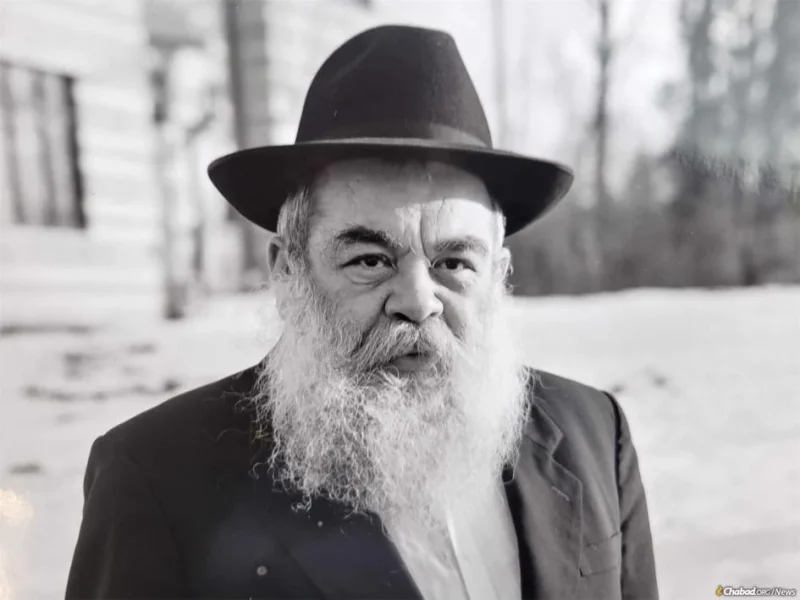
Rabbi Leibel Alevsky, 86, Powerhouse Innovator Who Built Chabad in Cleveland
by Motti Wilhelm – chabad.org
The 1970s are widely regarded as a pivot of change in history. Coups, conflicts, wars, sweeping economic and social upheaval, and the dawn of the “Me” generation.
It was an era of change in the Chabad-Lubavitch movement as well: In the 1970s the Rebbe, Rabbi Menachem M. Schneerson, of righteous memory, intensified efforts to build a global network of Jewish outreach, establishing dozens of centers of spiritual growth to reach Jews wherever they might be found.
Yet despite this strong push, there was one young man whom the Rebbe did not want to send out to found a Chabad center.
He was clearly suited for the role: a scholar and an activist who had already achieved remarkable success in organizing precisely the kind of Jewish initiatives required for such work. Any community would have been fortunate to have him, and Cleveland was actively seeking him out. He himself even requested to be sent. But the Rebbe declined them all, insisting that he was too vital to his current role to be reassigned.
That man was Rabbi Leibel Alevsky, who passed away on April 20 (3 Iyar) at the age of 86.
As the first employee of the Lubavitch Youth Organization in New York, Rabbi Alevsky played a pivotal role in shaping its mission and activities on multiple fronts. He not only envisioned new projects but brought them to fruition. Alevsky had taken a proactive role in publishing and disseminating the Rebbe’s voluminous teachings. During a difficult period in the 1960s, when the stability and security of the Crown Heights Jewish community was under threat, he stood at the forefront, helping strengthen its foundations, build essential relationships, and secure access to critical funding. Together, these efforts laid the groundwork for growth and continuity that endures to this day.

The Rebbe eventually agreed for Alevsky and his wife, Devorah, to become his emissaries in Cleveland, a mission to which the rabbi brought that same initiative and drive to strengthen the local community as he’d displayed in New York. Ultimately, he built a network of more than 20 Chabad centers throughout the greater Cleveland area.
“My grandfather was a man who had an incredible record of activity and achievement,” says Rabbi Yossi Freedman, director of Chabad of Downtown Cleveland. “But it was never about himself. What stood before him was the mission entrusted to him by the Rebbe, and his responsibility to his fellow Jews.”
Over his five decades as executive director of Chabad of Cleveland, Alevsky touched thousands of lives, impacting families and individuals, young and old alike.
“Rabbi Alevsky totally changed my family’s spiritual trajectory,” recalls Alan Vilensky, a Cleveland resident. “We were moving in a very secular direction, and today my wife and I keep Shabbat and are fully involved in Jewish life and observance. That would not have happened without Rabbi Alevsky, and he did it in the most nonjudgmental way possible.
“Rabbi Alevsky created the first outreach program in Cleveland. Today, there are many such programs. They all followed his example. He personally touched thousands of lives, and through his example, tens of thousands more were reached.”

Soviet Childhood
Yehuda Leib (“Leibel Alevsky”) was born in Chernigov (Chernihiv), Soviet Ukraine, on May 19, 1939. His parents had moved to the mid-sized city—joining his maternal grandparents there—in order to escape the oppressive watch of the Soviet secret police. By the time Leibel was born, however, authorities had already caught up with his grandfather, Rabbi Gavriel Kagan. An alumnus of the original Yeshivat Tomchei Temimim in the village of Lubavitch, Kagan had been arrested two months earlier for the crime of building illegal mikvahs, organizing underground cheders and teaching Torah.
Kagan’s arrest in Chernigov came during a mass sweep of arrests targeting Chabad Chassidim throughout Ukraine, including in the cities of Kiev, Kharkov and Dnepropetrovsk, where the NKVD—as the secret police was then known—arrested the Rebbe’s father, Rabbi Levi Yitzchak Schneerson. One year into his prison sentence, Kagan had a remarkable dream of the fifth Rebbe of Chabad, Rabbi Sholom Dovber. He was reciting the morning blessings, while the Rebbe responded “amen.” Kagan awoke with the conviction that he would soon be freed, which, in a matter of weeks, is what happened.
Just two years later, however, the Alevsky family’s lives were thrown into turmoil. Following the German invasion of the Soviet Union in 1941, Leibel’s father, Rabbi Chaim Boruch Alevsky, was drafted into the Red Army. The Soviets had no problem sending ill-equipped soldiers into the meat-grinder, and close to 9 million soldiers were killed. Alevsky was lost at the front and never came home.
As the Nazi advance continued, the remaining members of the family fled deeper into the Soviet Union. A government-arranged refugee train brought them to a town called Kuznetsk, but with no Jewish infrastructure or community there, they soon relocated to Penza, a larger city and the administrative center of the region, where a small Jewish community had formed. They remained there until the end of the war.

In the aftermath of World War II, the Soviet government permitted Polish citizens who had fled eastward to return home. Many Chabad Chassidim seized this narrow opening in the Iron Curtain to escape as well, relying on repurposed or forged documents to travel from Lvov (Lviv) into Poland, and from there to the free world. Some time in 1946 Leibel’s aunt sent his mother a letter announcing her “wedding” in Lvov and inviting her sister to attend. Recognizing the meaning of the cryptic message, Leibel’s mother brought the entire family to the border city, where they waited for an opportunity to escape.
During this period, 7-year-old Leibel, less likely to arouse suspicion, was tasked with helping assemble a minyan for Rosh Hashanah. He was given a briefcase containing a Machzor and a small Torah scroll, which he carried to the location of the secret prayers.
After successfully crossing into Poland, the family headed on into Czechoslovakia and from there to the American zone in Austria. They were settled in a Displaced Persons camp in Wegscheid, near Linz, together with many prominent Chabad Chassidim and their families who had also managed to escape. It was there that Leibel received his first formal Torah education.
From Austria, the family continued to Paris, and in 1949, at the instruction of the Sixth Rebbe, Rabbi Yosef Yitzchok Schneersohn, of righteous memory, they moved to Israel. There, Leibel continued his studies under improved, though still challenging, conditions. In an interview decades later with a grandchild, he recalled that for his bar mitzvah in 1952 he climbed a date tree to gather refreshments for a farbrengen held after supper in yeshivah, during which he recited the traditional Chassidic discourse (ma’amar).

Pioneer Days
Leibel’s mother lived in Kfar Chabad, the Chabad village and central hub in the country, while he studied in the yeshivah in nearby Lod. There, he had the opportunity to learn from and observe Chassidic luminaries. Each possessed a distinct approach: some immersed themselves for hours each day in prayer, others were tireless activists, and still others were influential teachers. Leibel was deeply shaped by observing them closely, and learning from their example.
In those years, travel between the United States and Israel was costly and rare, and even communication was limited. The Chassidim in Israel knew that the Sixth Rebbe had passed away in 1950 and that his son-in-law had assumed leadership, but beyond that there was little direct connection. Leibel later recalled that transcripts of the Rebbe’s teachings were almost impossible to obtain; on one occasion, when a single copy of a talk, typed on carbon paper, reached Kfar Chabad, the entire yeshivah gathered to study it.
This reality began to shift in 1956, when the Rebbe sent a group of yeshivah students from New York to strengthen the community in Israel following the murder of five students and one teacher in a terrorist attack at Chabad’s vocational school in Kfar Chabad. For many of the Chassidim there, this group provided their first tangible connection to the Rebbe’s court at 770 Eastern Parkway in Brooklyn, N.Y. The visit made a deep impression on Leibel.
He became determined to travel to New York to continue his studies in the Rebbe’s presence, to experience life in his court and learn directly from him. But first, he and his friends wrote to request permission. The Rebbe’s response was clear: they were to remain in Israel and continue their studies there.
Determined to find a way forward, Leibel approached his grandfather, Kagan, and declared that since he could not travel to the Rebbe, he would instead enlist in the Israeli army, despite being an only child and therefore exempt. His grandfather was deeply shaken—the army was not a place for a young Chassidic yeshivah student, especially at the time, when the anti-religious influence of many of Israel’s socialist founders was still so profoundly felt. Kagan immediately wrote to the Rebbe, asking that his grandson, to whom he had served as a father figure, be granted permission to travel to New York.
The Rebbe responded that, under the circumstances, he would permit Leibel to study for a year at the Chabad yeshivah in Brunoy, France, after which the matter would be reconsidered.
A few months later, Leibel went to France, where he studied under the guidance of the famed mashpia, Rabbi Nissan Nemenov. Six months into his stay, his passport expired, and he wrote to the Rebbe once again requesting permission to travel to New York. This time his request was granted, and he arrived in New York on his 18th birthday, in the late spring of 1958.

Student and Activist
Taught by his Chassidic mentors that encountering the Rebbe, especially for the first time, required intense spiritual preparation, during his first days in 770 Leibel attempted to remain in the shadows. But at the very first farbrengen he attended, the Rebbe himself sought him out, waiting for him to say l’chaim over a small cup of wine before responding in kind. Shortly thereafter, Leibel had his first private audience, during which he asked questions about spiritual service and received guidance.
The years that followed were a formative period. The Chabad community was still relatively small, rebuilding in the wake of the Holocaust and Soviet persecution, and each student received close, personal attention from the Rebbe. On at least one occasion the Rebbe admonished Leibel for failing to wear a coat in the winter. Alongside this attentiveness came many profound spiritual experiences.
In 1959, the Rebbe instructed the yeshivah administration to select two groups of seven students who would serve as models for their peers: one group distinguished in their study of Talmud and Jewish law, and the other in Chassidut. Those responsible for each group independently chose Leibel, inviting him to join their respective groups, known collectively as the “seven branches of the menorah.” Although he initially accepted both invitations, he was ultimately designated as a “branch” in Chassidut.
Several weeks later, the role of these groups expanded to include delivering insights in their respective fields to the broader student body. Leibel, then just 19, began presenting quasi-lectures to students several years his senior and fielding their challenges and objections to his interpretations.
Already then some of his future proactive activism began showing itself: Twice, he was asked to fill in for Rabbi Yehuda Krinsky and drive the Rebbe to the Ohel, the resting place of the Sixth Rebbe, which the Rebbe visited regularly. The Rebbe spent hours in prayer at the Ohel in Queens, and during his first-hand experience of it, Alevsky realized that the Rebbe and his secretary were without any direct way to communicate with 770 if needed. In response, he arranged for a car phone to be installed at a cost of $900, a considerable sum at the time.
Leibel also began to involve himself in other communal initiatives as well. What started with small efforts, such as arranging for a no-parking sign in front of 770, soon expanded into more substantial undertakings, including establishing a proper channel of communication between 770 and the NYPD. From there, his involvement continued to grow.

Innovator
In 1961, while still a yeshivah student, Leibel was recruited to the Lubavitch Youth Organization, which had been founded by the Rebbe six years earlier as the central body for Chabad’s burgeoning outreach efforts in the New York metropolitan region. At the time, the organization was headed by Rabbi Dovid Raskin, who also served on the yeshivah’s administration, and was staffed entirely by volunteers. As its activities expanded, it became clear that a full-time employee was needed, and Leibel was suggested for the role. He initially declined, wishing to continue his studies uninterrupted, but after receiving the Rebbe’s encouragement, he accepted the position.
The work of the Lubavitch Youth Organization operated on two fronts: bringing Jewish experiences and learning to those who otherwise lacked access, and sharing Chassidic teachings ever more broadly. Leibel immersed himself in both areas. He played a central role in publishing the Rebbe’s talks, helped organize speakers who would walk to synagogues on Shabbat to teach Chassidut, arranged classes, coordinated Shabbatons in which Chassidim from Crown Heights would bring their spirit to outlying communities, and much more.
Later that year, Leibel was introduced to Devorah Kazen, the daughter of Rabbi Zalman and Rebbetzin Shula Kazen. Her parents had settled in Cleveland after their own escape from the Soviet Union, where they became prominent community leaders, helping build Jewish life and institutions.
The couple married in Cleveland on September 17, 1962, corresponding to the 18 Elul, the birthday of the Baal Shem Tov, founder of the Chassidic movement, and of the Alter Rebbe, founder of Chabad.
In the middle of the wedding, a phone call came from 770 for the groom. The Rebbe had unexpectedly convened a farbrengen in honor of the upcoming 150th anniversary of the Alter Rebbe’s passing, and had instructed his chief of staff Rabbi Chaim Mordechai Aizik Hodakov to call the groom and relay the key points of the talks, so that he could repeat them during the wedding celebration.

The Alevskys both shared a warm relationship with Rebbetzin Chana Schneerson, the Rebbe’s mother. Rabbi Alevsky was introduced to her after he began his work with the Lubavitch Youth Organization, while Devorah had known her from their time escaping the Soviet Union. Both before their marriage and afterward, they visited her often and assisted her with various needs, including managing household matters and driving her to appointments.
Following their wedding, Rabbi Alevsky continued his work while expanding into new areas, particularly in strengthening the Crown Heights community during the period of urban decline, when Jews and many others were fleeing American cities, New York among them. Alevsky worked to build relationships between the Jewish community and city, state, and federal officials, opening lines of communication and helping ensure that the community received its fair share of government resources, including funding for security, sanitation, and other essential needs.
Over time, Rabbi Alevsky developed close ties with many public officials, regularly inviting them to 770 to meet the Rebbe and witness the growth of the Chabad community firsthand. At various farbrengens, he brought high-ranking guests, including mayoral aide Sid Davidoff, delegations of city commissioners, senior leadership of the United Jewish Appeal (UJA), William Sloane Coffin Jr., and others. The Rebbe welcomed these varied visitors, sometimes personally, other times through talks addressing their roles and responsibilities, with these encounters leaving a lasting impression. These and similar efforts served also to help stabilize and strengthen Crown Heights during what had been a period of great uncertainty.
Among his many initiatives, Rabbi Alevsky helped facilitate the purchase of several properties for the Lubavitch Youth Organization and arranged interest-free loans for families seeking to buy homes in Crown Heights.
He also played a leading role in establishing organizations and projects that became central to Crown Heights community life and to Chabad outreach more broadly. These included the Crown Heights Jewish Community Council, helping create community safety patrols and initiating the “Encounter with Chabad” program, which brought students and young professionals to Crown Heights for immersive Shabbos experiences.

Pivot to Cleveland
During these years, he would periodically visit his in-laws in Cleveland, bringing his characteristic vigor and energy with him. He made such a strong impression on the local community that a committee was formed in an effort to persuade him to relocate there and help strengthen its existing institutions and build new ones. But his role was so imperative to Lubavitch Youth Organization and to the Crown Heights community that the Rebbe rejected this idea on numerous occasions, saying that Rabbi Alevsky was needed in Brooklyn.
Even when Rabbi Alevsky himself requested to be sent out as the Rebbe’s emissary to Cleveland, the Rebbe responded that he was seeing success in the Lubavitch Youth Organization and should remain there.
Eventually, a compromise was reached: Rabbi Alevsky would relocate to Cleveland, but as an extension of the Lubavitch Youth Organization. For several years, he split his time between New York and Cleveland, continuing to develop Crown Heights initiatives while also helping his in-laws strengthen their community by establishing the Cleveland branch of Lubavitch Youth Organization.
An example of the Rebbe’s regard for his work can be seen in a video recording of the 1975 farbrengen marking Yud Shevat, the anniversary of the Sixth Rebbe’s passing and the Rebbe’s assumption of leadership. During the gathering, two leaders from the Cleveland community approached the Rebbe with a request. Rabbi Alevsky had already been active in Cleveland for three years, but he continued to commute regularly to New York and remained involved in the central office of the Lubavitch Youth Organization. “We would like Leibel to be able to spend more time in Cleveland,” they said.

The Rebbe responded, “If you find someone else from your Chabad House to replace him in New York…” He then turned the request back on them, noting their involvement in educational efforts in Cleveland, and suggested that if they could “educate two or three people to reach Leibel’s level,” those individuals could take his place in New York, allowing him to dedicate his full focus to Cleveland.
Rabbi Alevsky threw himself into both arenas. One of his first major undertakings in Cleveland was the erection of a public menorah in Public Square. Today, public menorahs are a familiar and widely embraced feature of Chanukah celebrations across the Jewish world. In the 1970s, however, some of the strongest opposition came from within the Jewish community itself. Despite intense pressure to remove it, Rabbi Alevsky stood firm, establishing it as a lasting Chanukah tradition in Cleveland, as in many other cities.
Among his early initiatives was a “Stump the Rabbi” program at Case Western Reserve University’s Hillel House, which quickly gained popularity. He also founded “Camp Chabad,” one of the first Chabad day camps in the country, and organized a wide range of programs and classes for elementary school and college students, introducing them to Jewish learning and identity. Many of these early efforts were underwritten by philanthropist Irving Stone, who made his support contingent on Rabbi Alevsky personally leading the programs.
The Alevskys saw remarkable success in their work, with many of the young people who attended their classes and programs making significant strides in their Jewish observance. In fact, their impact was so strong that some parents began to complain that their children were insisting on changes at home, such as keeping kosher, which they found overwhelming.

As these activities continued to expand, Rabbi and Mrs. Alevsky gradually shifted their focus fully to their work in Cleveland, while his responsibilities in the Lubavitch Youth Organization in New York were distributed among others.
Recognizing the growing potential, Rabbi Alevsky began bringing in additional emissaries to serve under the umbrella of Chabad of Cleveland, placing each in a different suburb while he continued to build the central headquarters. As he expanded Torah classes and community programming locally, he also helped launch affiliated Chabad institutions in other cities across the state.
In his role at the helm of Chabad of Northeast Ohio, he went on to establish a network of 22 Chabad centers, serving thousands of Jews throughout the region. Developing strong personal friendships with supporters such as Stone and Mel Waxman, who would go on to dedicate the Waxman Chabad Center (the headquarters of Chabad of Cleveland), Rabbi Alevsky always focused on expanding his activities to ensure every Jewish person had access to their heritage.
Even while leading such a wide network, Rabbi Alevsky never lost sight of the “simple” work with which he had begun, studying Torah one-on-one, offering another Jew the opportunity to perform a mitzvah, and providing every individual with a living connection to their heritage.
He continued teaching and reaching out even as his health declined. His final class was delivered just days before his passing.
In addition to his wife, he is survived by his children: Sarah Freedman (Bahia Blanca, Argentina); Chani Glitzenstein (Maaleh Efraim, Israel); Kaila Sasonkin (Akron, Ohio); Chayim Boruch Alevsky (Cleveland, Ohio); Miriam Greenberg (Solon, Ohio); Dinie Greenberg (Shanghai, China); Estie Marozov (Pepper Pike, Ohio); Rochie Sudak (London, UK); Rivky Friedman (Brooklyn, New York); and Mendy Alevsky (Cleveland, Ohio).
This article draws on material from A Chassidishe Derher magazine, as well as information provided by Rabbi Mendy Greenberg (Twinsburg, Ohio,) and Rabbi Bentzion Pearson.