



Judge Freier Puts the Brakes on Crown Heights Bike Lane Project
A New York Supreme Court judge has temporarily halted the remaining construction of Crown Heights’ controversial protected bike lane project, following a lawsuit challenging the city’s procedures for moving forward with the project.
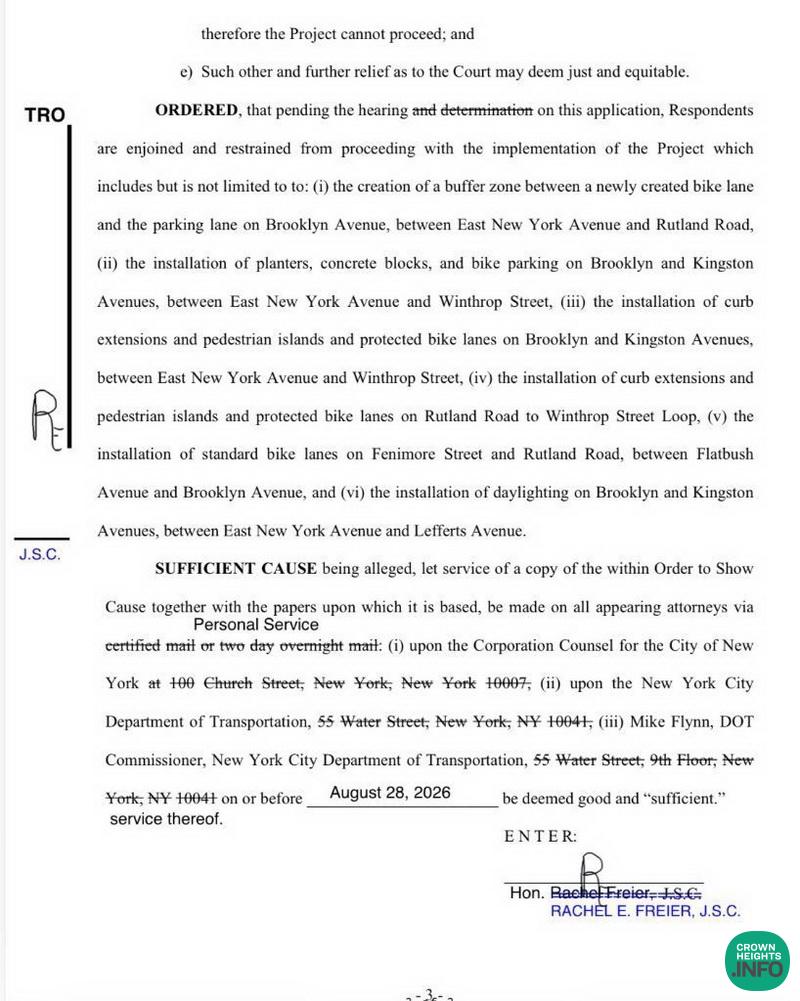
New York Supreme Court Justice Rachel Freier granted a temporary restraining order (TRO) barring the New York City Department of Transportation (DOT) from proceeding with additional portions of the project on Kingston and Brooklyn Avenues and several surrounding streets. The order remains in effect until the case returns to court, with the next hearing scheduled for September 16, when the court will consider the matter further.
The lawsuit was brought by Crown Heights resident Yosef Wolf from the Chabad community against the City of New York, the Department of Transportation, and DOT Commissioner Mike Flynn. Wolf argues that DOT began implementing the project without completing the formal notifications, consultations, and certifications required by city law before a major transportation project can proceed.
The order came after construction had already begun. DOT had completed the protected bike lane on Kingston Avenue between East New York Avenue and Winthrop Street and was preparing to continue the project on Brooklyn Avenue and other locations. That includes the planned protected lane on Brooklyn Avenue, remaining Kingston Avenue work, pedestrian islands, curb extensions, planters and concrete barriers, a protected loop around the Wingate campus, and additional bike lanes planned for Rutland Road and Fenimore Street.
The city argued that extensive community outreach had already taken place. DOT says it presented the project to elected officials, FDNY, NYPD and other city agencies, as well as Community Board 9 and Crown Heights organizations including Shomrim, Hatzalah, the Crown Heights JCC and Jewish Future Alliance.
Wolf’s lawsuit, however, argues that community outreach alone was not enough and that DOT failed to complete the formal legal procedures required before construction began. His filing claims that Councilmember Rita Joseph had not been notified that DOT was beginning implementation and that Councilmember Crystal Hudson was also not properly notified. The lawsuit further alleges that DOT failed to provide required certifications documenting consultations with FDNY, NYPD, Small Business Services, and the Mayor’s Office for People with Disabilities.
The court filings also show that DOT had already modified the original project following community opposition. The initial plan extended farther north toward Empire Boulevard, while the current version begins at East New York Avenue. DOT also reduced the projected loss of parking spaces and made other design changes.
Parents are concerned about the children’s safety, while the lawsuit centers on the city’s legal procedures, many Crown Heights residents have also raised concerns about the safety of protected bike lanes, particularly for children boarding buses on their way to Yeshiva.
Crown Heights resident Boruch Sholom, who is not involved in the lawsuit, said he supports bike lanes generally but has concerns about protected lanes. “I’m a cyclist, and I use bike lanes, but protected bike lanes are dangerous, especially for children boarding buses.” Sholom said that if the goal is safety, the safety of everyone—including children getting on and off buses—must be taken into account.
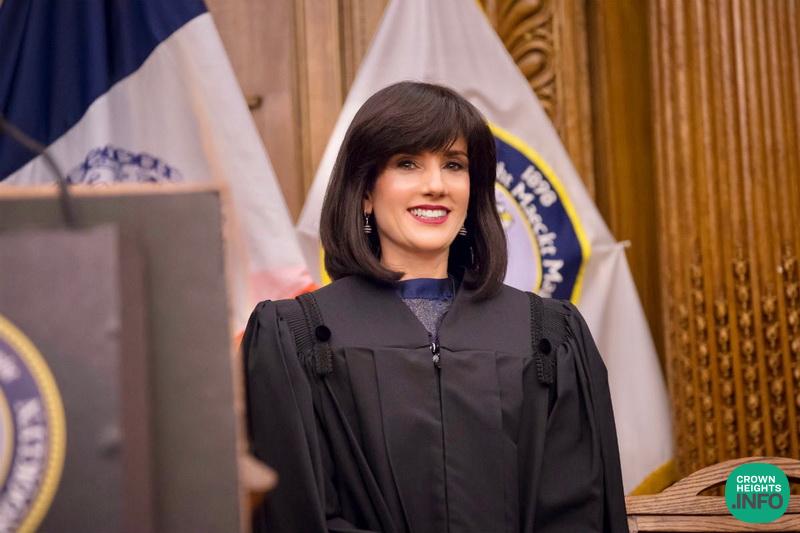
The case is also notable for being heard by New York Supreme Court Justice Rachel Freier, whose background and familiarity with the Orthodox and Hasidic Jewish community are well known. For many Crown Heights residents, having a judge who understands the community’s way of life and the practical concerns facing its families provides a meaningful sense of reassurance. Justice Freier’s temporary restraining order, however, is based on the legal issues raised before the court, and the case will now proceed through the judicial process.
Wolf is seeking not only to stop the remaining construction but ultimately to overturn DOT’s decision to implement the project and require the city to restore portions of the streets that have already been altered. For now, Judge Freier’s order puts the remaining construction on hold, giving the court an opportunity to examine the legal questions surrounding the project before the city moves forward.











Yirmi
Way to go Rabbi Wolf! Amazing
Mamdani
Wait till Mayor Mamdani will demand that the Judge has to recuse herself from the case because she is Jewish…
Lepkivker
Now let her stop the 13 floor building on east new york ace
Dangerous for seniors, too
It’s also dangerous and an inconvenience for seniors who have trouble with their balance, can’t move their heads side to side easily to check for oncoming bikes and would need to cross the street for a car that can’t stop on their side of the block – all because of the bike lane!
Shmaya Balberg, Republican District Leader
It would help had our own Democrat Councilmembers entered an Amicus Curse, let alone opposing the idea facially. Let’s face it. The bike lanes were selected as a sweetheart deal to raise property values, and are consonant with the all-encompassing “vital Brooklyn” project that was negotiated as a “done deal” by just about all the local Democrats. Rather than surrendering, flee to the Republicans!