
Here’s My Story: The Wedding Gift of a Lifetime
Rabbi Baruch Hertz
Click here for a PDF version of this edition of Here’s My Story, or visit the My Encounter Blog.
I grew up in London, but in 1980, following my bar mitzvah, my parents, Rabbi Yitzchak Meir, of blessed memory, and Mrs. Rivka Hertz, took me on a trip to New York. We were going to spend Sukkot with the Rebbe and have a private audience with him after the holidays.
Even as a child, I had always known that my parents had a special connection with the Rebbe. After coming to Lubavitch as a young yeshivah student, my father was sent to London as the Rebbe’s emissary to serve as the dean of the local Lubavitcher yeshivah, and he would often speak about his personal experiences with the Rebbe. That year, I was able to witness that special connection firsthand: The Rebbe noticed my father when we arrived in 770, the day before Sukkot, and added him to a small list of senior chasidim who would receive a lulav and etrog for the holiday directly from the Rebbe.
With all of that, I really wanted to have an audience with the Rebbe on my own, like my older brother and other yeshivah students his age would. After all, I was already past the age of bar mitzvah. However, the Rebbe’s secretary insisted on scheduling a single appointment for my parents and me together.
Now, before an audience, people generally wrote a note, detailing anything they wanted to tell the Rebbe or any questions they had for him. My father wasn’t sure whether I should write my own note, and in the end, he included me in his note, but suggested that I prepare another one with just my name on it.
When the audience began, my parents handed their note to the Rebbe, but he spent a huge part of the time focused on me, speaking to me personally, and giving me blessings. The meeting seemed to come to an end, and then the Rebbe looked at me: “You have something for me?”
I was still holding my note, and I wasn’t sure what to say, until the Rebbe invited me to bring it to him. I handed it over, and then the Rebbe spoke to me again. He told me to start studying Chumash — the daily Torah portion — every day, along with the commentary of Rashi.
“How old are you?” he then asked.
“Thirteen,” I replied.
The Rebbe said that in that case, I should study all of Chitas — to read the daily portions of Tehillim (Psalms) and Tanya, the classic work of Chabad Chasidut, in addition to the Chumash. The Rebbe explained that the calendar printed at the back of most editions of the Tanya would guide me to that day’s portion and, he added, “If you don’t understand the meaning of something in Tanya, your father can help you.” As he said that, the Rebbe smiled and looked at my father before continuing to address me. “And you should also influence others to study Chitas every day,” he concluded.
Subsequently, I would come back to spend the Tishrei holidays with the Rebbe almost every year, but after that year, the Rebbe no longer held private audiences. Moreover, as I grew up, yeshivah students of my generation were taught to hardly ever speak to the Rebbe, and many would not even ask him questions in writing, since we did not want to take up too much of his time. Still, the feeling I got at that audience was once that has always stayed with me: It was the sense that rather than just following in the path of my parents, I had my own special connection with the Rebbe.
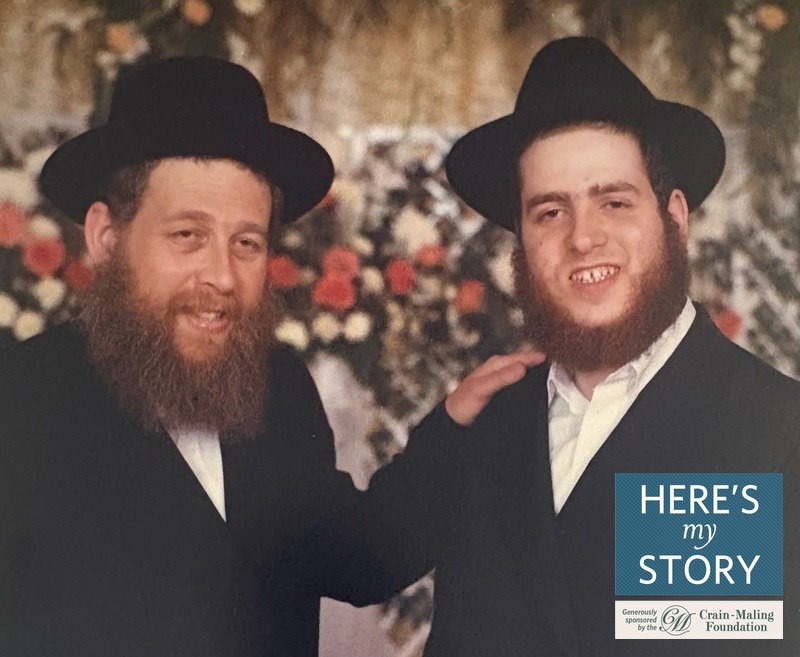
A few years later, in 1988, I had a truly unique and personal experience with the Rebbe. It was the Shabbat before I got married, when the groom is traditionally called up to the Torah in honor of his upcoming wedding. It was also the Shabbat before the month of Tammuz, and so a large chasidic gathering, a farbrengen, was held in 770 that afternoon. I recall that the Rebbe spoke at great length about the sage Maimonides and about the daily study regimen that the Rebbe had recently established for studying his great work on Jewish law, the Mishneh Torah. In strong, clear language, he discussed the many reasons and benefits of participating in this daily study cycle.
Later on, as the chasidim started to sing, some people would hold out a cup of wine or spirits in order to wish the Rebbe “l’chaim!” (“to life!”). While this was going on, the Rebbe pointed towards my father, who was seated close to his table, to wish him l’chaim in honor of my upcoming wedding. At first, someone sitting beside my father thought that the Rebbe was pointing to him, but the Rebbe clarified: “Hertz! Hertz!” and told my father to say l’chaim. To the person sitting next to my father, he then quoted the famous Talmudic dictum, “A good thought is considered by G-d as action,” and wished him l’chaim as well.
Then the Rebbe called out: “The groom should also say l’chaim!” He suddenly stared in my direction, and the 770 crowd parted so that I had a clear view of the Rebbe. People standing nearby poured me some wine, and the Rebbe motioned for me to drink an entire cup.
“Sing a song to celebrate the bride and groom,” the Rebbe suggested to the crowd, and Rabbi Yoel Kahn, the well-known chasidic scholar who often led the singing at farbrengens, started to sing Samach Tesamach, a wedding song popular in the Chabad community. Then, in the middle of the song, the Rebbe pushed his chair back, stood up, and began dancing and clapping along intensely. In response, the crowd livened up even more, and because the Rebbe had requested this song in honor of my wedding, I stood up on a bench to join in the celebration. Normally, if you tried to stand on a bench during a farbrengen in 770, no one would let you block their view, but this time nobody bothered me. This joyous scene, with the chasidim singing and the Rebbe clapping and waving his hands, continued for quite a period of time, until the song came to an end.
In all the years I spent as a yeshivah student in 770, I don’t recall the Rebbe ever saying l’chaim to another student in such a public way, and I have no idea why he chose to celebrate my wedding so powerfully. But that moment, with the Rebbe looking right at me, celebrating this joyous occasion in the middle of the farbrengen, was a piercing, transformative experience. In retrospect, my wife and I feel that the Rebbe was empowering us with joy as we were embarking on this new journey in life, and charging us with the power to create joy for others. It was a moment beyond time and space.
In 1991, Rabbi Baruch and Chanie Hertz were sent as emissaries of the Rebbe to Chicago, where he now serves as the rabbi of the Chabad community and the dean of Chicago’s Lubavitch Girls’ High School. Together, they also founded Chabad of Greater Lakeview. He was interviewed in October 2020.