


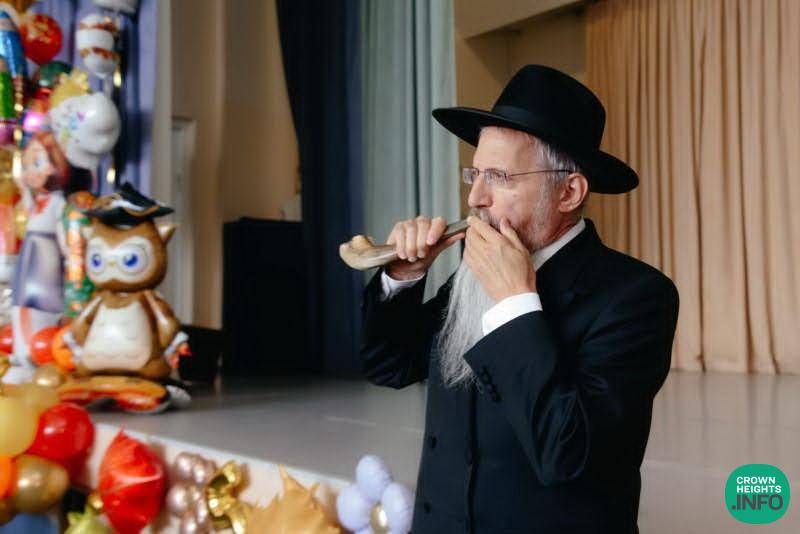
Weekly Dvar Torah: No Shofar? Have Some Kugel!
This Rosh Hashanah, something will be missing.
We will come to Shul on the first day of Rosh Hashanah. We will daven the special Rosh Hashanah prayers. We will proclaim Hashem as King of the universe. But we will not hear the sound that, more than anything else, defines Rosh Hashanah.
There will be no Shofar.
Because the first day of Rosh Hashanah falls on Shabbos, we will blow the Shofar only on the second day.
Why?
The Gemara gives a surprising explanation. Blowing Shofar requires some skill. The Sages were concerned that someone who does not know how to blow might take his Shofar to an expert to learn. In his eagerness, he might forget that it is Shabbos and carry the Shofar through a public domain, violating the prohibition of carrying on Shabbos.
And therefore, the Sages decreed: when Rosh Hashanah falls on Shabbos, we do not blow the Shofar.
Think about this.
Because perhaps somewhere there might be an unlearned Jew who wants to fulfill the Mitzvah, forgets that it is Shabbos, picks up his Shofar, and carries it to someone who can teach him how to blow — because of that possibility, the entire Jewish people does not perform the Torah Mitzvah of Shofar that day!
It makes no difference who you are. The greatest scholar, the holiest Tzaddik, the most learned Jew — nobody blows Shofar.
Really?
For such a remote possibility, we give up the central Mitzvah of Rosh Hashanah?
Many explanations have been given. But Chassidus takes us much deeper. The Rebbeim discussed this question extensively, from the Alter Rebbe through our Rebbe. The Rebbe Rashab devoted an entire lengthy series of Maamarim to understanding the profound spiritual meaning of Rosh Hashanah that falls on Shabbos.
To understand the answer, we first need to understand what the Shofar actually accomplishes.
Rosh Hashanah commemorates the creation of Adam. Although Adam was created on the sixth day of Creation, that day became Rosh Hashanah — the beginning of the year.
Why not the first day, when Hashem actually began creating the world?
Because until Adam appeared, the purpose of Creation had not yet begun to be fulfilled.
Hashem is infinite. He certainly did not “need” a world. But Hashem desired a dwelling place in the lowest realm — a world where G-dliness would be concealed, and human beings would have the mission of searching for Hashem, discovering Him within that concealment, accepting His sovereignty, fulfilling His Torah and Mitzvos, and transforming this physical world into a home for Him.
Adam immediately understood his mission.
On the very day he was created, he turned to all of Creation and proclaimed: “Come, let us bow down and bend the knee; let us kneel before Hashem, our Maker.”
In other words: There is a King. Let us crown Him.
That was the moment Creation began fulfilling its purpose. And that is why the day Adam was created became Rosh Hashanah.
Every Rosh Hashanah, that process happens again.
The world does not exist independently. Since Creation came into existence yesh me’ayin — something from nothing — it requires Hashem’s creative energy constantly to sustain it. Every moment, Hashem recreates the world.
But on Rosh Hashanah, the entire relationship is renewed.
Hashem looks at the world, so to speak, and evaluates the year that has passed. Has this world been fulfilling the purpose for which it was created? Is mankind — and particularly the Jewish people — transforming this world into His dwelling place?
That is one of the deeper meanings of Rosh Hashanah as the Day of Judgment.
And Hashem, in His infinite kindness, tells us how to awaken His desire and pleasure to continue this relationship for another year:
Blow the Shofar.
The Shofar is the sound of coronation. Throughout history, trumpets were sounded when a king was crowned. On Rosh Hashanah, we sound the Shofar and proclaim: Hashem, You are our King. We accept Your sovereignty. We accept Your Torah. We accept Your Mitzvos. Give us another year, and we will continue the work of making Your world a dwelling place for You.
Indeed, the very word Shofar is related to the idea of Shufra — beauty and pleasure. The Shofar reaches into the deepest level of Divine pleasure and awakens Hashem’s desire, so to speak, to renew Creation for another year.
Now we can understand what happens when Rosh Hashanah falls on Shabbos.
The first Rosh Hashanah in history — the day Adam was created — was Friday. Adam crowned Hashem as King, the purpose of Creation was set into motion, and then came Shabbos.
Ba’ah Shabbos, ba’ah menuchah.
Shabbos arrived, and with it came rest.
Why?
Because the work was complete. As we say in Kiddush, Vayechal Elokim — Hashem completed Creation. The world had reached its purpose. Adam had recognized his Creator and crowned Him King.
There was Divine pleasure.
That is the essence of Shabbos. Shabbos is not merely a day when we stop working. Shabbos represents the pleasure that comes when the work has achieved its purpose.
And that happens again every single week.
During the six weekdays we struggle with the physical world, refining it and elevating it. Then comes Shabbos — a day of rest, delight and pleasure. We eat good food, drink wine, enjoy our three Shabbos meals, sing Zemiros, and experience Oneg Shabbos.
So when Rosh Hashanah itself falls on Shabbos, something extraordinary happens.
Normally, we need the Shofar to reach upward and awaken that Divine pleasure.
On Shabbos, the pleasure is already there.
Shabbos itself accomplishes what the Shofar normally needs to accomplish.
The Alter Rebbe once expressed this idea in a wonderfully Jewish way. If we are not blowing Shofar, how will Jews accomplish on Shabbos what normally must be accomplished through the Shofar?
By eating Kugel!
It sounds almost humorous, but it contains something profound.
Kugel is a traditional food of Shabbos, and in its original form it is round — without beginning or end, symbolizing infinity. Instead of reaching toward the Infinite through the cry of the Shofar, on this Rosh Hashanah we connect with that Divine pleasure through Shabbos itself — through the holiness, rest, delight, and yes, even the Kugel of Shabbos.
Suddenly, the entire question turns upside down.
Why are we being deprived of Shofar because Rosh Hashanah is Shabbos?
We aren’t.
Shabbos is doing the job.
And perhaps that gives us a beautiful way to look at the entire year ahead.
The first day of this new year is Shabbos. Before we take a single weekday step into the year, the year is born in an atmosphere of Shabbos — holiness, peace, tranquility, pleasure and a sense that the purpose is being fulfilled.
And remarkably, this year has something even more special.
Just as this Rosh Hashanah begins on Shabbos, next Rosh Hashanah will again begin on Shabbos.
Our entire year is surrounded by Shabbos.
What a message with which to enter a new year.
May this truly be a Shabbos year.
A year of peace instead of conflict. A year of tranquility instead of turmoil. A year in which our efforts bear fruit and our missions are accomplished. A year in which we experience Hashem’s blessings not only spiritually, but materially and visibly — good health, abundant Parnassah, Nachas from our children and grandchildren, and endless reasons for Simcha.
And above all, may this “Shabbos year” finally lead us into the great Shabbos for which the world has been waiting — the era of Moshiach, when the long work of transforming this world into Hashem’s dwelling place will finally reach its fulfillment.
Then there will be true peace. True harmony. True Divine pleasure.
May we enter this year with joy, live it with joy, and together dance joyously to greet Moshiach Tzidkeinu.
Kesivah Vachasimah Tovah!
Have a Sweet, Healthy, Peaceful, prosperous, truly Shabbosdik New Year!
Gut Shabbos, Gut Yomtov
Rabbi Yosef Katzman
To support our work, please donate via PayPal or via Zelle to: cablejew@gmail.com. Thanks