


New Release: When the Rebbe Chose the Theme for Detroit’s Camp Gan Israel
As schools across the country wrap up the academic year and camps prepare to open for the summer, a newly published response from the Rebbe offers a glimpse into the message he wanted emphasized at Camp Gan Israel in Detroit.
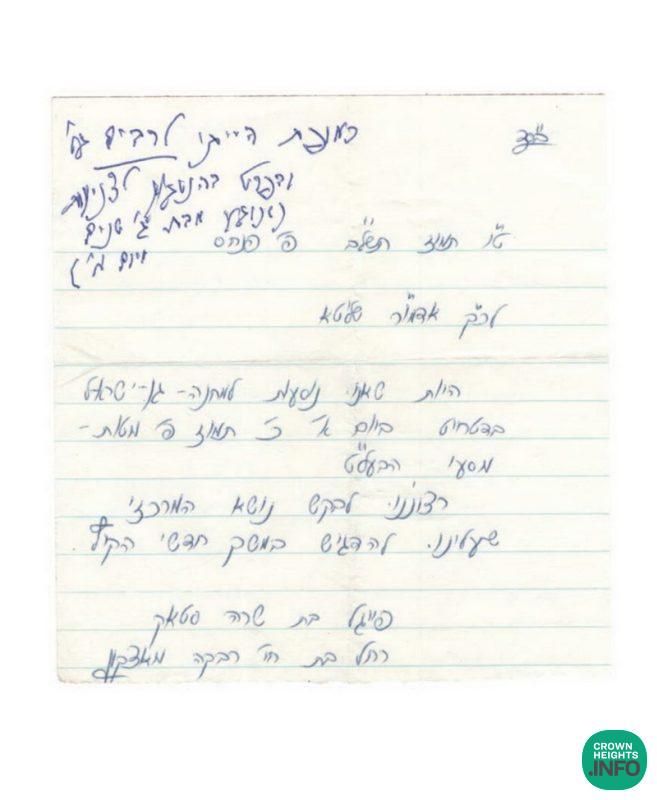
The response, appearing in print for the first time, is being published courtesy of the Igros Kodesh editorial team of Vaad Hanachos B’lashon Hakodesh, and will appear in the farbrengen booklet for Shabbos Parshas Chukas, following Gimmel Tammuz 5786.
Michigan was among the first states to receive shluchim during the Rebbe’s nesius. In 1958, Rabbi Sholom Ber and Mrs. Batsheva Shemtov arrived in Detroit as the Rebbe’s shluchim while still in the days of sheva brachos following their wedding.
One of the first institutions established in the state was Camp Gan Israel, founded in 1961. Since then, hundreds of boys and girls have attended camp there each summer. Located in “Lubavitch City,” the camp has played a central role in the chinuch of generations of Anash families and shluchim.
As preparations were underway for the summer of 5732 (1972), head counselors Feigel Stock (later Turnheim) and Rochel Mochkin (later Kaplan) wrote to the Rebbe requesting guidance.
“We are traveling to Camp Gan Israel in Detroit on Sunday, 20 Tammuz, Parshas Matos-Masei,” they wrote. “We would like to request a central theme that should be emphasized throughout the summer months.”
The Rebbe’s handwritten response, published here for the first time, read:
“כמופת הייתי לרבים…”
“Especially regarding tznius (which applies beginning from the age of three years and one day).”
As was his practice during that year, the Rebbe quoted a verse from Kapitel 71, which he was reciting at the time, and emphasized the word “larabim”—”to many.”
He then added that particular emphasis should be placed on the subject of tznius for Jewish girls, noting that according to halachah, its requirements begin from the age of three years and one day.
The Rebbe addressed this point on numerous occasions, both in writing and in his public talks. See also Likkutei Sichos, Vol. 18, p. 448, and Terumah 5741 (Shichos Kodesh 5741, vol. 2, p. 419).
To view the maaneh:
To download the complete booklet: