Holocaust Survivor Killed in Kherson Shelling
by Motti Wilhelm – chabad.org
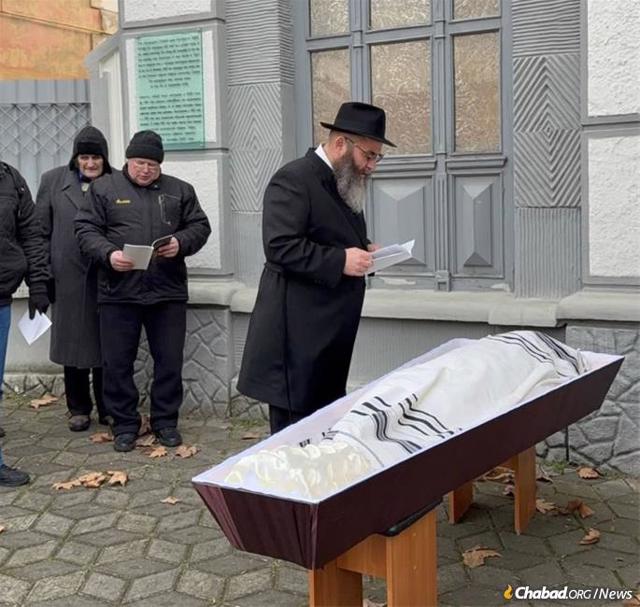
The Jewish community of Kherson is in shock and mourning following the death of Yevgeny Bondar, an 84-year-old Holocaust survivor who succumbed to injuries sustained in a shelling attack on the war-torn Ukrainian city.
Born in March 1941 in Kerch, Crimea, Bondar survived World War II as a young child, fleeing with his family from place to place, always remaining one step ahead of the advancing Nazis. After the war, the family settled in Kherson, where Bondar lived for the remainder of his life.
For more than 40 years, he served as an emergency physician, providing lifesaving care to those in immediate medical crisis. Though war and decades of Soviet repression denied him a Jewish education and formative Jewish experiences, Bondar later became an active member of the Jewish community as it reawakened following the fall of the Soviet Union.

Rabbi Yosef Yitzchak Wolff, who founded Chabad-Lubavitch of Kherson in 1993, told Chabad.org that Bondar was “a quiet, modest and warm person.”
“He was always ready to help another person, both in his professional work and in every other area of life,” Rabbi Wolff said. “He was deeply respected and loved by all.”
Since the Russian invasion of Ukraine four years ago, Bondar became even more involved in the Jewish community, attending nearly every event and becoming a familiar, reassuring presence to all.
In late December, Bondar was critically injured during a shelling attack on Kherson, shrapnel causing devastating internal injuries and forcing doctors to amputate the arm. Despite their efforts, he passed away several days later, on Dec. 30.
Rabbi Wolff said the loss has deeply shaken the community, which continues to live under the constant threat of bombardment.
“Before the war, there were 10,000 Jews living in Kherson. Today, there are between 800 and 1,000,” he said. “Anyone who was able to leave, did.”

The rabbi explained that most of the Jews who remain are elderly and lack the strength or resources to uproot their lives and begin again elsewhere. The Wolffs themselves have chosen to stay in Kherson, despite the daily danger, in order to care for those who cannot leave.
“Chabad is their literal lifeline, their final support system,” he said. “We make sure they have food, medication and the basic necessities for survival. Without us, they would be completely alone.”
In July, Rabbi Wolff was driving with his wife and daughter when their car was directly hit by a Russian suicide drone. Miraculously, they escaped unharmed. In October, a large shell ripped through the central synagogue of Kherson. It pierced the synagogue roof, slamming through the second-floor sanctuary before coming to a stop in Wolff’s office on the ground level. Though the building was occupied at the time, there were thankfully no casualties. Asked how he manages to remain unafraid, Rabbi Wolff chuckles.

“Anyone who says they are not afraid is either crazy or lying,” he says. “Of course, it’s frightening to live under constant bombardment, but we learn to overcome the fear and do what needs to be done.”
Even under these conditions, the community managed to hold a Chanukah gathering, with some 80 members coming together to celebrate the victory of light over darkness. Rabbi Wolff and his sons also visited Jews in their homes, delivering Chanukah menorahs and the holiday spirit, bringing moments of joy to lives that have been marked by hardship on a daily basis and by constant fear for their lives over the past four years.
To assist the Jewish community of Kherson, click here.