

770 Was In An Uproar: Was the Rebbe For It, Or Against It?
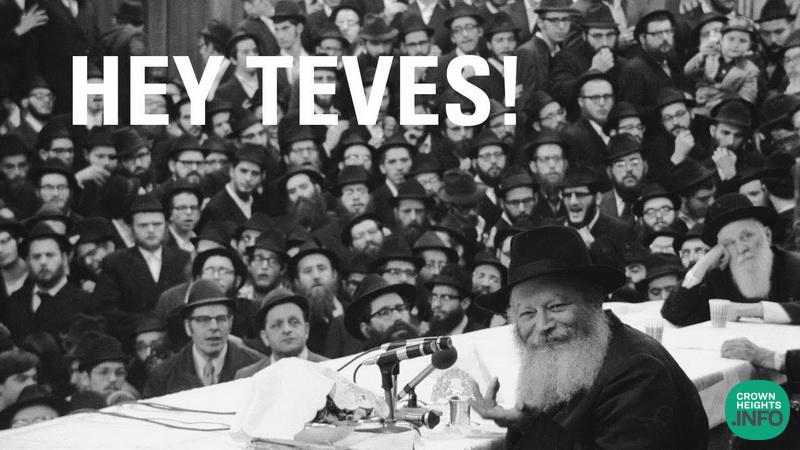
During the period at the beginning of 5748 (1987–88), I used to organize farbrengens at 770 on Yoma D’Pagra (minor special dates) when the Rebbe did not Farbreng, or on the second night of a Yoma D’Pagra when the Rebbe asked that Chassidic Farbrengens be arranged, and similar occasions. When the luminous day of the fifth of Teves approached, which that year fell on Shabbos, we decided to arrange a large Farbrengen for the first anniversary, in a manner befitting our festival — one that we personally experienced in our very flesh, having witnessed our Rebbe’s pain and rejoiced in his joy.
Nevertheless, I thought to myself that it was not appropriate for such a celebration to be officially run by Vaad Mimush (the Committee for the Implementation, which organized the Farbrengens), since ultimately this belonged to Agudas Chassidei Chabad, who had conducted the struggle by the Rebbe’s directive. Therefore, I approached them to propose that I would be willing to arrange the physical logistics, while the spiritual and official responsibility would be in the name of Aguch.
For some reason, I received firm opposition from all the members of Aguch except for Rabbi Shlomo Cunin (and Rabbi Chodokov, whom I did not approach), claiming that the Rebbe was opposed to the celebration, citing as proof the incident of the second of Kislev, when the Rebbe got visibly upset with some who were standing and waiting to celebrate when the Seforim were going to arrive.
I argued that on the following Shabbos the Rebbe explained his pain from Monday because it had occurred in the middle of the seder, and he also added, saying: “If you want to dance and if you want to Farbreng, it should be at the expense of eating and at the expense of sleeping.” Indeed, at the time, it was whispered that the Rebbe had said this because the Rebbetzin had come to the Rebbe with complaints as to why he became upset when the Chassidim wanted to rejoice in his joy. For such a thing, that the Rebbe would seemingly apologize, was highly unusual.
They refused to accept my argument and stood their ground. I then continued on to the Secretariat to ask their opinion, and they too said the same as Aguch. I then went to the Beis Din, which at that time was at the height of its influence, and specifically they agreed with me. When I saw that I had supportive backing, I decided to go big: I hired a caterer to prepare a genuine festive meal, at a high celebratory level.
In the meantime, I asked Yossel Gutnick to contribute toward covering the expenses, which were in the thousands of dollars. He said he would do so on condition that the Rebbe openly and publicly support it. I replied that I had no contract with the Rebbe to support me, neither openly nor privately, and I decided to continue and take the risk of going against the establishment. We launched a massive promotion and publicity for the festive meal for Motzoei Shabbos, the fifth of Teves.
On Friday, I approached the Secretariat with a bottle of Mashke, as was customary for anyone who arranged a Farbrengen. During the Shabbos farbrengen, the Rebbe would give you the bottle and instruct you to announce what it was for, invite the crowd, and invite our Rebbe, the Nasi of the generation. The secretary asked me what it was for, and I answered that it was for the Motzaei Shabbos farbrengen of Didan Notzach. He told me he is hesitant to bring it in because the Rebbe was against it. I asked him did the Rebbe tell you that he does not want the celebration? He answered no, but asked whether I didn’t know what happened on the second of Kislev. I replied to him just as I had to the members of Aguch, but he stood his ground.
At that point, my Oholei Teire temperament flared up, and I said to him: I don’t understand how you can censor mail being sent to the Rebbe? You are a courier, and you should bring in everything that is given to you to give over to the Rebbe. If the Rebbe does not want it, then he simply will not call on me to give me the bottle during the Shabbos farbrengen! He finally acquiesced and he gave in and accepted it.
Meanwhile, my colleagues, the Tmimim, hung a sign downstairs in 770 on the western wall. One of the senior Mashpi’im began yelling at them to remove the sign because the Rebbe was against the celebration. They became confused and asked one of the Rabbonim who was present in the synagogue, and he said that he saw no problem whatsoever with the sign. The Mashpia relented, and the sign remained.
In the meantime, 770 was in an uproar: was the Rebbe for it, or was the Rebbe against it?
For Kabolas Shabbos, the Rebbe entered the Shul, and there was a large crowd of guests who had arrived. The entire Davening was festive, and after Davening, as the Rebbe exited, we noticed that the Rebbe raised his holy eyes and looked at the sign.
Only then did the uproar truly begin to boil. One shouted, “Here — it’s clear the Rebbe is against it,” and another shouted, “It’s clear the Rebbe is for it.” In short, the entire night was charged and joyful. I, however, was afraid — what would be? Was I the wisest of them all, or the biggest fool and idiot among them all?
When the time for the Rebbe’s Farbrengen arrived, my place was literally on the floor directly facing the Rebbe. I had no idea what to expect — whether the Rebbe would react to this controversy or not address it at all, or maybe even give us a severe reprimand. That the Rebbe would support it never even crossed my mind; I only wondered how sharp the reaction against my initiative would be.
Immediately at the beginning, the Rebbe began addressing the day’s portion and said that today’s theme is as written on the wall: Didan De’hasforim Notzach (“Our books have triumphed”). I immediately began to tremble and pray that the ground would open beneath me. The Rebbe began with the word “the books,” and in my mind I heard the Rebbe continuing that one must look into the books, and I continued to imagine that the continuation would be: What is all this wild celebration about? Sit down, open books, study them, stop the dancing — and who knows what else.
But the Rebbe continued (in the spirit of the Gemara about Chanukah, which just concluded): “The following year they established it for praise and thanksgiving,” and I began to breathe a little. This no longer sounded like a harsh direction. The Rebbe explained the entire matter of Didan Notzach as written in the edited and unedited sichos, and concluded with the words: “Especially since they prepared a Seudas David Malka Meshicha in connection with the celebration of this day.”
I felt such relief, the Rebbe had simply saved me — something I would not have dreamed of even in the strangest dream. I immediately decided that I had done my part in preparing the Farbrengen, and from now on, the baton would be passed to the members of Aguch.
Indeed, when the Rebbe called on those who had prepared the Mashke to come up, I motioned to the members of Aguch that they should go up to take the Mashke, but they stood in place and did not approach. So I went up myself and stood before the Rebbe, and from there I invited them again publicly. They then came, said l’chaim, and immediately left. They left the bottle for me to take, and I later saw in the chronicle that on that Shabbos it was Meir Harlig and I who took Mashke.
Naturally, that evening, a very large crowd arrived. I remained holding the whip, so to speak, to run the Farbrengen. Some of the members of Aguch did, in fact, participate and speak, but it felt strange to me that the official Didan Notzach Farbrengen was being run by a Yungerman from Vaad Mimush — in my opinion, it was neither logical nor correct. But this, too, is part of “the following year they established it for praise and thanksgiving.”
Gut Yomtov Chassidim, Didan D’Hasforim Notzach,
Rabbi Yosef Katzman










Yasher Koach!
Baruch Shekivantah!