
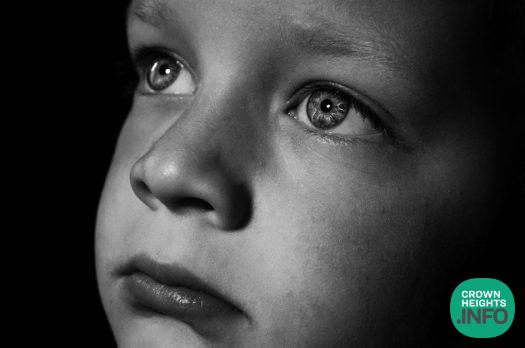
When the World Feels Scary: Speaking to Children About Terror
by: Chana Kaiman, LCSW-RPT – Education and School Relations Lead, The Bereishis Foundation
Children often sense danger before they understand it. Long before words are spoken, they notice the tightness in adult voices, the sudden urgency in conversations, the extra Tehillim whispered where bedtime stories used to be. Even when we try to protect them, fear slips in quietly.
When terror strikes, caregivers are left holding an impossible tension: the instinct to shield children from pain, and the responsibility to help them make sense of a world that suddenly feels unsafe. What do we say? What do we leave unsaid?
The Torah does not ask us for perfect answers. It asks us to be present. “Chanoch lana’ar al פי דרכו” educate the child according to their way. Each child has a different nervous system, a different stage of understanding, a different capacity for meaning. Our job is not to explain the world, but to restore safety within it.
Before children can hear words, they need to feel calm. Fear lives first in the body, not the mind. A regulated adult is one who speaks slowly, moves gently, maintains routine and becomes a child’s first reassurance. Children borrow calm the way they borrow language. When we steady ourselves, we steady them.
Children will not remember every word we say. They will remember how safe they felt when they were afraid.
For very young children, terror is not an idea; it is a disruption. Toddlers and preschoolers may become clingy, regress, or melt down more easily. This is not misbehavior. It is a request for closeness. At this age, words should be simple and repeated often: You’re safe. I’m here. Hashem is watching over us. The power is not in the sentence but in its consistency. Predictable routines, familiar songs, being held these are the conversations young children understand best.
As children enter the early elementary years, questions begin to form, though they are rarely asking what adults think they are asking. Could this happen to us? lies beneath nearly every inquiry. Here, clarity matters but so does restraint. Start by asking what they heard. Correct gently without adding detail. Focus on the present moment and the layers of protection around them: parents, schools, community. Avoid dismissing fear with “don’t worry.” Instead, acknowledge it: It makes sense your body felt scared. You’re safe right now, and you’re not alone.
Middle childhood brings a different kind of wondering. Children begin to ask why people do such things, why Hashem allows pain, why the world feels so broken. These are not questions to solve, but conversations to hold. Speak honestly, without graphic detail. Make moral distinctions clear: violence comes from broken choices, not from entire peoples. Emphasize values the Torah returns to again and again the sanctity of life, responsibility for one another, the power of kindness. Giving children small ways to respond through tzedakah, tefillah, or acts of chesed restores dignity when the world feels out of control.
Adolescents experience terror on an even broader plane. They grapple with justice, identity, faith, and the future itself. Some will want to talk endlessly; others will withdraw. Here, the greatest gift is respect. Listen more than you speak. Allow space for anger, doubt, and complexity even questions about Hashem. Our mesorah is not fragile. It holds centuries of suffering alongside resilience and covenant. Teenagers need to know that questioning does not sever belonging.
Across every age and stage, children are watching less for explanations and more for emotional cues. They notice whether adults are consumed by the news or grounded in daily life. Whether fear dominates the home or is acknowledged and contained. Whether faith feels like a refuge or a source of pressure.
Caregivers often underestimate the quiet choices that matter most: turning off the news when children are nearby; maintaining bedtime rituals even when the world feels heavy; speaking about Hashem as close and compassionate, not punitive or distant. These choices teach children something enduring; that fear can rise without taking over, that safety can return, that they are held.
The Takeaway
We cannot promise our children a world without terror. But we can give them something lasting: the experience of being seen when they are scared, steadied when they are shaken, and rooted in a tradition that has faced darkness and chosen life again and again.
Long after the headlines fade, that is what children will carry with them, not what we explained, but how safe they felt in our presence.
About the Author
Chana Kaiman, LCSW-RPT, is the Education and School Relations Lead at the Bereishis Foundation. She is also a Licensed Clinical Social Worker and Registered Play Therapist specializing in child, adolescent, and family therapy. Chana has advanced training in Child-Centered Play Therapy, Filial Play, Adlerian play therapy, Trauma-informed care, and Internal Family Systems (IFS). Her clinical work integrates neuroscience and somatics with a deeply Torah-rooted approach to emotional wellness.
To support the work of the Bereishis Foundation, or to bring this approach to your school or community, please visit: https://www.bereishisfoundation.org/










An
❤️❤️❤️