Weekly Story: Beis Nissan Part #2
by Rabbi Sholom DovBer Avtzon
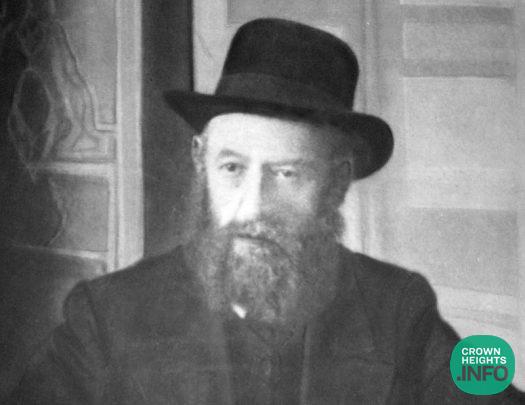
This Erev Shabbos is Beis Nissan, the 106th yahrzeit of the Rebbe Rashab as well as 106 years since the Frierdiker Rebbe became Rebbe. In this week’s column, I will continue mentioning certain aspects that we could learn from the Rebbe Rashab’s life, aspects which I related at a farbrengen Thursday night, the eve of Beis Nisaan.
As always, your feedback and comments are greatly appreciated and most welcomed.
The Rebbe Rashab’s custom was to say the maamar Friday evening before Kabalas Shabbos. Shortly after the conclusion of the maamar, he would enter the shul to begin davening with the minyan, although he concluded his davening a sizable time after the minyan did.
However, the bochurim led by the mashpia and the chozrim would then review the maamar more than once until they knew the maamar fluently. Only then, did they begin to daven kabalas Shabbos and then eat the Seuda Shabbos. Shabbos morning before Shacharis, the chozrim with the mashpia, Reb Groinem, would enter the Rebbe Rashab’s room, and one of the head chozrim would review the Maamar for the Rebbe.
Sometimes the Rebbe would correct them on his own or add some clarifications or explanations. Other times the choizer would ask the Rebbe for clarification. And sometimes, especially when it was a very difficult maamar he would ask the Rebbe for whom did he say this my maamar for? After all it was way beyond most people’s comprehension, and especially their ability to implement it into their Avoda.
After a certain maamar which discusses various levels of the service of a servant (in the Hemshech of Samach vov),,after the choizer concluded the review, he asked, “For whom was this maamar said?”
An animal only sees the earth/ground and the food that is on the ground in front of it, but it never sees the heaven above it, the Rebbe Rashab replied.
The mashpia later explained to the bochrim that the Rebbe’s reply was, I know that this maamar is beyond a person’s reach and complete understanding. However, a person has to know that there is higher and highe. So while it is beyond you, yet, everyone should aspire to elevate themselves even if they cannot succeed all the way. But the fact that they come to this realization and aspiration to elevate themselves, that itself was the purpose of saying the maamar.This is similar to a story with Reb Hillel Paritcher whom the Mitteler Rebbe sent to the colonies in Ukraine, where most of the Jews were very simple.
Reb Hillel told them, by learning Chassidus and davening your connection to Hashem will improve. Years past, and one of the Jews in Ukraine who attached himself to Reb Hillel, came over to him one time and expressed his disappointment and frustration. Rebbe, you said that if I learn Chassidus I will feel a connection to Hashem and my davening would improve.
For quite a number of years, I made sure to listen to whatever you teach during the months that you are here and do whatever I can to understand these precious teachings. Yet nothing has changed! My davening didn’t improve, as I still don’t feel an inspiration and I also don’t feel a connection to Hashem!
Reb Hillel replied, “Your question itself proves that you did change for the better! Before you started learning Chassidus it didn’t bother you that you don’t feel any inspiration or connection to Hashem. But now it does bother you. Isn’t that a tremendous change!”
So here too the Rebbe Rashab is telling us, I understand that some of the Chassidus that is said, might be, at least initially, beyond one’s comprehension and ability to implement it into their conduct.
But that is only when you’re speaking about the concept in its entirety. However, a small part of the concept you do comprehend. You do comprehend that there is something higher than just the world, and you aspire to connect yourself to it. This is similar to what the Alter Rebbe writes in Tanya that a Beinoni should not feel bad that they are not reaching the level of a tzaddik, because the mission of a beinoni is to constantly battle and overcome the nefesh haBehames and aspire to go higher.
So let us learn some more Chassidus and then we would look at the world from the Rebbe’s perspective.
In a simple application, Pesach is in two weeks, and we are all going to eat Matza. Is matza just an unleavened cracker, or is matza Food of Faith and Food of Healing, as is discussed at length in Chassidus?
Another aspect of the Rebbe Rashab that at first glance it is way beyond anyone of us, but with the same approach we can all implement an aspect of it into our lives.
Once, at a gathering of rabonim in Russia, they were discussing how to respond to the government’s demands concerning the chinuch of the Jewish children in the chadorim and other aspects. One Rov there presented his thoughts, and many of the rabbonim there thought there was merit to it.
When Reb Chaim Brisker asked the Rebbe Rashab if he agrees with it, as many of the Rabbonim thought it was a good plan, the Rebbe replied NO!
Reb Chaim asked, Lubavitcher Rebbe, why are you opposed to it?
The Rebbe replied, because that was the first thought that came to my mind when I heard it.
Rebbe of Lubavitch, because that was your first thought we should negate this opinion completely? After all, whatever we decide may succeed and save us, and it may put the Jewish people of Russia in danger.
o how can we decide such a serious question based on a thought, Reb Chaim inquired?
Before my Bar Mitzvah, my father the Rebbe instructed me to learn Shulchan Aruch Orach Chaim thoroughly, replied the Rebbe. Ever since then, my body has been trained to act according to the Shulchan aruch on its own. Therefore, if that was my body’s reaction, I am positive this is based on the guidance of the Shulchan Aruch!
Hearing these words, Reb Chaim Brisker declared, I agree wholeheartedly with the Rebbe of Lubavitch We heard numerous times from our Rebbe, that in addition to the instruction of the Baal Shem Tov, that everything that one hears or sees, they are supposed to take a lesson in their service of Hashem. That is especially so concerning a story of the Rebbeiim that they or one of the successes decided to publicize.
Obviously, none of us are going to say that we trained our body to act completely in accordance to the Shulchan Aruch. Nevertheless, we have to take a lesson from the above-mentioned story and apply it in our life.
The Rebbe related a few times the story of the Chernobler, that in the middle of accepting his Chassidim for a Yrechidus, he suddenly interrupted it. Later on he explained, in order to decide and figure out if the second thought came from the yetzer tov or the other inclination.
The Rebbe concluded by saying, to us the deciding factor is not so difficult. We should look at what is going to be the outcome of our decision. If I follow one opinion or if I follow the other opinion. Applying this guidance to ourselves, let us see what our two options are and what they might cause. If one decides to learn a little bit more Chassidus and try to daven with at least paying attention to what the words mean, even if that is not inspiring you and bringing you closer to Hashem at least at that moment you would be fulfilling Hashem’s Mitzvos and connecting yourself to Him at that time. The other option is, to continue as we have done until now, and everyone knows if the way they conducted themselves up until now inspires them and connects them to Hashem.
A Taste of Chassidus
Adam ki Yakriv Likkutei Torah Vayikra 2
The simple meaning of this possuk is, when a person from among you will bring an offering to Hashem: from the animals – from the cattle and from the flocks you shall bring your offering. In other words, the possuk is basically teaching us what a person should do when they decide to bring an offering to Hashem. However, in this maamar, the Alter Rebbe is going to explain that the possuk is coming to teach and guide us, on how every Jew has the ability to come close to Hashem and serve Him.
The Alter Rebbe begins by asking three questions.
- Why does the possuk begin in third person, when a person will bring, and concludes in second person, you shall bring your sacrifice?
- Why in the beginning of the possuk “A person” is in the singular sense, yet, at the end of the possuk it is in the plural sense “You all shall bring?”
- If the meaning of the possuk truly is, if a person amongst you decides to bring a sacrifice, shouldn’t the word “mi’keim” which means from amongst you should come after the word Adam and not after the word when he will bring, which is speaking about the sacrifice?
Being that at the end of the possuk, the word of you shall bring is in the plural sense, and that is speaking about or referring to the Jewish people, evidently, the person at the beginning of the possuk which is singular is not speaking about the Jewish people, rather it is speaking about (a level of) Hashem, who as will be explained is also called “Adam.”.
That also explains why the beginning of the possuk is in third person “When a person will bring forth” and at the end of the possuk it is in second person, “you [the Jewish people] should bring the sacrifice”, as ultimately Moshe was supposed to give over this mitzvah to the Jewish people.
The Alter Rebbe explains, Hashem sent our Neshoma into this physical world and put it in the confinement of a human body. So while the neshoma essentially has a burning love for Hashem, and desires to be connected with Him, the body and world conceals that love. However, in order to reveal and bring out that love, the Neshoma needs assistance from above.
Therefore, the Possuk begins with the word Adam, which is referring to the radiance of Hashem as it first descended to create this physical world. While Hashem obviously isn’t a human and has no body or form/image, nevertheless, at that point Hashem is referred to in Kabbalah as the Adam – the man/ person – who is sitting on the chair/throne. Subsequently, the meaning of the first three words of the possuk is, when Hashem sets out to inspire mankind to come close and reveal their love to him.
Essentially, Hashem is reminding the soul of its source and is inspiring it to return to that source. Therefore, the wording is Adam Ki Yakriv Mikeim – meaning When Hashem sends the inspiration in order to bring a Jew closer to Him.
But this inspiration, as powerful as it may be, cannot accomplish on its own, that the Neshoma will maintain that desire; the Neshoma has to do the work to change the body’s desire.
While the Adam on the throne is the source of the G-dly soul, and therefore it can inspire it to reveal the love it has for Hashem, yet it is enclothed in a body where the nefesh Habehamis (animalistic soul) is prevalent. And in order to convince that soul to also desire to serve Hashem, it has to connect it to its source, the Ox which on the left side of Hashem’s throne.
To accomplish this, we describe in Birchas Krias Shema how the heavenly angels nullify themselves to Hashem, to the extent that they don’t have any personal desire and interest. When the animal soul hears and comprehends this, that its source gives up its desires that can influence it to also desire to serve Hashem.
So after Hashem sends this inspiration, the possuk continues and states “You all shall bring a sacrifice.” The possuk is telling us, that we cannot rely on the inspiration from above, we must accomplish it on our own, through our effort.
In other words, the purpose of sending the soul down into this Earth is not merely that the Neshoma return back to where it came from, intact in its love to Hashem. Rather, the purpose is that the G-dly soul should convince the animalistic soul to also make that connection to Hashem. That is why the possuk continues when it is discussing what the Neshoma must do and states, you, the Jewish people, should bring your animal to Hashem.
But not everyone’s animal is the same, as people face different challenges. There are those whose character can be described as being a bully, like an ox who gores or tries to push others aside. Then there are those who respect other people’s boundaries, so you may think that they are excellent, but they desire things that do not belong to them and will scheme and connive to obtain those “pleasures.” That person is compared to a sheep.
Therefore the possuk states Mikeim – From you is the sacrifice to Hashem. Once a person has the desire to come close to and indeed connect themselves to Hashem, they must sacrifice their ego and desires. When they succeed in that, then they can and will become closer and fully connected to Hashem.
Rabbi Avtzon is a veteran Mechanech and the author of numerous books on the Rebbeiim and their chassidim. He is available to farbreng in your community and can be contacted at avtzonbooks@gmail.com.