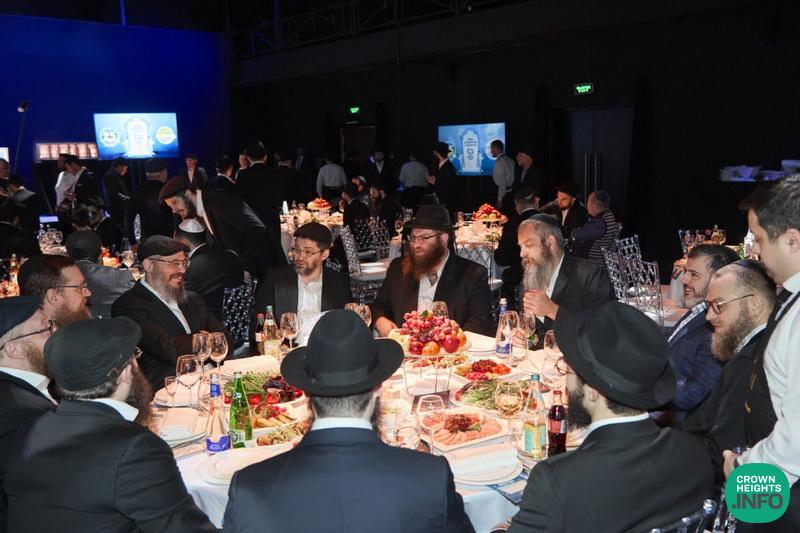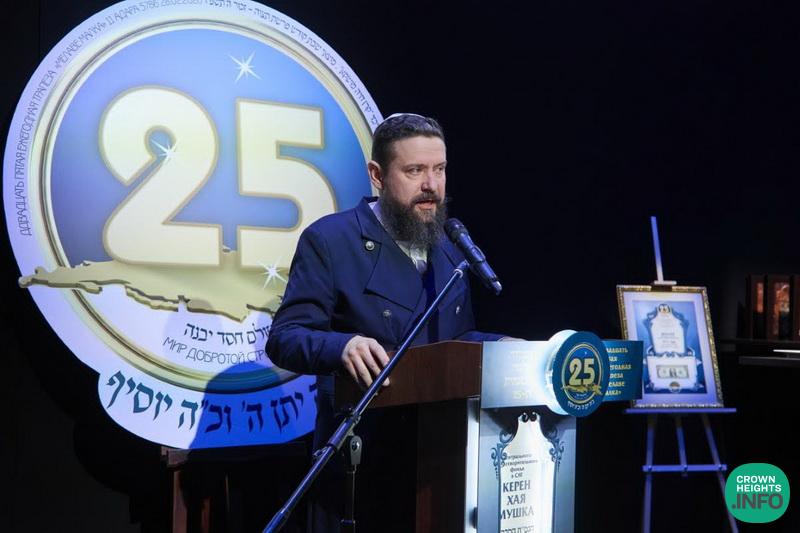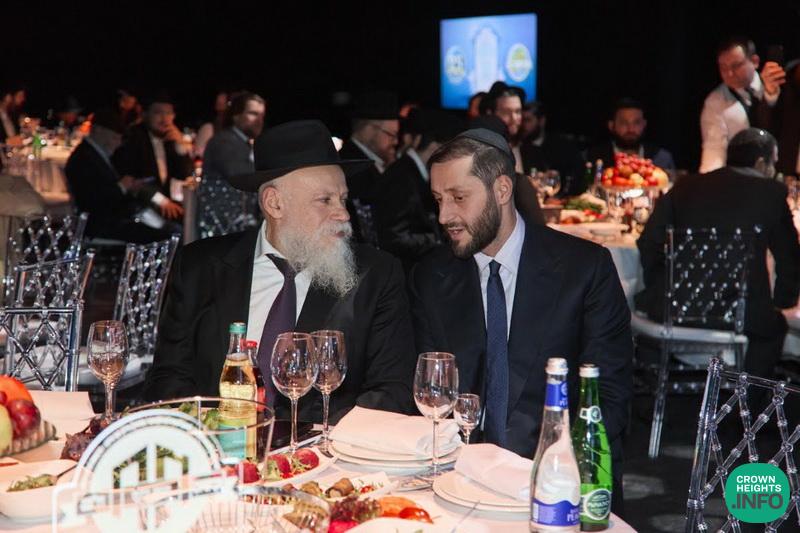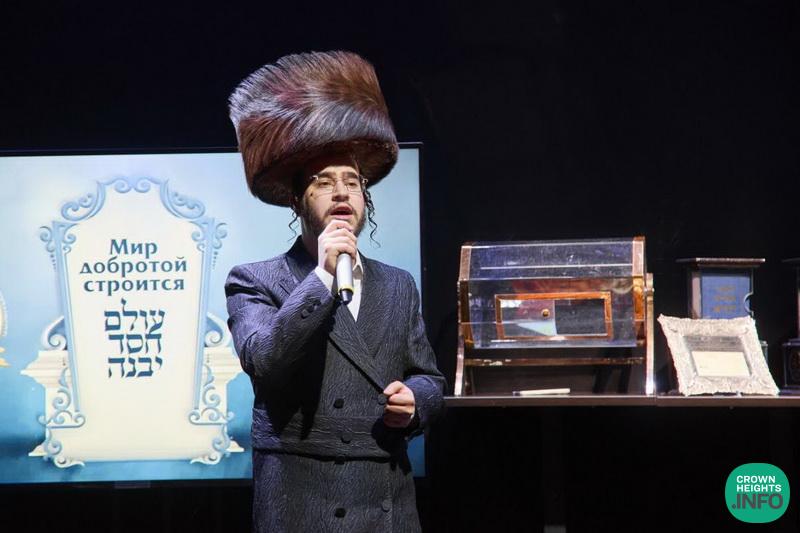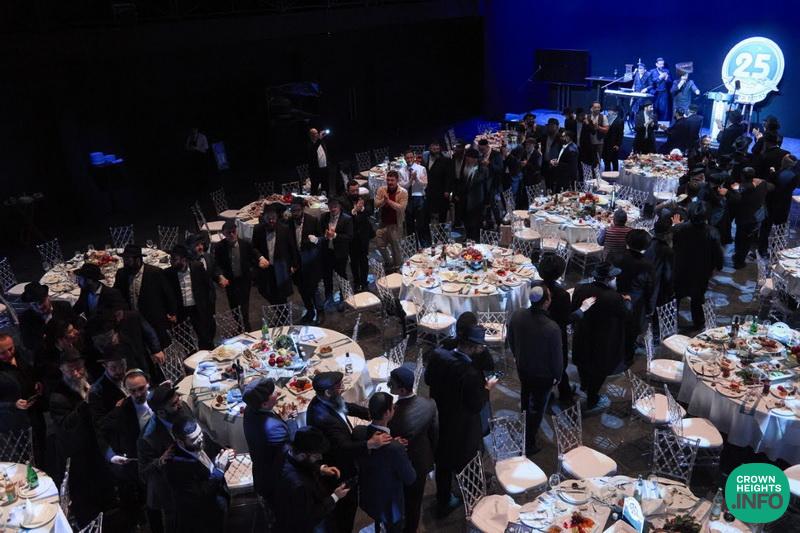

Moscow Celebrates Miracles in Eretz HaKodesh with Grand Melaveh Malkah of Hoda’ah and Chessed
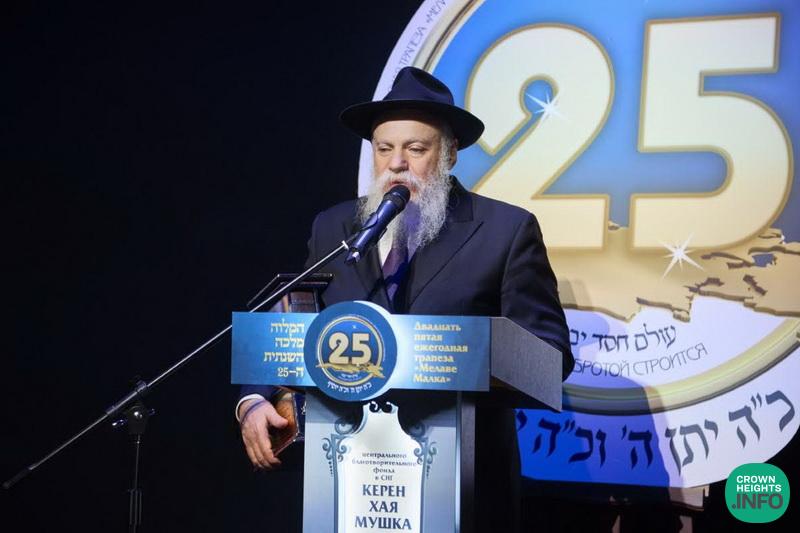
“Our eyes are now turned toward our brethren in Eretz HaKodesh. Our thoughts are with them and our tefillos are on their behalf. The period is not an easy one, but with Hashem’s help, even before Purim we will yet see true simchah. ‘Olam chessed yibaneh’ — the world is built through kindness.
The Gemara relates that two sages, Abaye bar Avin and Rabbi Chanina bar Avin, prepared their Purim seudos and sent portions to one another, and it was considered as though they had fulfilled the mitzvah of mishloach manos. What benefit was there in this? Before the exchange each one had a seudah, and afterward each one still had a seudah. Is this how a mitzvah is fulfilled? Yes! Because the very act of giving to one another — even if one merely exchanges the same portion with his friend — brings him simchah.
Giving a gift and giving tzedakah brings a person more joy than the joy of receiving. So much so that the Rambam writes that through this one resembles the Ribbono shel Olam. Since Hashem is the source of all simchah, it is understood that when we emulate His ways, it brings us true joy.”
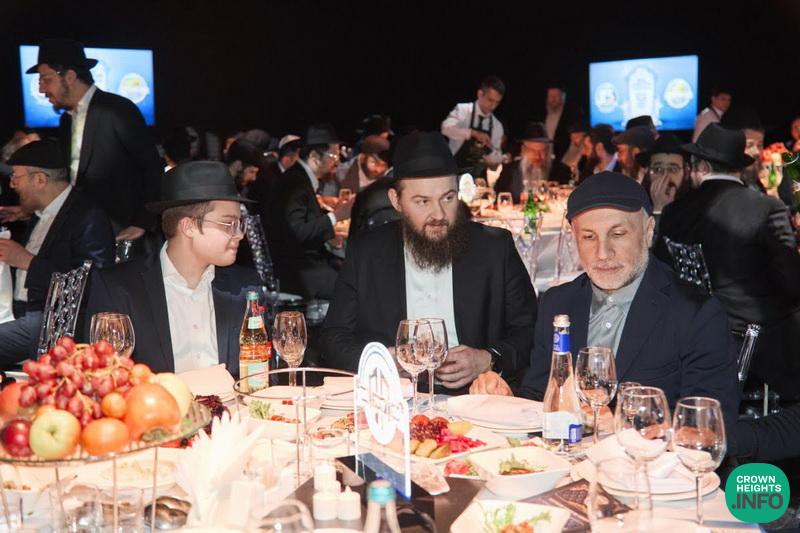
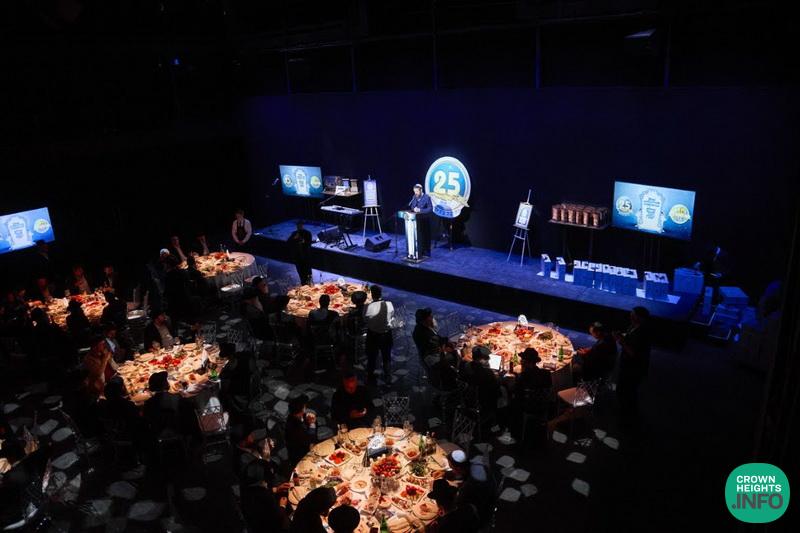
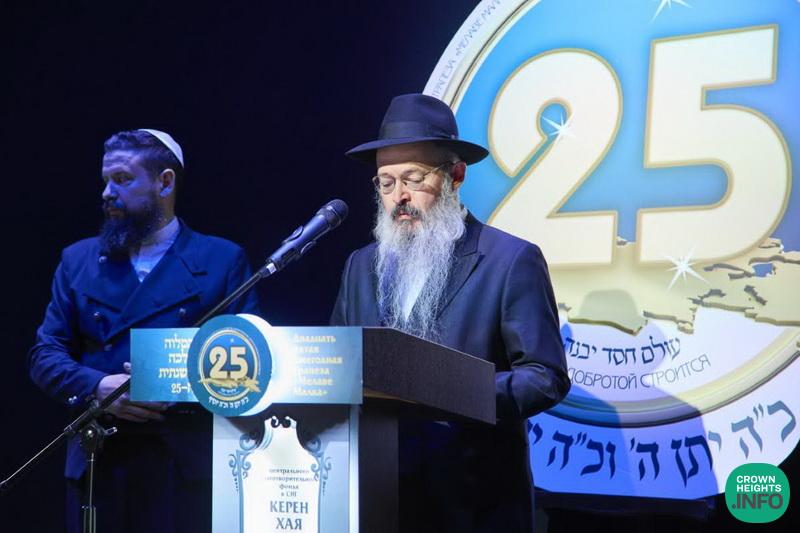
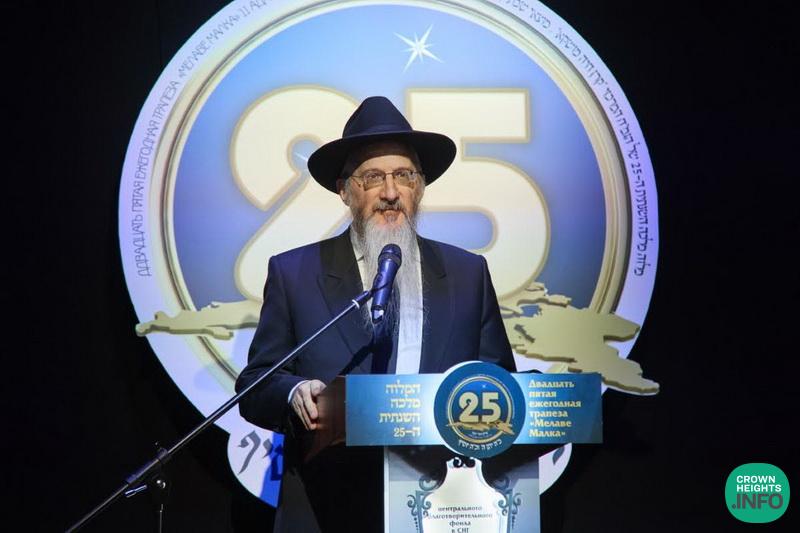
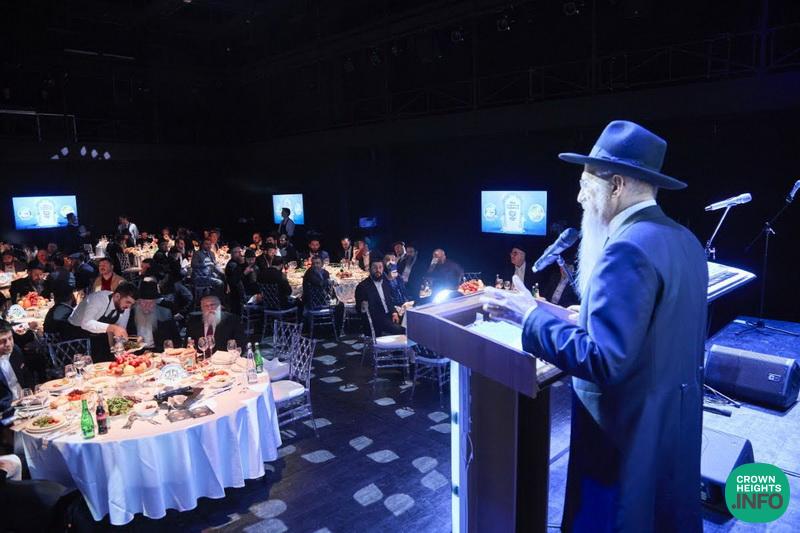
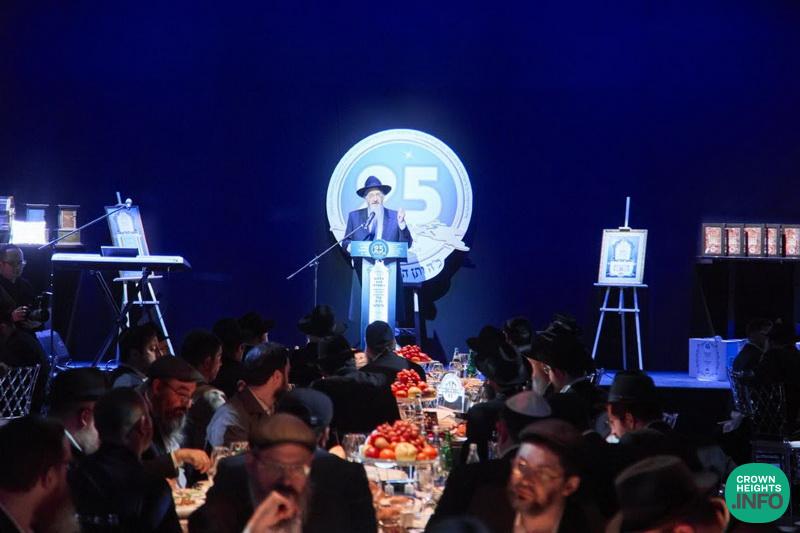
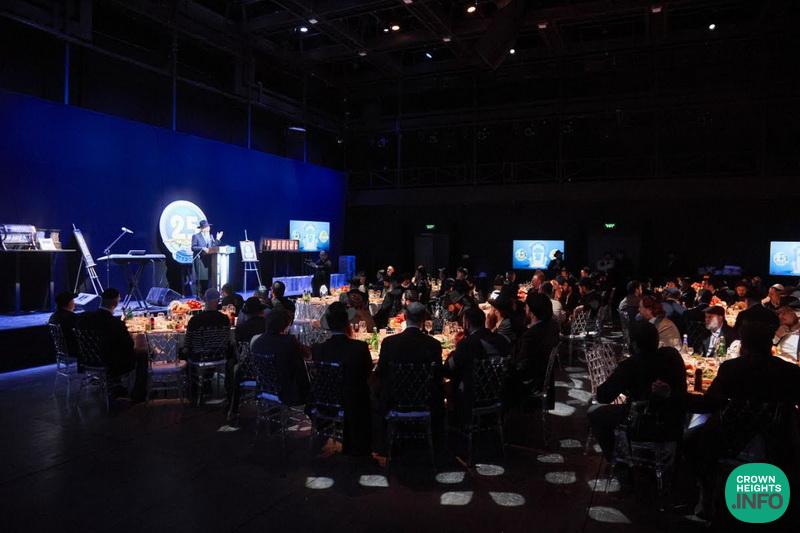
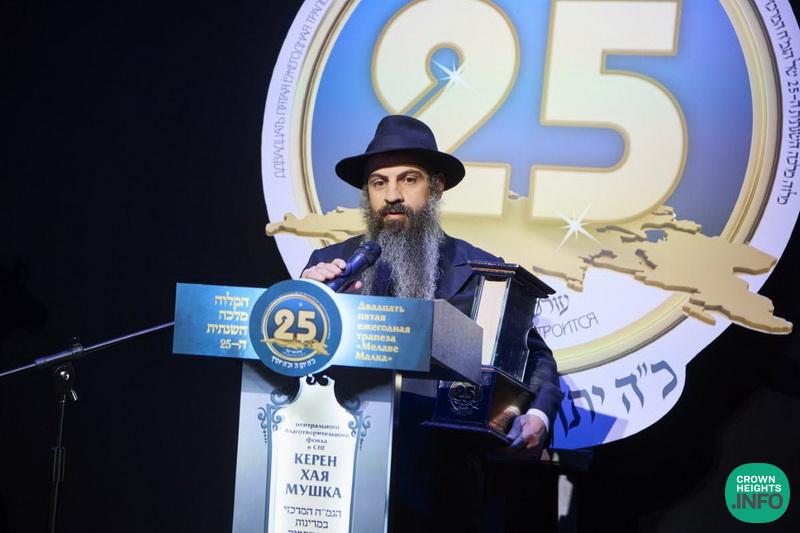
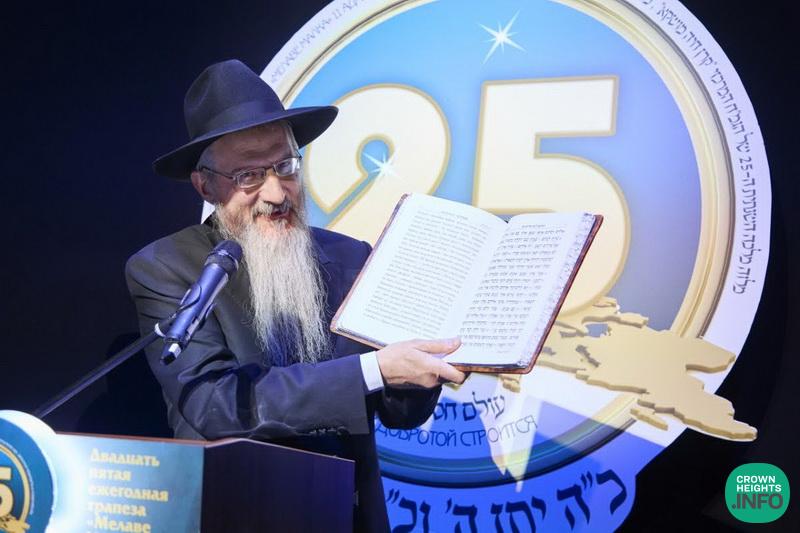
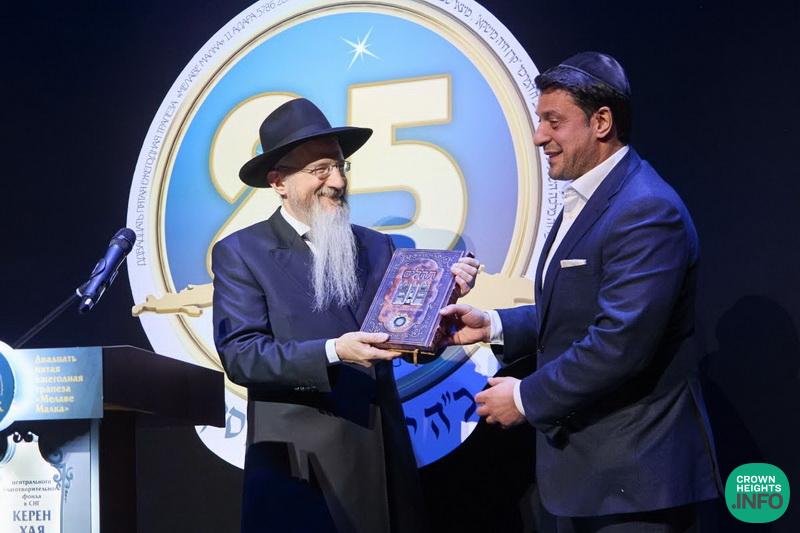
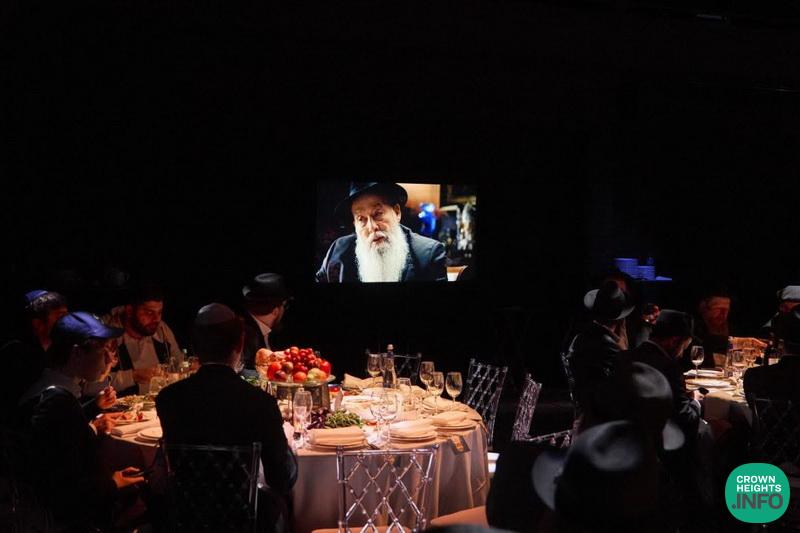
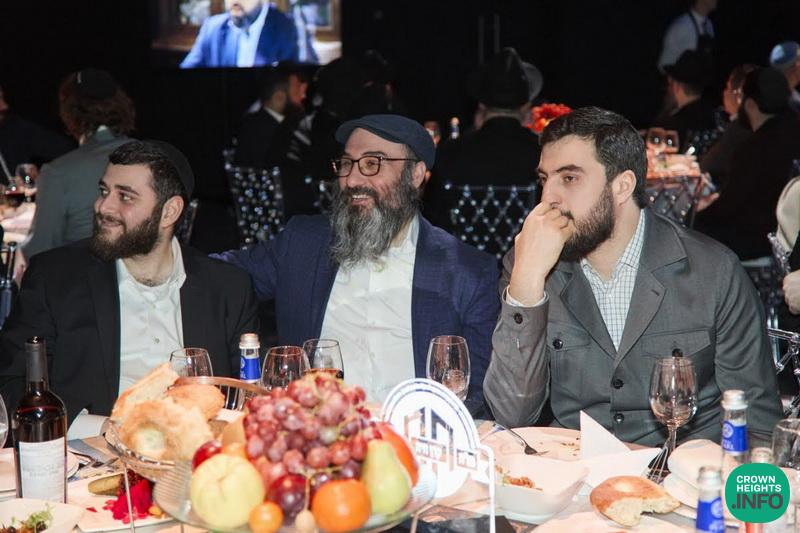
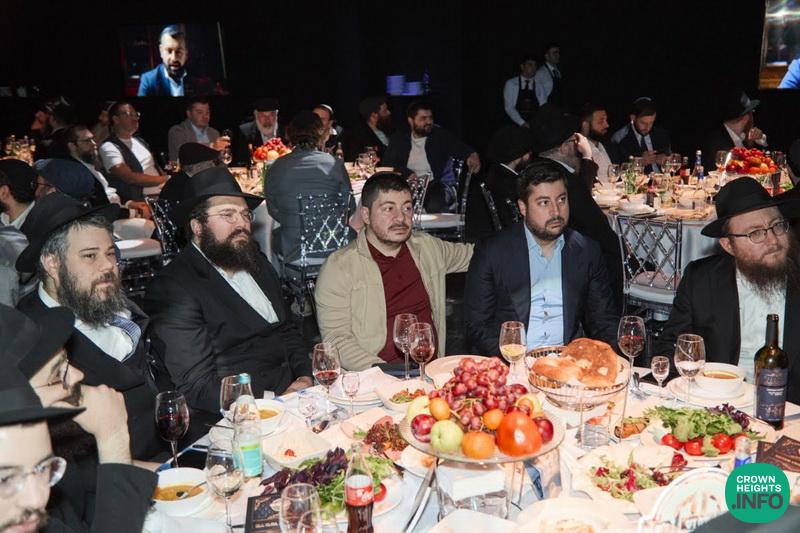
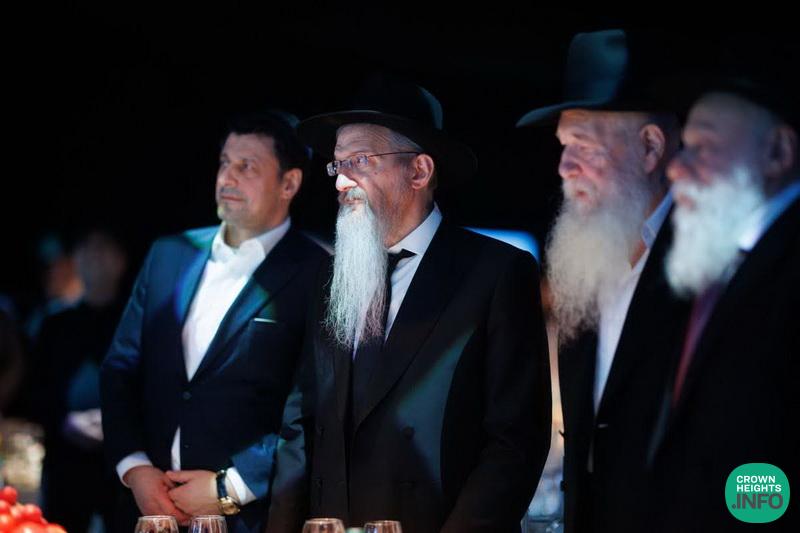
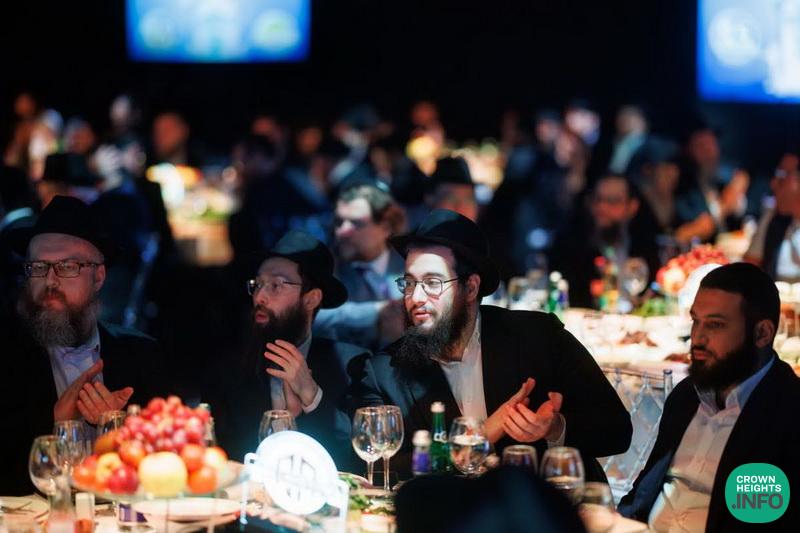
With these words, the Chief Rabbi of Russia, HaGaon Rabbi Berel Lazar shlita, opened his central address at the annual gathering for friends and supporters of the “Central Gemach Fund of the Former Soviet Union,” which this year took the form of a seudas hoda’ah to Hashem for the miracles and wonders performed for our brethren dwelling in Eretz HaKodesh.
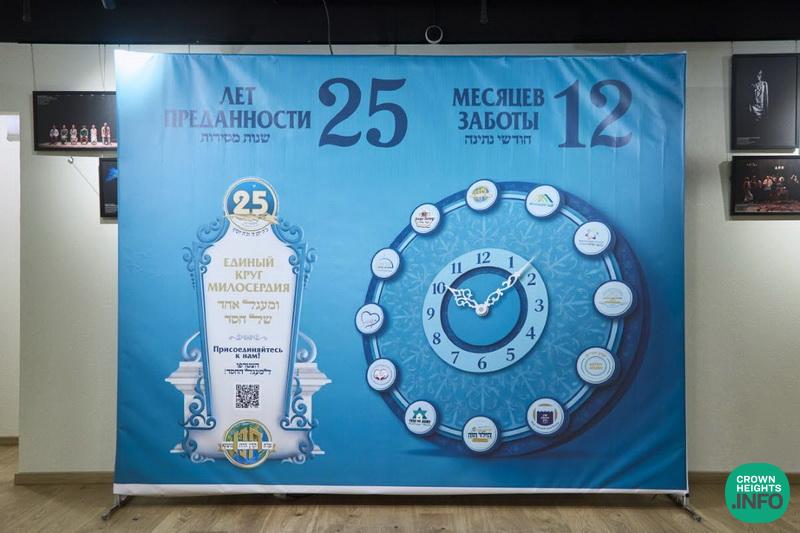
This annual event is held each year close to the yahrtzeit of the young shlucha, Chaya Mushka a”h Lazar, the eldest daughter of yibadel lechayim tovim the Chief Rabbi shlita. Since the establishment of the organization twenty-five years ago, the vast majority of shluchim and rabbanim throughout the countries of the former Soviet Union have been supported and assisted through it. Day after day, the directors of the gemach, together with their devoted staff, sit and carefully review each request, examining every matter and serving as a listening ear to all those in need.
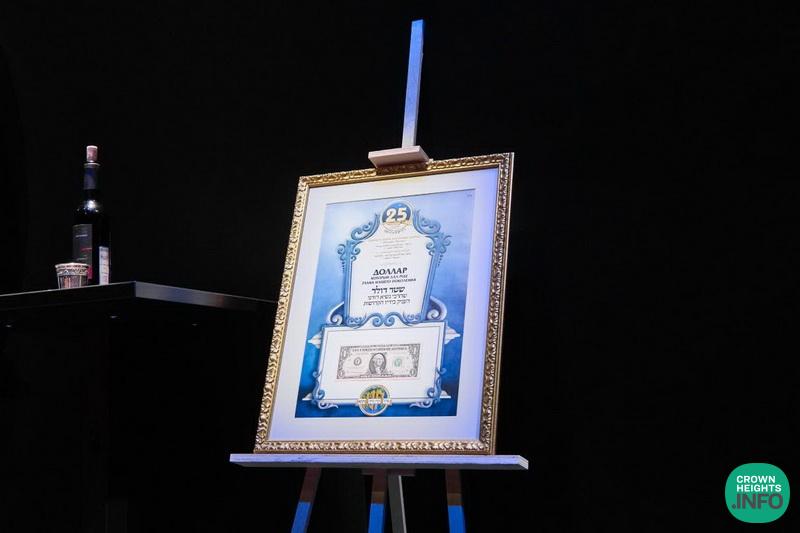
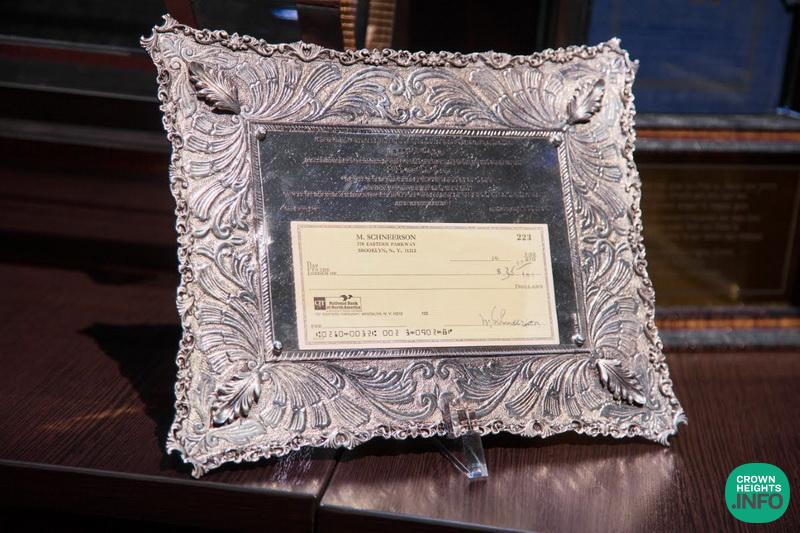
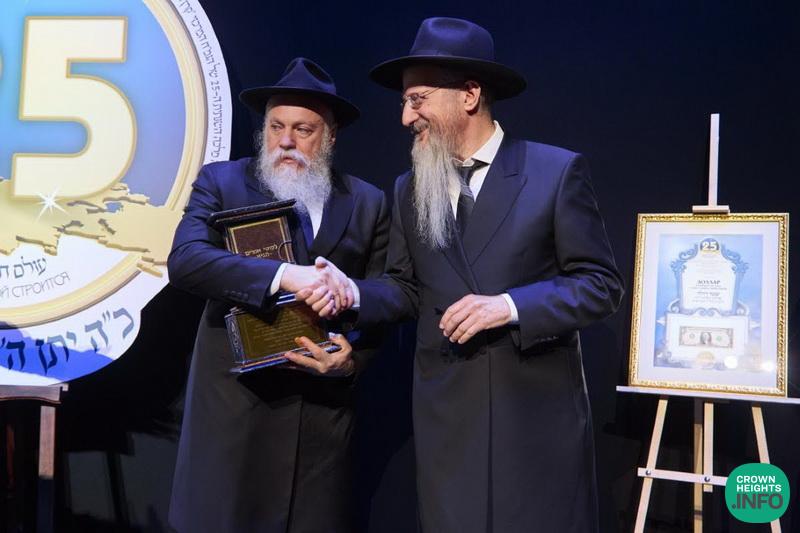
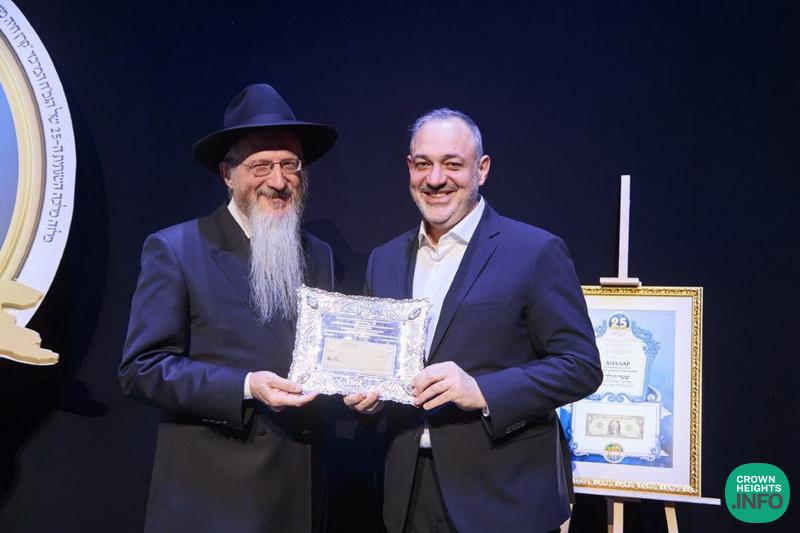
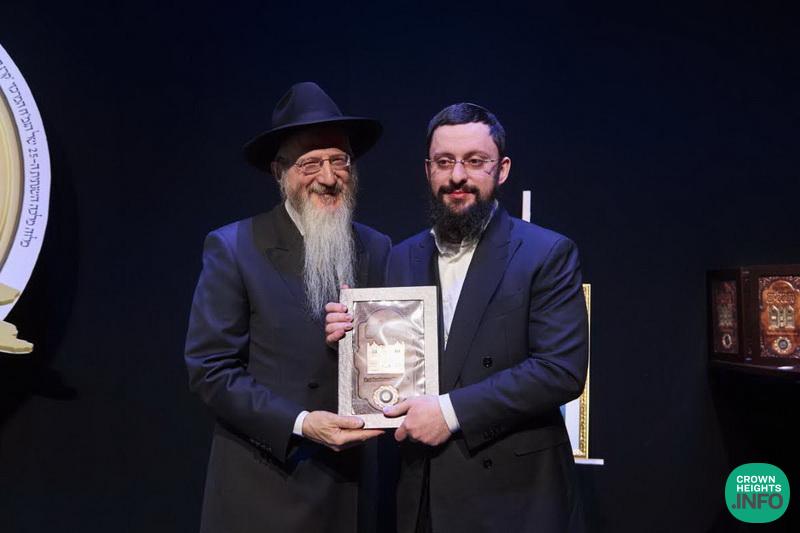
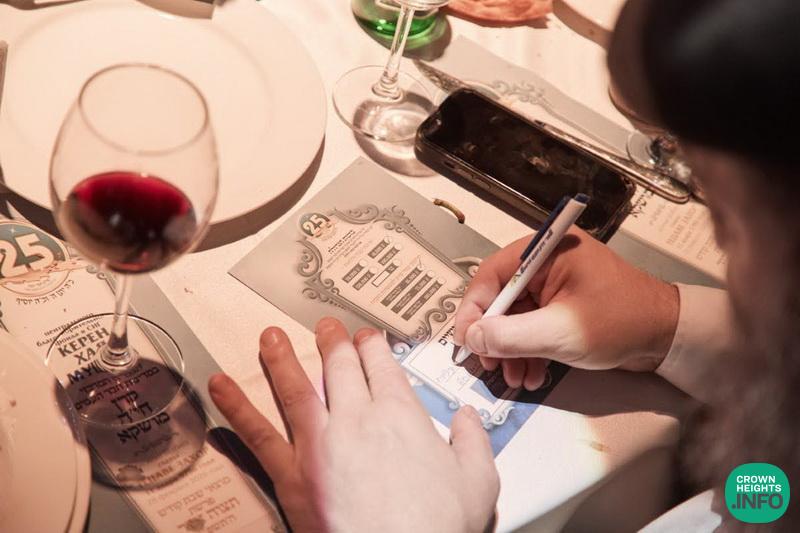
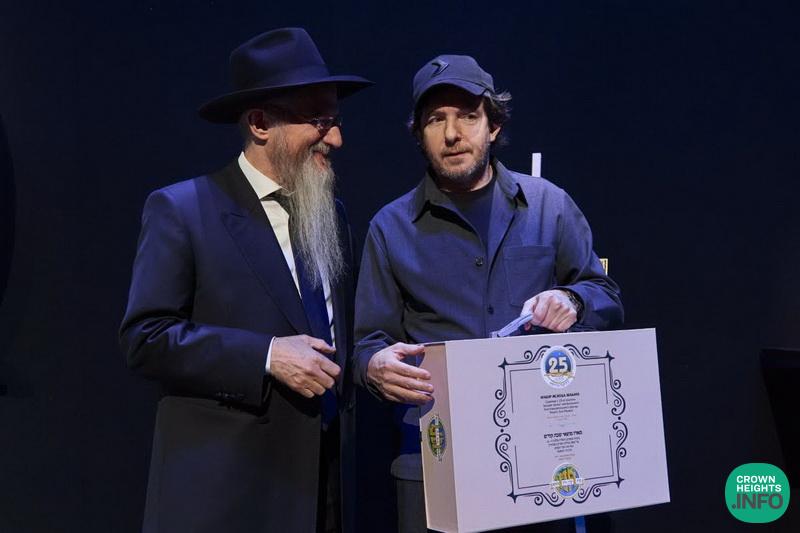
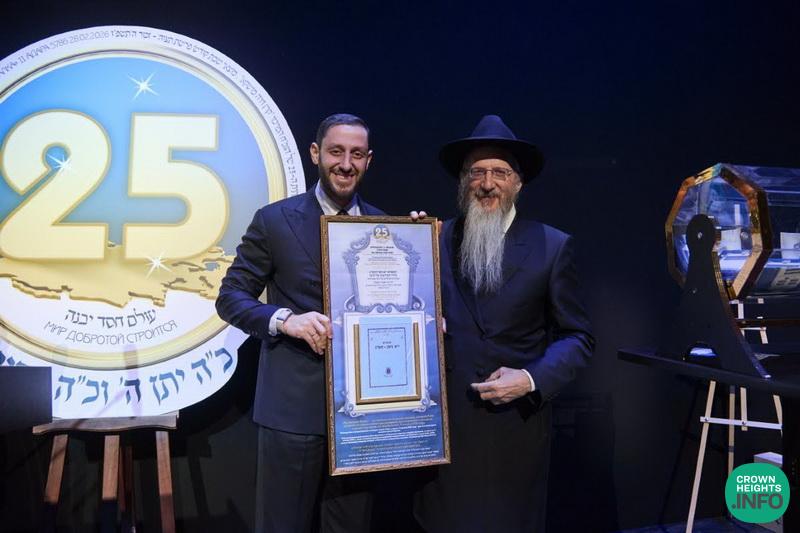
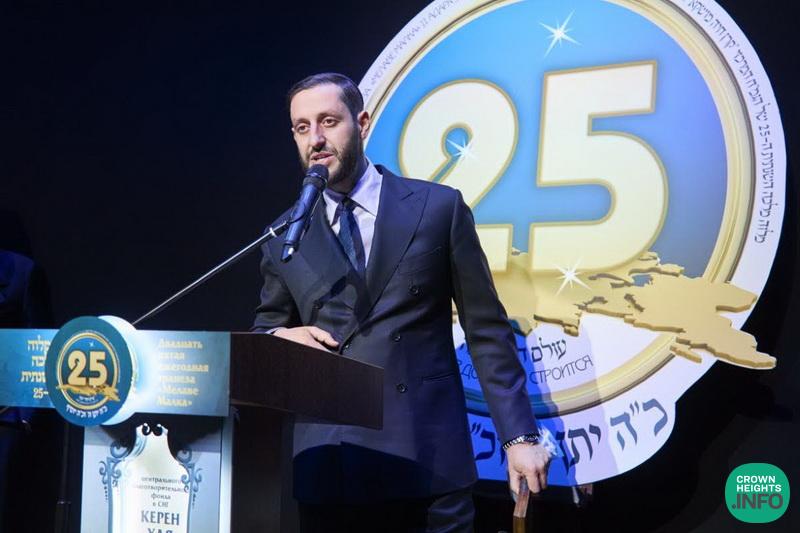
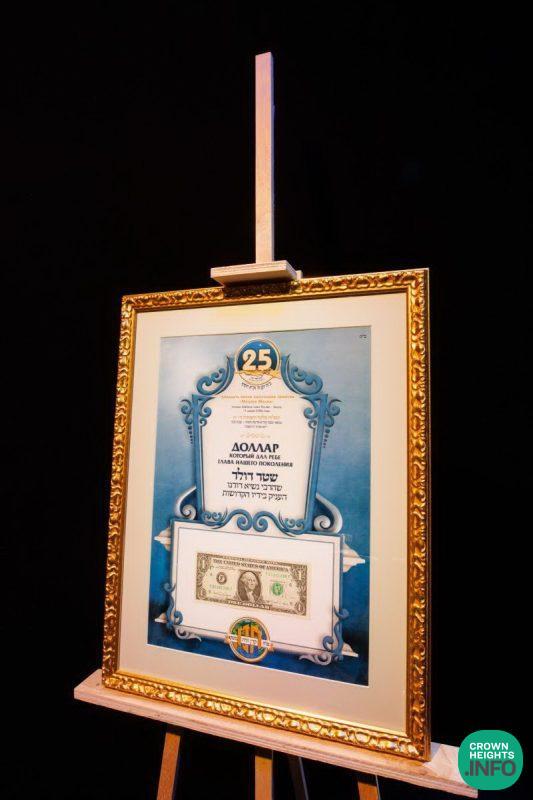
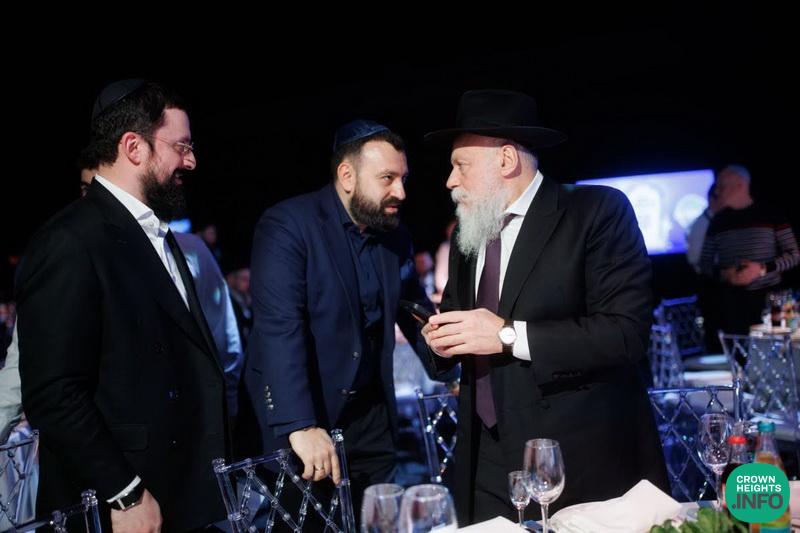
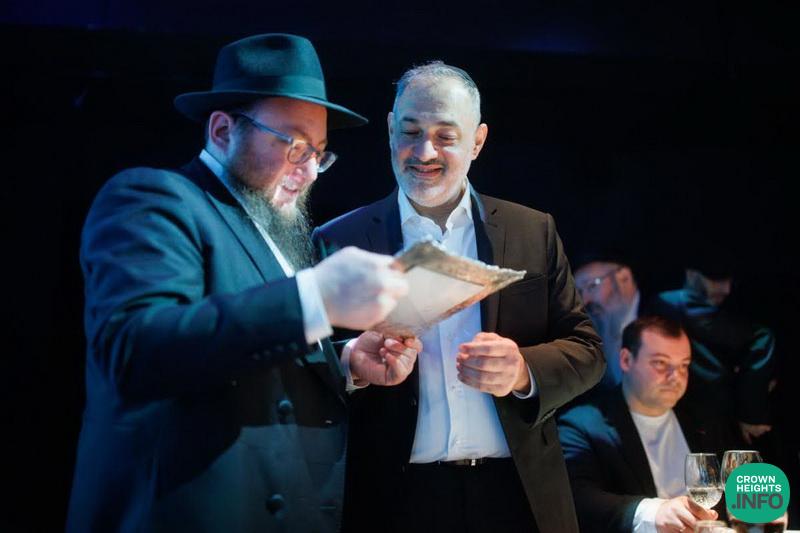
This year’s grand seudah was generously sponsored by the President of the Federation of Jewish Communities of the CIS, philanthropist R’ Lev Leviev, one of the earliest supporters of the gemach fund. Representing him was his son-in-law, R’ Dovid Halevi Eliezerov, who received on his behalf a unique and rare gift from the gemach administration — a cheque bearing the holy signature of the Lubavitcher Rebbe zy”a for the sum of twice chai dollars.
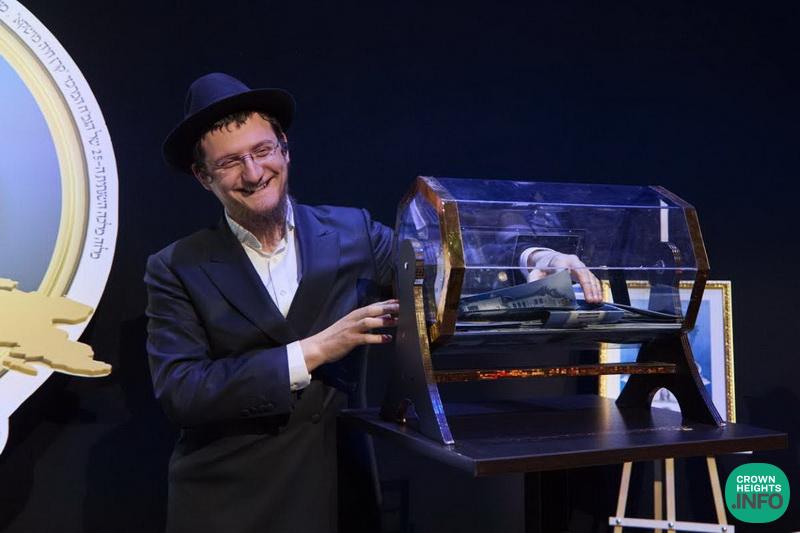
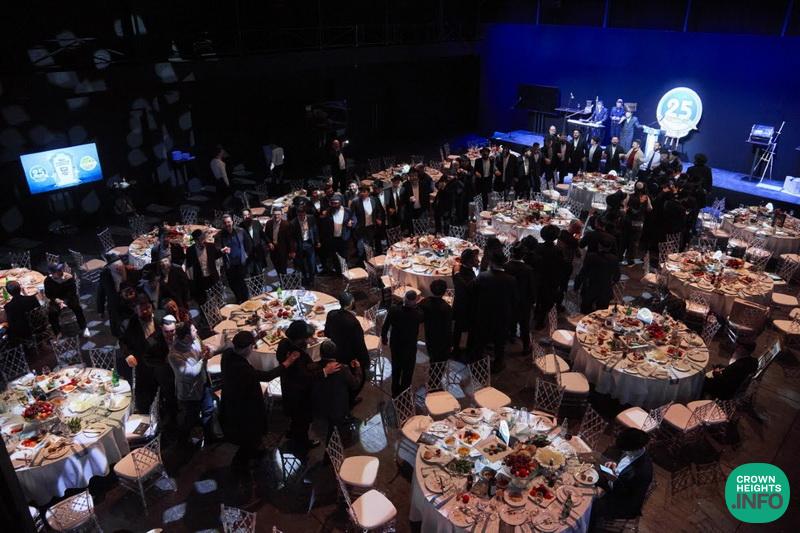
The magnificent and beautifully arranged celebration was produced by the administration of the Jewish Chesed Center “Shaarei Tzedek” in the Marina Roscha neighborhood of Moscow, within whose walls the fund has operated since its founding. Every applicant, whoever he may be, is received with dignity, and every effort is made to assist through the various avenues of support that have developed over the years — including weekly distribution of food packages, assistance upon the birth of a child, substantial support toward weddings, arranging simchos, and many other forms of help. The gemach has thus become one of the leading Jewish chessed institutions in the world, serving as a model for many others, and inspiring the establishment of similar loan funds in numerous communities across the globe.
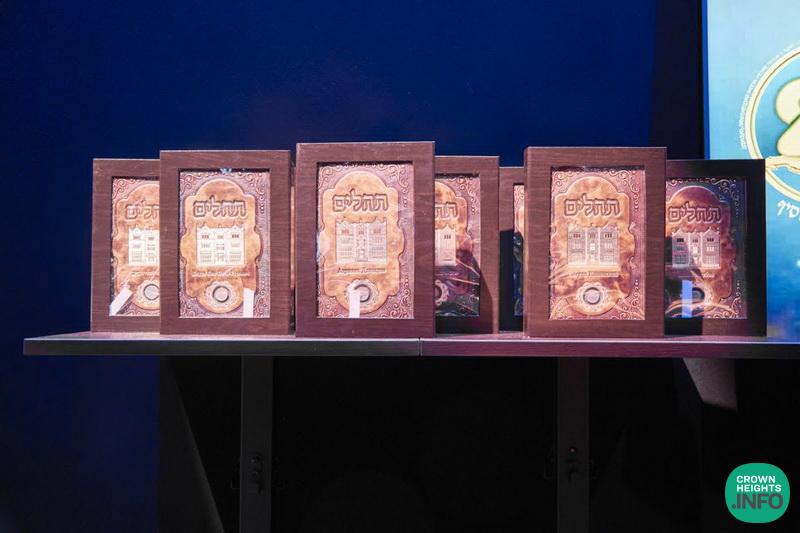
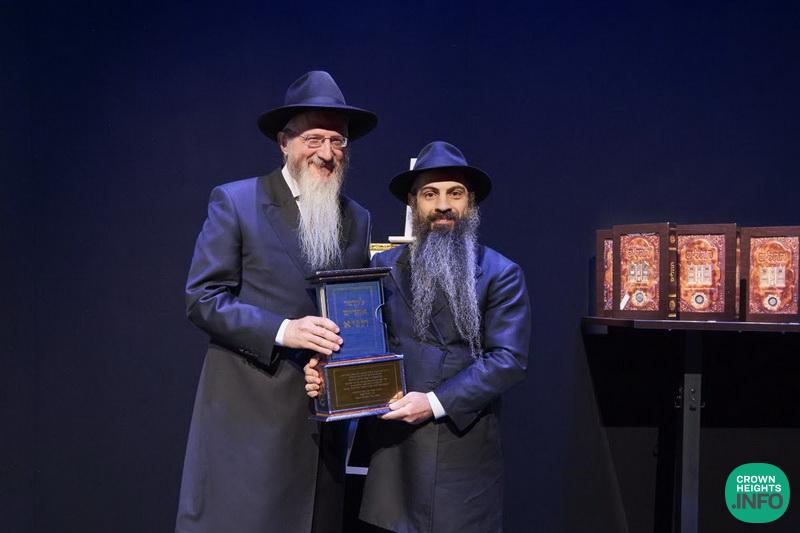
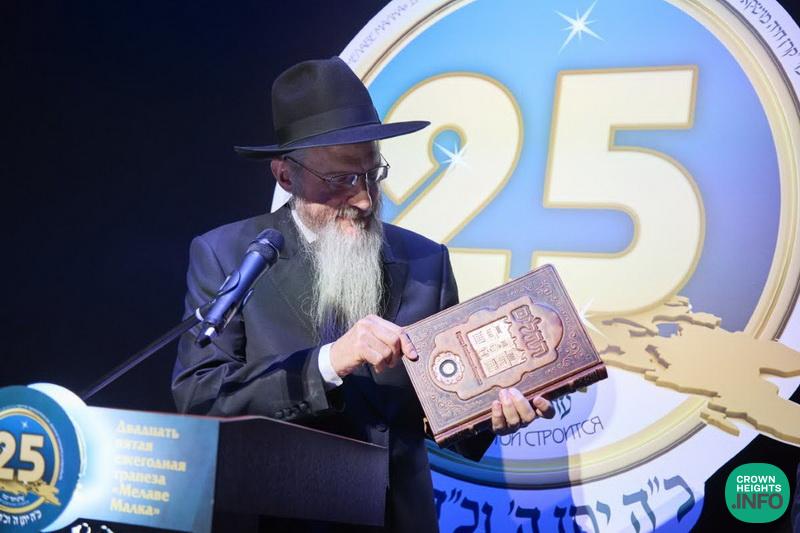
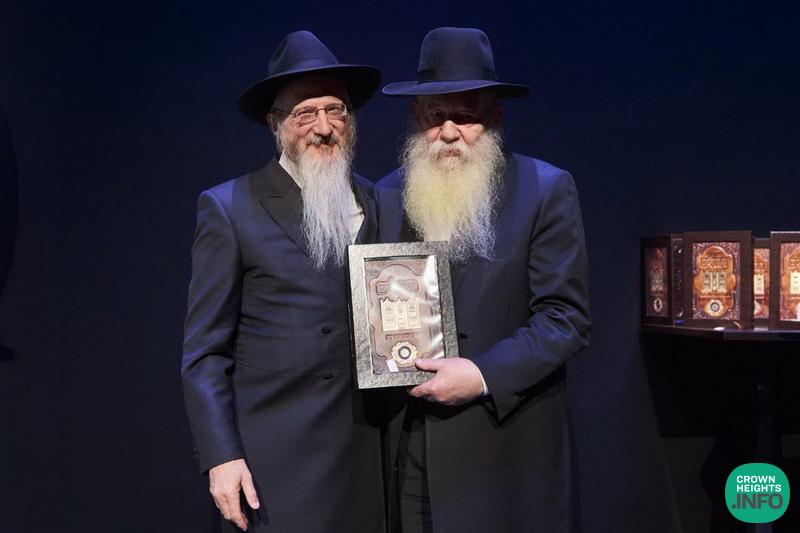
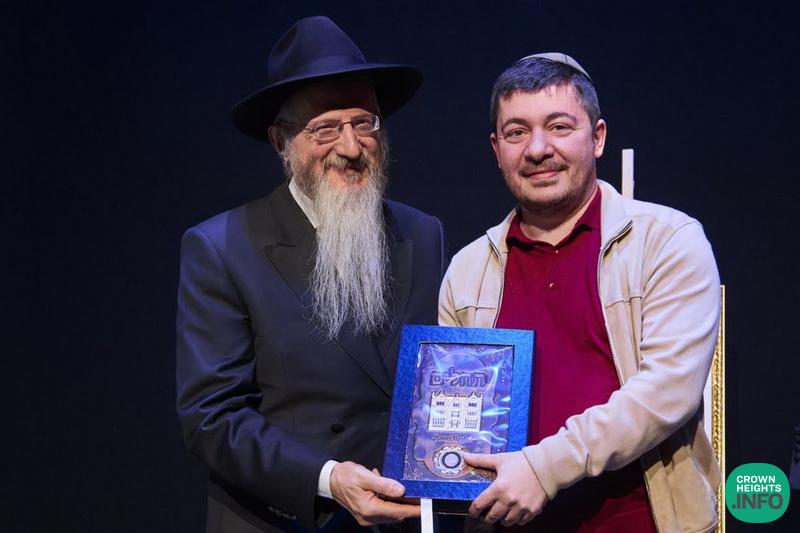
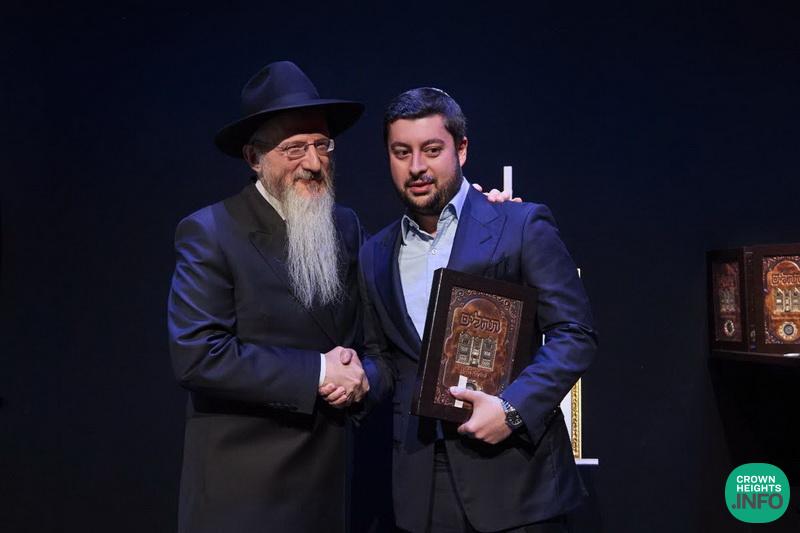
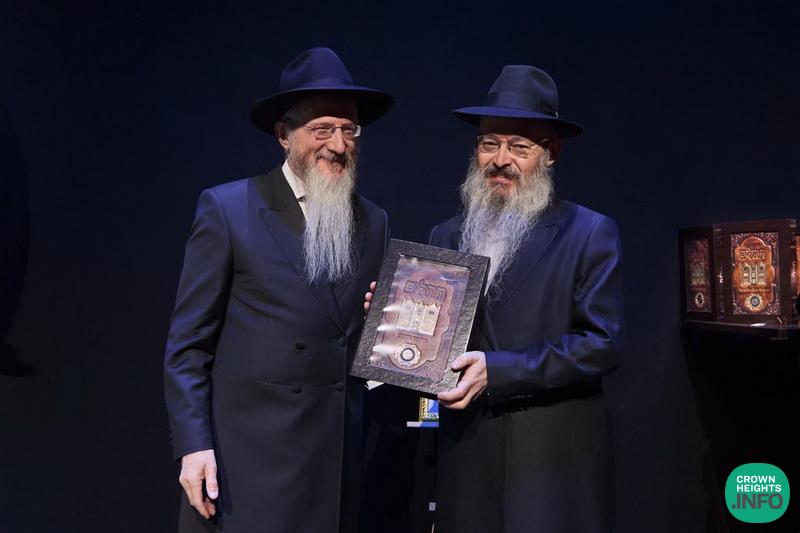
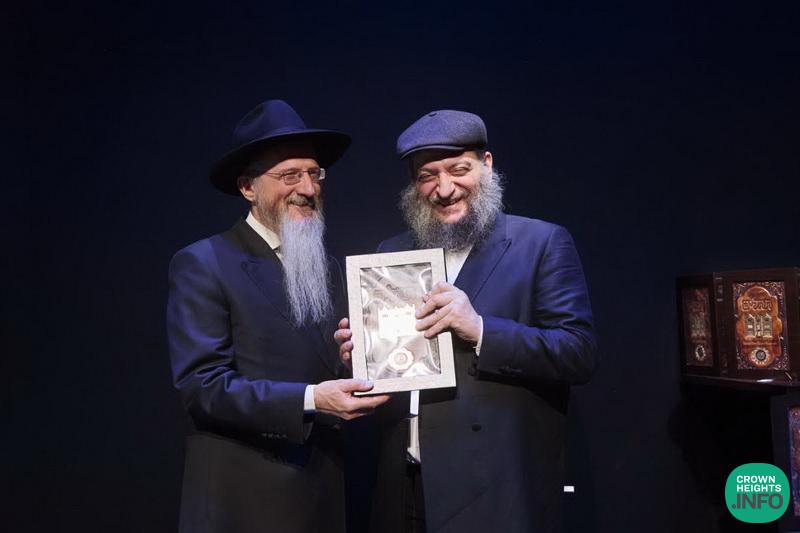
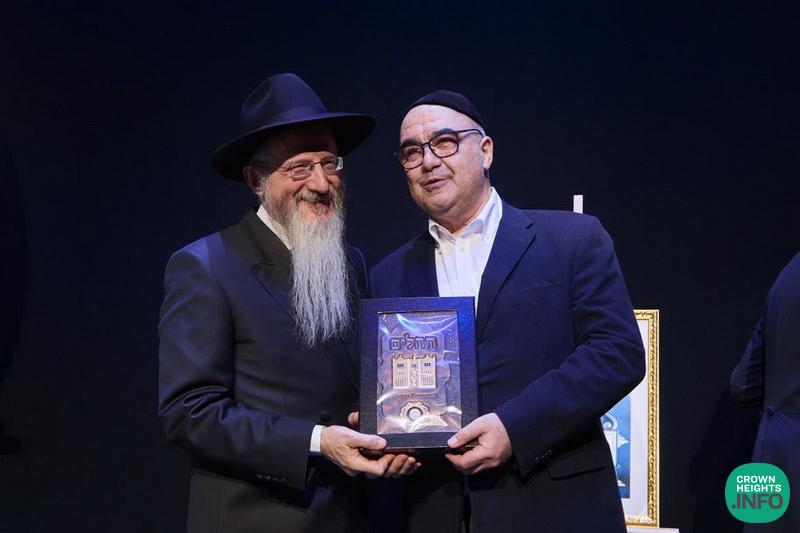
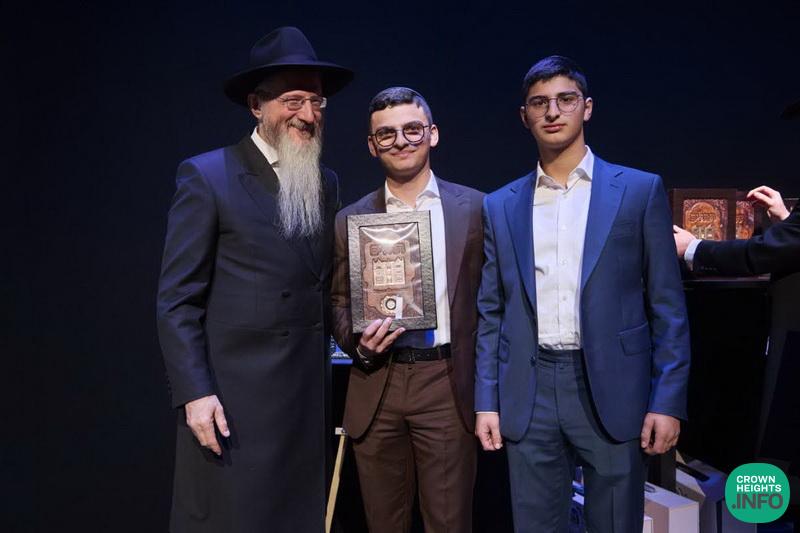
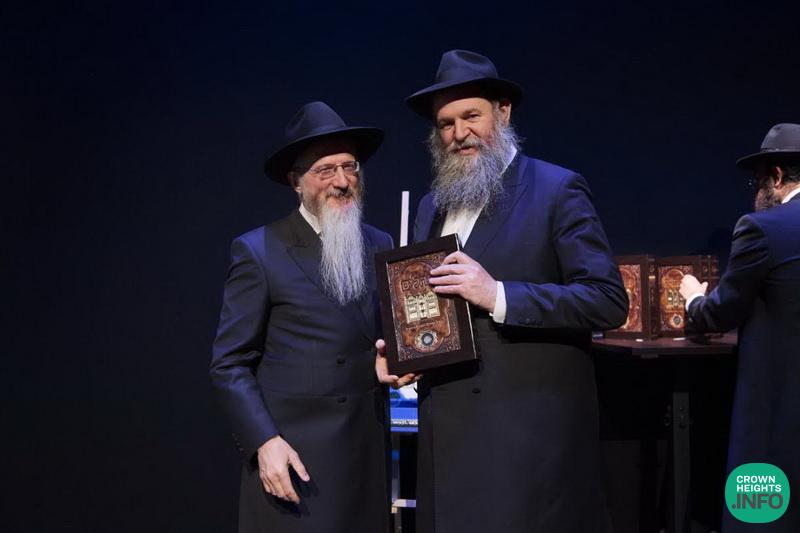
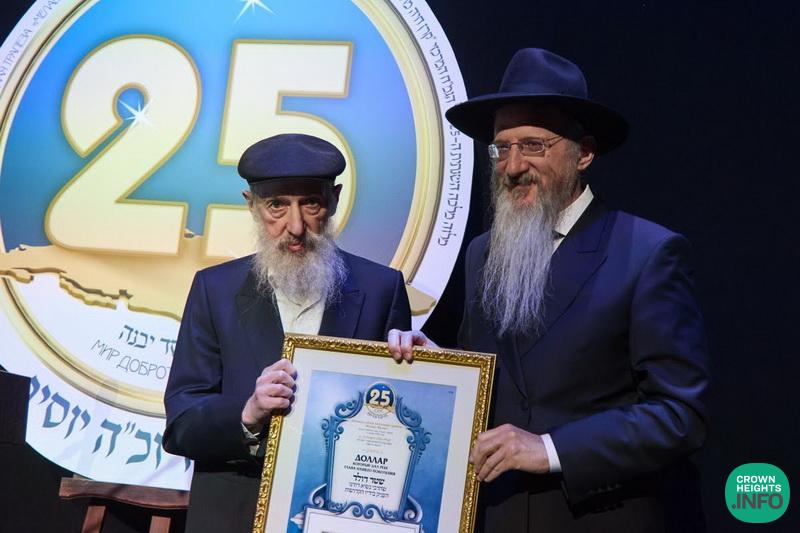
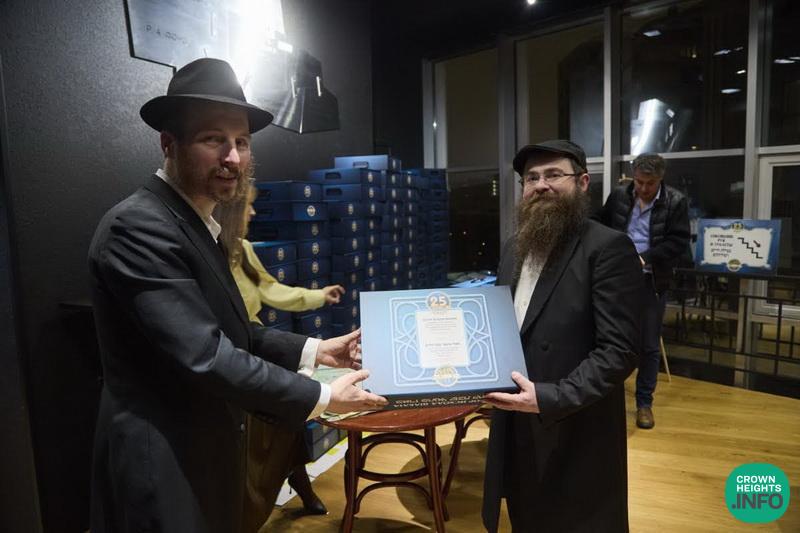
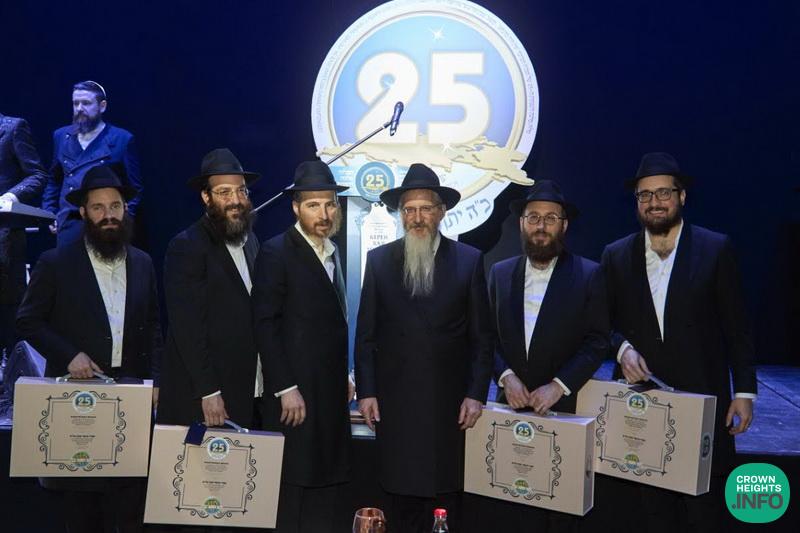
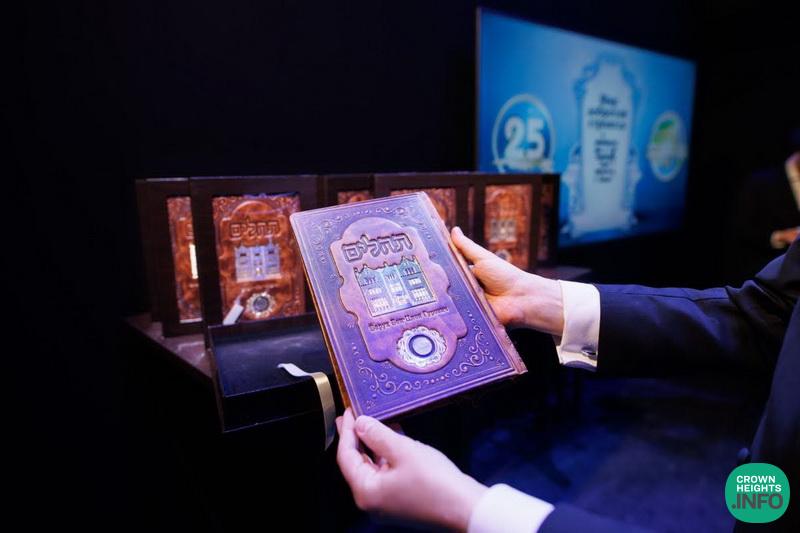
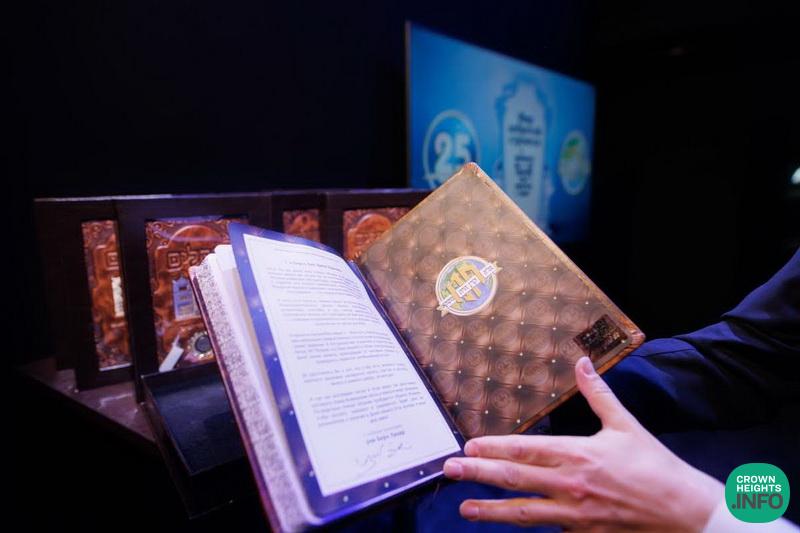
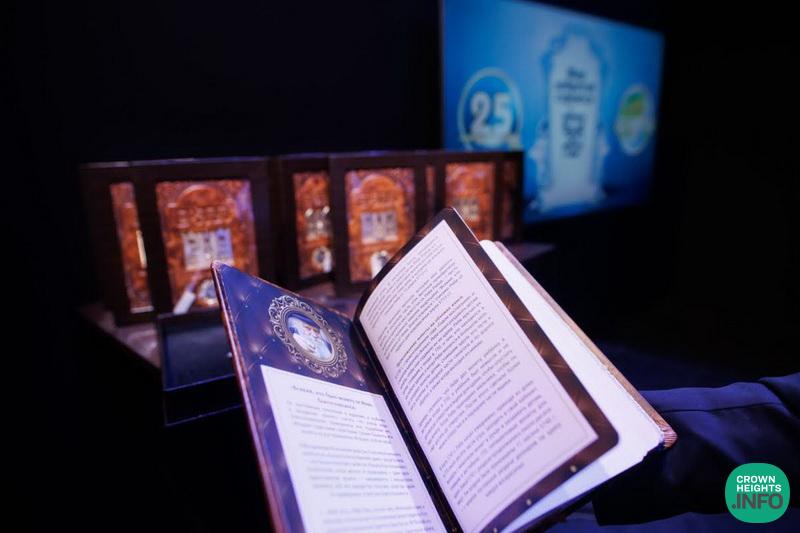
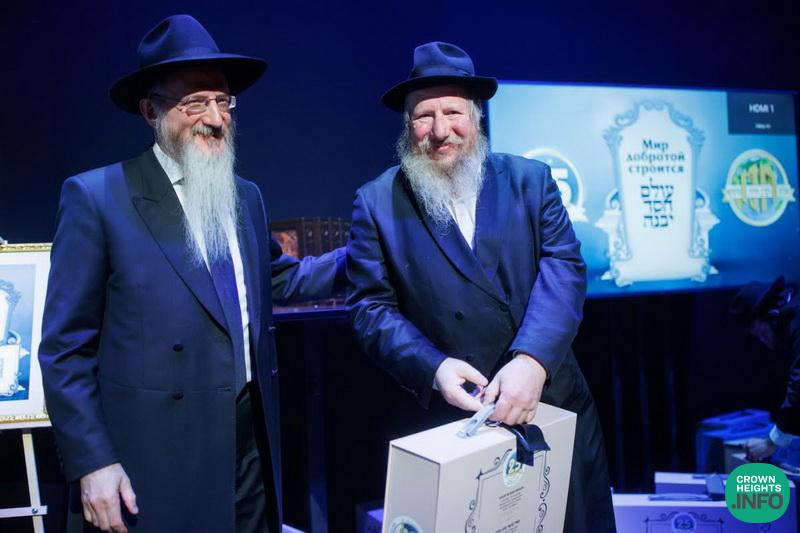
Special tributes of appreciation were presented to the President of the Federation of Jewish Communities of Russia, Rabbi Alexander Boroda; to the founder and chairman of the “770 Russia” Fund, Rabbi Yehuda Davidov; and to the president of the STMEGI Foundation, Mr. German Zakharyayev. The Chief Rabbi presented each of them with a copy of the holy Tanya and a coin with a blessing from the holy hands of the Lubavitcher Rebbe, artistically incorporated into breathtaking displays. All who saw the tributes expressed their admiration at the unique beauty of these gifts, as well as the other presents distributed later in the evening to the supporters and friends.
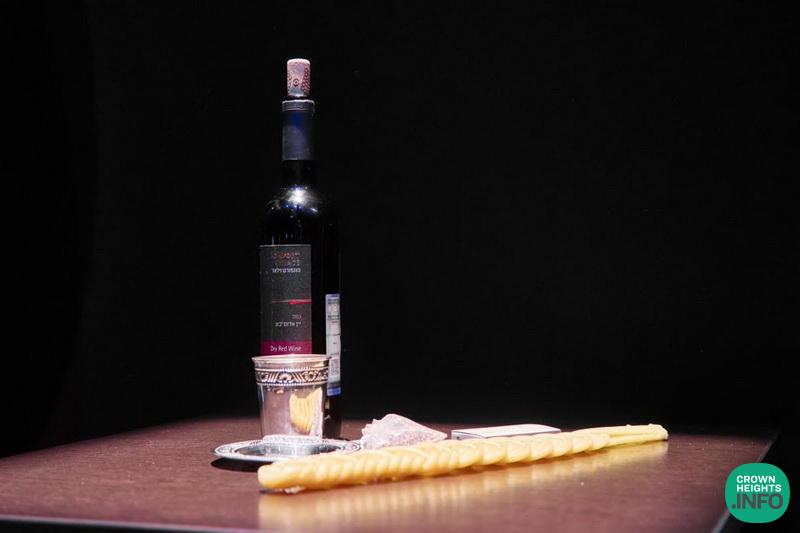
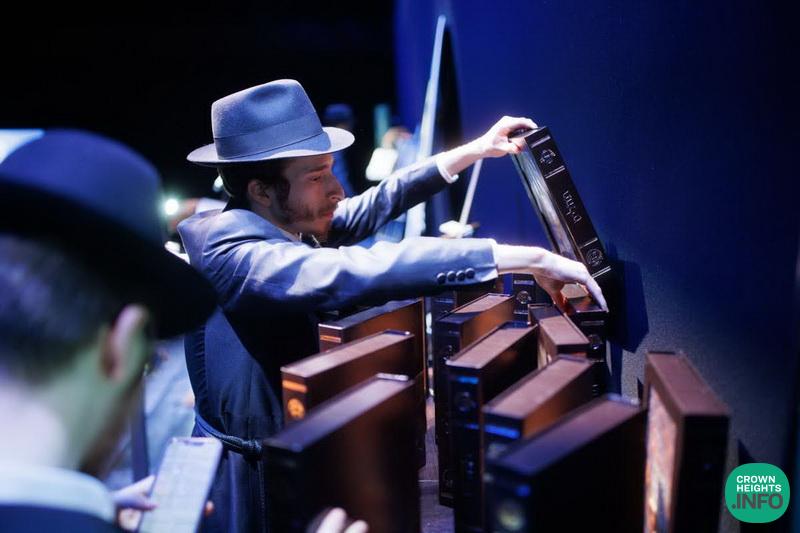
A special surprise awaited all participants as they departed at the conclusion of the festive evening: a unique and original Motzaei Shabbos set, including a tray, kiddush cup, candlestick with havdalah candle, besamim jar, two cups for the custom of “chamin on Motzaei Shabbos,” two candlesticks for lighting in honor of Motzaei Shabbos, a tzedakah box, and a booklet in Lashon HaKodesh and Russian, specially written and edited by the director of the gemach, containing detailed guidance with the tefillos, halachos, and customs for Motzaei Shabbos.
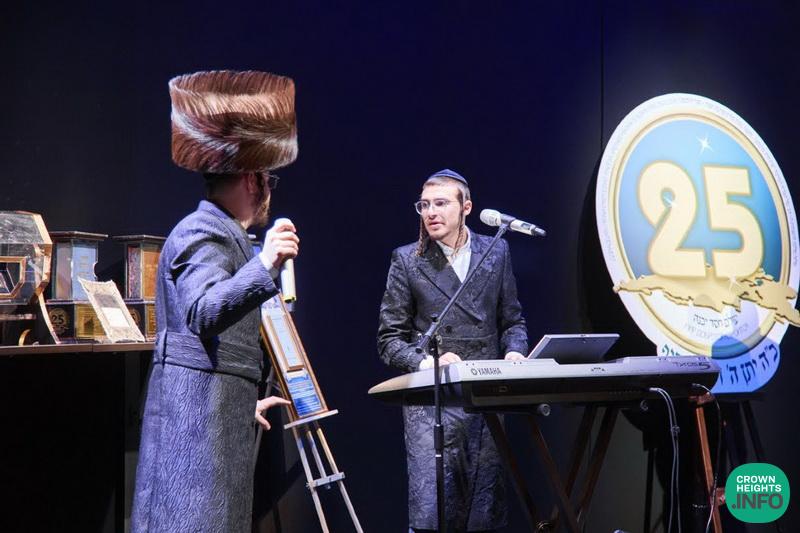
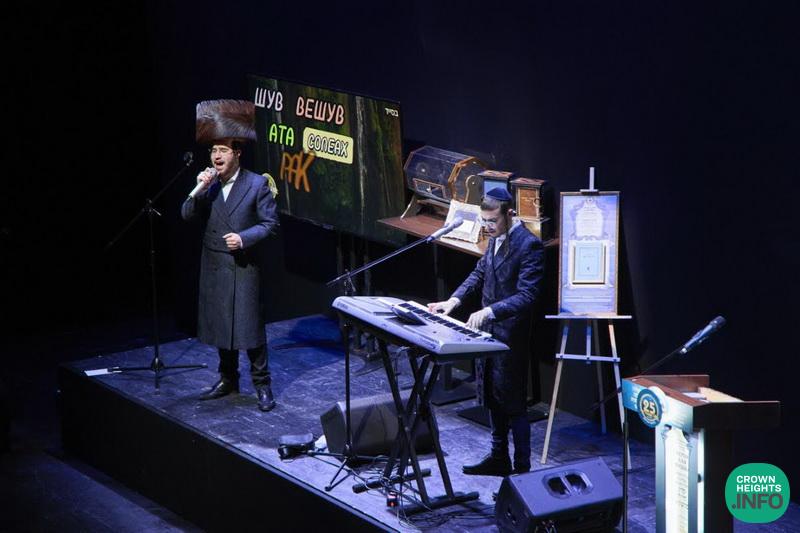
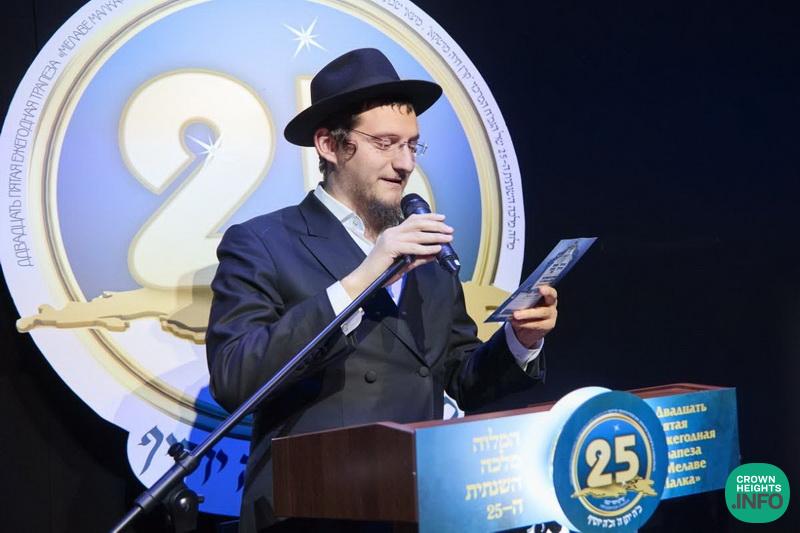
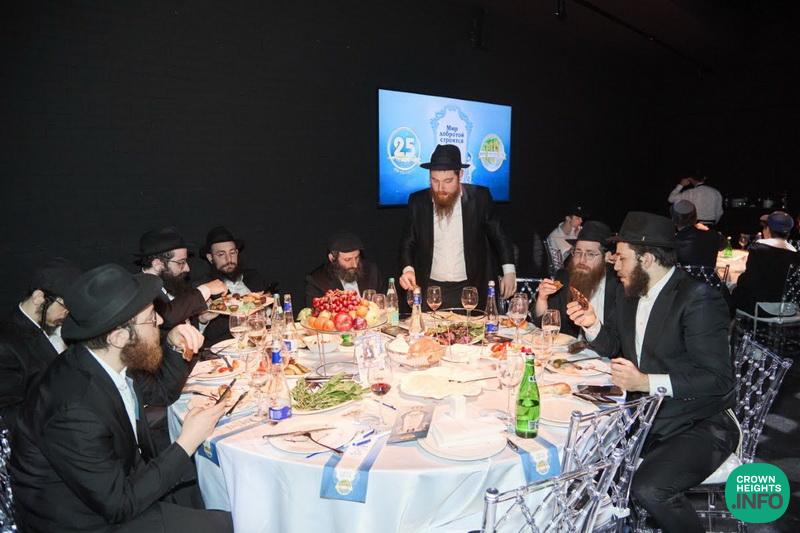
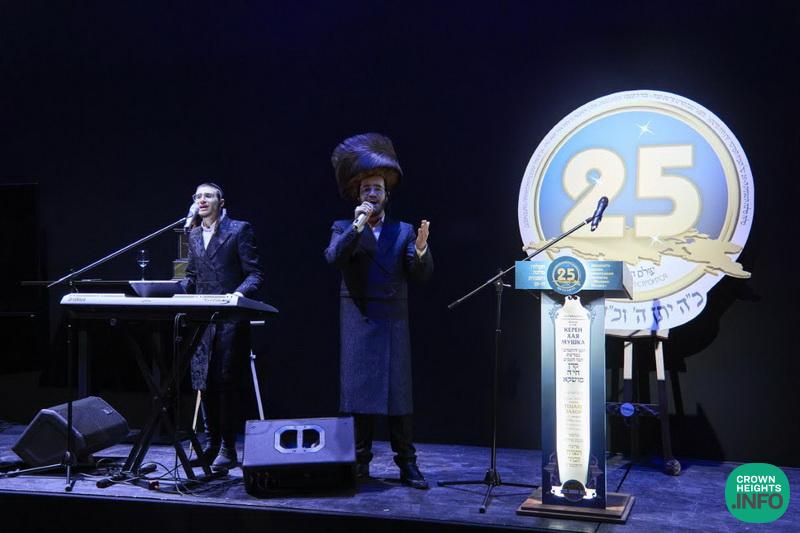
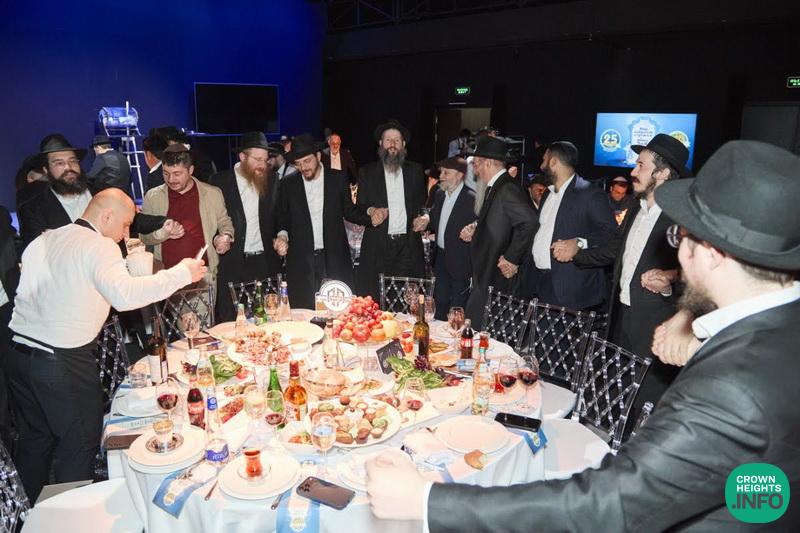
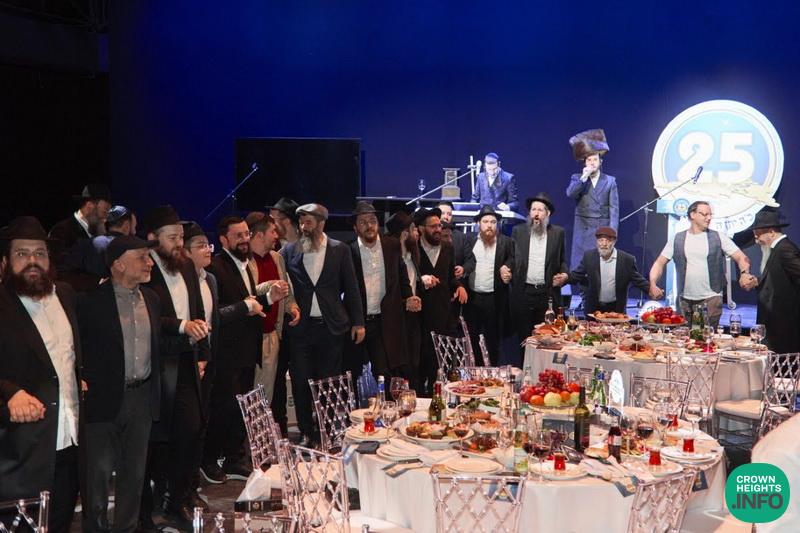
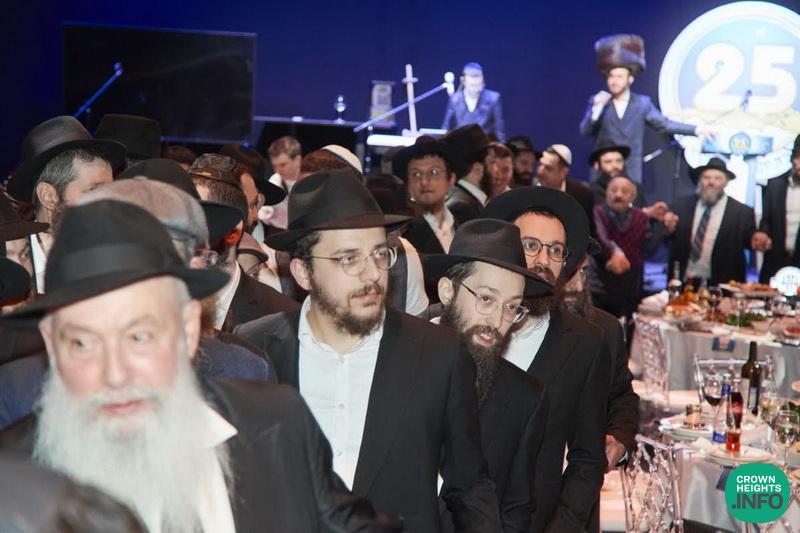
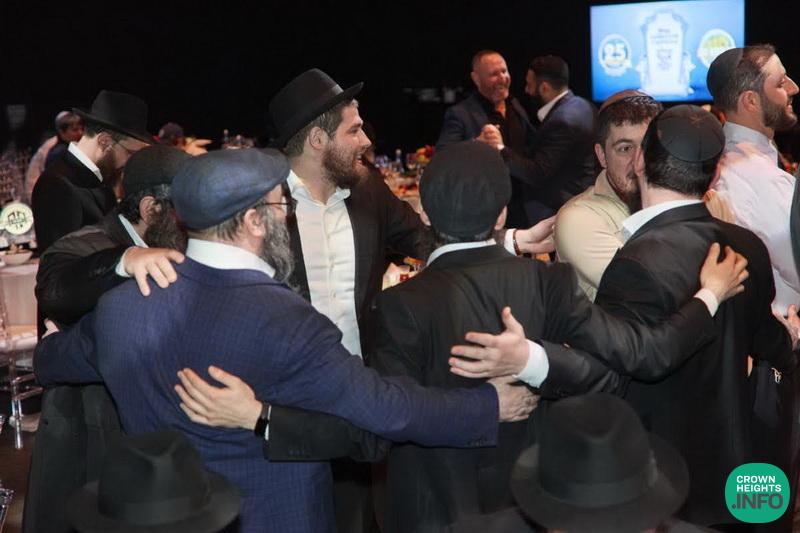
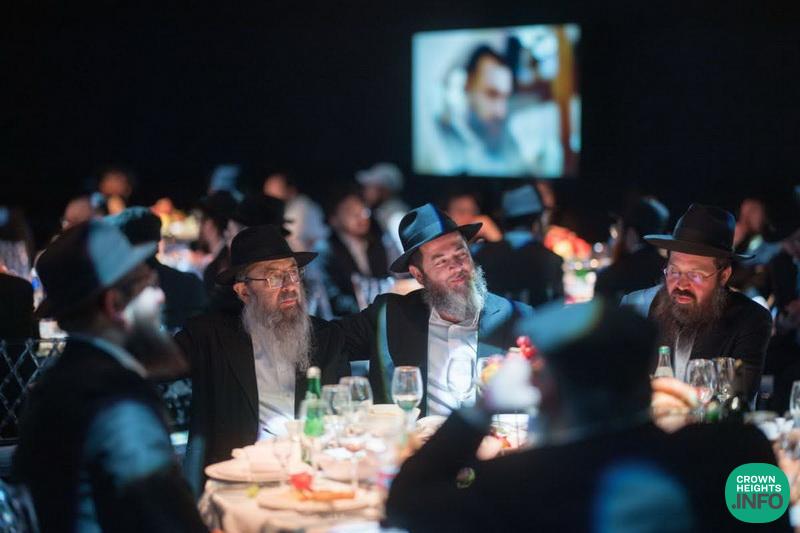
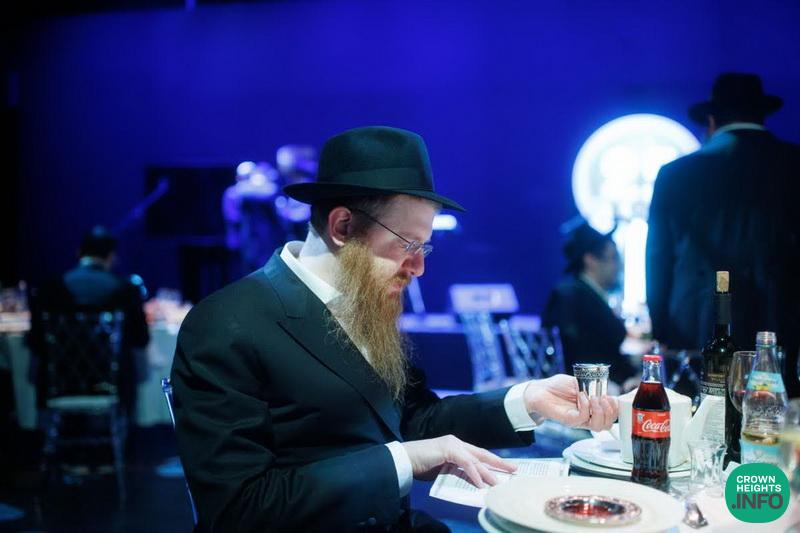
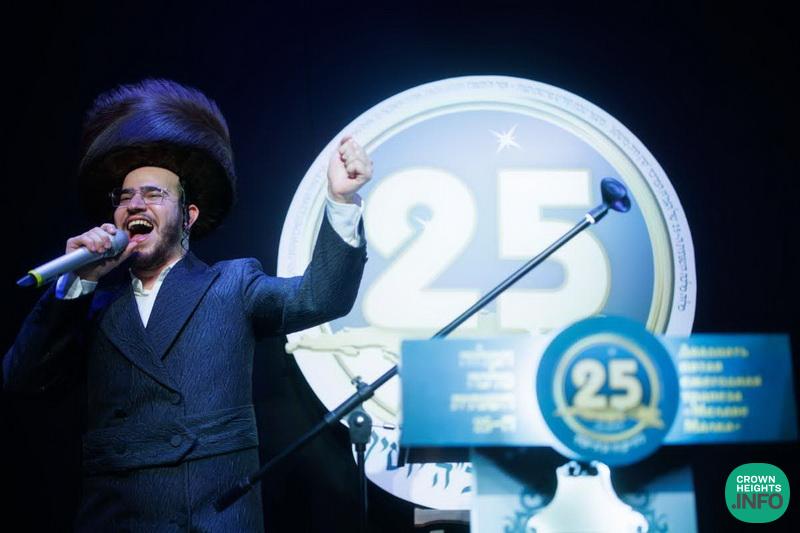
Upon hearing the good news of the elimination of the tyrant and Amalekite oppressor in Iran, the large gathering was transformed into a seudas hoda’ah. It began with the recitation of a kapitel Tehillim by a member of the gemach administration and chairman of the Ohr Avner Foundation, Rabbi Dovid Mondshine, and continued with heartfelt niggunim and songs of deveikus, leading to spirited dancing with the baal menagen and composer R’ Bentzi Stein, accompanied by keyboardist Eli Weiss. The celebration continued for a long time, until Birkas Hamazon, which was led by the Rav of the Solomon Hills community and menahel of the Moscow Yeshiva Gedolah, Rabbi Yechezkel Lazar.
Words of gratitude and appreciation were expressed to the members of the committee — Rabbi Avraham Gevirtz, Rabbi Avraham Zaks, Rabbi Shimon Chertok, and Rabbi Elazar Mordechai Kenig — who assist wholeheartedly throughout the year, purely l’shem Shamayim, without expectation of reward.
From the address of the Chief Rabbi of Russia, HaGaon Rabbi Berel Lazar shlita:
“Many years ago, during a visit to Eretz HaKodesh with our family, a man approached us and asked for tzedakah. Our little daughter, Chaya Mushka, asked: ‘What did that man want?’ I answered her: ‘He is asking for money.’ She said: ‘Ah, I understand — that’s what you do!’
Indeed, this is our shlichus: to engage in tzedakah and chessed, and to give other Yidden the zechus to fulfill this fundamental mitzvah.
The Gemara asks: What are the primary characteristics of the Jewish people? It does not say that they are wise or mighty. The Gemara states: Yidden are ‘rachmanim, bayshanim, and gomlei chassadim’ — compassionate, modest, and performers of kindness. These three traits we inherited from our Avos: from Avraham, who excelled in chessed; from Yitzchak, who embodied modesty; and from Yaakov, who was compassionate.
And what is gemilus chassadim? Very many things. Rabbi Yechiel of Alexander would say: ‘If someone told a humorous word and you responded appropriately, you have done a chessed.’ Doing good means offering support, a kind word, even a smile. But the highest level of chessed is giving an interest-free loan.
Eighty-five years ago, the Frierdiker Rebbe related a story that occurred in the town of Polotzk, where there lived a simple chassidishe Yid named R’ Yisrael. He was a shopkeeper who from time to time would leave his work and travel to Lubavitch to the Tzemach Tzedek. On one visit, he listened to a maamar in which the Rebbe spoke about the greatness of gemilus chassadim.
The maamar discussed Avraham Avinu, who was generous with his body, his wealth, and his soul. The Rebbe cited the Sefer HaBahir: ‘The attribute of chessed said before the Holy One, blessed be He: From the time Avraham has been in the world, I have not needed to perform my task, for Avraham stands and serves in my stead.’
The Rebbe elaborated that through his physical acts of kindness in this world, Avraham replaced the attribute of Chessed of Atzilus.
R’ Yisrael did not understand the deeper Kabbalistic concepts, but the words about gemilus chassadim he reviewed again and again.
When he returned home, as was the custom among chassidim, people gathered to hear ‘What did the Rebbe say?’ He admitted he had not understood most of it, but repeated the few points that had penetrated his heart.
In the marketplace he met his fellow merchants, Nachman and Yosef. Wanting to grant them the zechus of gemilus chassadim, and though he did not need money at all, he asked Nachman for a loan — solely because he had heard from the Rebbe about its greatness. The three shopkeepers began lending money to one another daily, simply to fulfill the mitzvah of gemilus chassadim.
On his next visit to Lubavitch, the Tzemach Tzedek left his room and asked who R’ Yisrael the shopkeeper was. Since he was not a prominent chossid, no one knew whom the Rebbe meant until it was clarified. The Rebbe called him in and asked him to describe his daily schedule. R’ Yisrael detailed his routine of Tehillim, tefillah, learning, and work.
It seemed insufficient to the Rebbe. ‘And what about tzedakah?’ the Rebbe asked. ‘Unfortunately not,’ he replied, ‘for I am very poor and cannot afford to give.’ The Rebbe continued questioning until R’ Yisrael mentioned the daily loans.
After he left, the Rebbe’s young son, Rabbi Shmuel — later the Rebbe Maharash — asked his father why he had summoned him. The Tzemach Tzedek answered: ‘I saw above his head a shining pillar of Chessed from the world of Atzilus.’
This story arouses wonder: they did not need one another’s money — so what chessed was there?
The answer is that exchanging portions brings simchah. When one gives to another, he already experiences joy in the giving itself. It is not what he received that matters, but that he gladdened another.
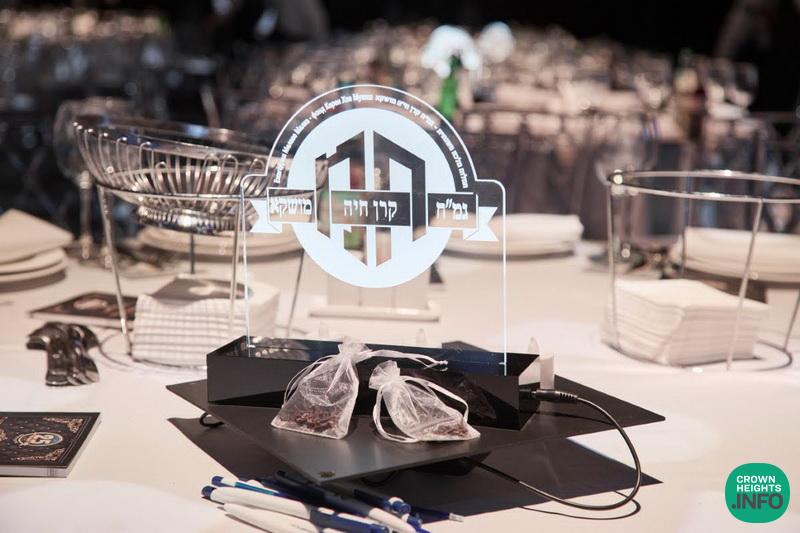
That is why, in our gemach ‘Keren Chaya Mushka,’ those who give the funds receive the pillar of chessed from the World of Atzilus — not because they needed the money, but because they gave it. The giving itself brings the joy.
This is why we established the fund — to commemorate the life of our Chaya Mushka, whose entire being was simchah: joy in helping others, and doing so with joy.
When our little daughter returned her soul to her Maker, we wrote upon her matzeivah: ‘She was a source of joy.’ When she was a student in the Kuravsky’s Jewish Day School in Moscow, she was just six years old, and at lunchtime she would stand by the sink, happily helping the other children wash their hands properly. We decided that in her memory we would help people, and ensure that people help one another. That would be a source of simchah.
Over the years, enormous sums have been distributed in loans. Recently, a businessman approached me and said: ‘I owe the bank money and am paying interest. Everything I earn goes to the interest — not even toward the principal. Please give me a loan so I can close the debt.’ I asked whether he had approached Keren Chaya Mushka. He replied: ‘I did. They told me the funds have been fully distributed, the coffers are empty, and there is already a waiting list.’
Purim is approaching, and on Purim — as halachah states — we give ‘to all who stretch out their hand.’ Let us accept upon ourselves a good resolution before Purim to strengthen the gemach, to gladden others — and that itself will gladden us!”
Photography: Dmitry Loubaev