Weekly Story: I Am Truly Present
by Rabbi Sholom DovBer Avtzon
This week I am going to post something I mentioned by a farbrengen last Shabbos, adding additional insight which I heard from Rabbi Nissin Mangel. As always, your feedback and comments are greatly appreciated and welcomed.
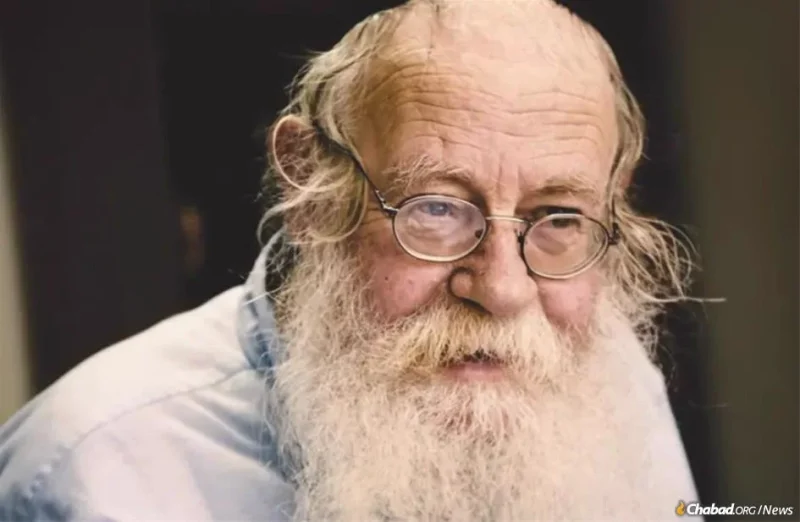
HaRav Adin Eivehn Yisroel (commonly known as Rabbi Stensaltz) related the following thought in a farbrengen. When I was a student in Yeshiva, my mashpia was Rabbi Shlomo Chaim Kesselman. After one particular farbrengen, I got up and said, this was an exceptional farbrengen.
The next day, I began wondering to myself what was so exceptional about last night’s farbrengen? Why did it make such a powerful impression on me, more than other farbrengens? After all the stories that he said, either he has said them in previous farbrengens, or I knew them from other places. The insights and lessons that he extrapolated from those stories were also things that I heard from him or from others. The songs are the same songs we sing by every farbrengen. So what made last night’s farbrengen different than other farbrengens?
Thinking it over I came to the following conclusion, because last night I came to participate in the farbrengen, and not just to listen as a bystander or as spectator or even a student that is coming to the farbrengen because that’s the proper thing to do. I came because I wanted to come, and I wanted to hear and be inspired. I was completely present and focused on the farbrengen. In Yiddish Ich Hub Tzu’gi’trugin – איך האב צוגיטראגן.
This Insight of his perhaps gives us a greater sense of clarity in the following story, which the Frierdiker Rebbe related. Once, when the Mitteler Rebbe was in cheder, he entered his father’s room and asked him the following question. In chapter 20 possuk 4 in Shemos parshas Mishpatim, the Jews told Moshe Rabeinu “We will do whatever [Hashem instructs us], and then three pesukim later, in past 7, the Jews said the famous words of Na’aseh V’nishma, we will do and we will try to understand the meaning of the mitzvos. Tatty, my question is, what happened in those three pesukim that caused the Jews to rephrase their answer from Naaseh to Naaseh V’nishma?
His father the Rebbe replied, originally the Jewish people said Naaseh, we will do whatever Hashem commands us, [whether we understand it or not, and whether we enjoy it or not].
However, Moshe Rabeinu who is a faithful Shepherd wanted to instill into the Jewish people the proper perspective, and he spoke and explain to them the beauty of having the ability to fulfill Hashem’s Mitzvos, until the Jews rephrased their reply and said we will do whatever Hashem wants us to do, and we will learn its reason that we will have a sense of pride and enjoyment in having the opportunity and merit to fulfill his mitzvos.
The change was in their approach. The Mitzvos were the same mitzvos, just it was a change in their approach to what a mitzvah means and is. Originally, they replied we will do all the mitzvos(commandments), because we are obligated to do them. After all Hashem performed tremendous miracles, just to save our lives numerous times.
But after Moshe spoke with them, their approach was we will do the mitzvos because we realize it’s a beautiful opportunity and a tremendous merit that Hashem is granting us to be able to come close to Him, [as mitzvah has the meaning of connection or bonding]. So now the mitzvah is being done with enjoyment, happiness and vibrancy and not out of a sense of duty and obligation.
When young DovBer left his father’s room, he was met by the chossid Reb Shmuel Munkis, who asked him what did your father, the Rebbe, tell you?
Replying mischievously, he said, My father said, the misnagdim replied Naaseh, while the chassidim replied Naaseh V’nishma.
To explain what I understand to be his reply, I will relate something that Rabbi Yosef Dov (commonly referred to as Rabbi J.B.) Soleveichik once related.
My father hired for us various melamdim, one of them was a chossid, who although he was told by our father not to teach us the Tanya, secretly he did so. Once my father entered the room unexpectedly and the melamed tried to hide it, but my father noticed him putting the Tanya away and warned him that he must stop, but my grandfather told him to continue, as it is important for us to learn it.
I realized that the melamdim were from different communities and perspectives, and I wanted to see for myself what is the difference between chassidim and Litvish (misnagdim). After all, I noticed that both were meticulous in every mitzvah, so I probed deeper until I realized that the Litvish melamed fulfilled every mitzvah with the same feeling of obedience (kabbolos ol) and holiness. He danced on Simchas Torah because there is a mitzvah to dance, and also fasted on Yom Kippur, because it was a mitzvah to do so.
While the chassidishe melamed danced on Simchas Torah because he was happy and on Yom Kippur it was noticeable that he was being reflective. One may ask, what is the difference if I do a mitzvah with inner Joy or I just do the mitzvah because that is what Hashem wants me to do?
This can be answered with the well-known story of Reb Gavriel Noiseh Chein – Rav Gavriel who found favor in the eyes of others. Gavriel was a very well-to-do person, who helped others with an open hand and gave large amounts of money every time a messenger came to collect on behalf of the Rebbe.
While it seemed that he had everything and was a happy person, personally he was broken and devastated, as it was already fifteen years since his marriage, and they have yet to be blessed with a child. Furthermore, every time he mentioned this to the Rebbe and requested a brocha, the Rebbe did not respond with a brocha. However, even this aspect of his life did not last, as the Wheel of Fortune turned and he now became extremely poor.
He accepted his poverty without a complaint and thanked Hashem for the years that he was blessed with comfort and continued his life as if nothing changed.
However, one day he came from shul and his wife noticed a downcast look on his face. Gavriel she kindly said, why are you so upset, didn’t you tell me that whatever Hashem does is for the good and He is the true judge?
You are definitely correct my dear wife, he replied. I am not upset that we do not have the money to buy the food and clothing that we used to be able to afford. Rather, today I noticed that a messenger of the Rebbe came to raise money and he’s intentionally avoiding me because he is aware that I don’t have the money to give the Rebbe.
Hashem is just in His actions and knows that I don’t deserve money, but why should this affect the poor person who is in desperate need of the tzedokah I used to give? Why does he have to suffer because of my shortcomings? And Gavriel let out a sigh.
His wife thought for a moment and then said to him, there’s still one piece of jewelry that I have. I will pawn it and the money we get for it; you will give to the Rebbe. She immediately searched for that piece of jewelry and took it to the pawn shop and received some copper coins.
However, she began to think, this is the last item of value we own, who knows if we will ever have the ability and merit to give tzedoka again? Let me at least do it the proper way. She then took sand and began rubbing each coin so that they should be shining and presentable
Unintentionally, her tears started to flow and they mixed with the sand that she was rubbing the coins, until the coins were shining brightly.
Being that the Rebbe’s messenger continued on his journey to other towns and villages and was planning on returning in a few days, Reb Gavriel decided to personally bring the coins to the Rebbe. He was fearful that during the next few days, he might be tempted to use the coins to buy some food for himself and his wife.
When he handed the coins in a handkerchief to the Rebbe, the Rebbe asked why did he bother to bring the coins himself, and not give it to the messenger?
Reb Gavriel then informed the Rebbe of his true situation. The Rebbe opened up the handkerchief and noticed how brightly the coins were shining. Reb Gavriel explained what his wife did.
The Rebbe face shined with happiness and said, the women took their copper mirrors and Moshe used them to build the kiyor (fountain) in the courtyard of the Mishkan. He then blessed Rav Gavriel that he should find favor in other people’s eyes and promised him that he would become wealthier than before. He advised him to begin dealing in precious stones. He then concluded, because of the purity of your wife’s deed, you will be blessed with offspring.
That my friends is the reward of doing a mitzva with happiness and enthusiasm.
After the farbrengen someone asked me, but how does one make themself present at a farbrengen or at or in any situation?
On this I would like to mention a saying of the Frierdiker Rebbe.
In the first years of Tomchei Tmimim, he was appointed by his father to be the executive director of the Yeshiva. In order to have a crystal-clear understanding of where the students were holding and progressing, from time to time, he would personally farbreng with the students.
He once said, there are certain students that develop into the young men that the yeshiva is proud of, while there are others that the yeshiva is not so proud of. Some say the reason is because the first group spent a long time in the yeshiva and were able to absorb the teachings and guidance of the yeshiva, while the other students weren’t so fortunate. However, the truth is, that is not the situation and reason for the two opposite outcomes. It is possible for a student who was in the yeshiva for only one day to develop exactly as a student of Tomchei Tmimim is expected to, while a student can be here for many years and not develop properly.
The difference between them is, the first student knew he was going to be here for only one day. However, during that day nothing else existed he was truly here. The other student who may have been here for many years, was indeed here. However, he was always thinking, what am I going to do when I leave the yeshiva? So while he was physically here, he wasn’t completely here, his mind was elsewhere.
To bring out this thought with more clarity, I will repeat something that Rabbi Mangel mentioned last Shabbos.
In the early chof’s (60’s), a large group of chassidim were coming to the Rebbe for Tishrei. Some came for the entire month, while others were able to come only for Sukkos and Simchas Torah.
During a farbrengen, one of the older chassidim said to the Rebbe, L’Chaim for those [chassidim of Eretz Yisroel] who have already arrived from Eretz Yisroel, to the Rebbe, and L’chaim for those who have to arrive.
The Rebbe replied, L’chaim for those who have arrived [physically], but have yet to be here [emotionally].
Rabbi Mangel connected this thought with the possuk (Shemos 24:12), that Hashem told Moshe, Come up to me on the mountain and be there. Meaning it is not enough that you are merely present, but you should realize this is where you are meant to be, and desire to be.
Yes, it may be only for a short time period, but for the duration of the time, I am completely there!
A Taste of Chassidus
Mi Yiten Ki’uch Lee לי כאח יתן מי Torah Ohr p. 79
In this Maamor, the Alter Rebbe is explaining the reason why Hashem commanded bnei Yisroel to make and form the Cherubim. In the Mishkan and Beis Hamikdash there are numerous vessels, such as the two altars the table, Menorah, the Aron, and so on. Each one of these utensils and all the other utensils, it is clear to everyone, why Hashem instructed us to make them, as each one has a specific purpose and function. In other words, a person can see and easily understand why they are needed. However, when it comes to the Cherubim the Torah does not explain what their purpose is.
But as Chassidus explains, that when the Torah says And you shall make for Me a Mishkan and I will dwell in it, that wasn’t a commandment just for that time, it is for all people, in all times and wherever they may be. In other words, the Mishkan and Beis Hamikdash are not just holy places where we are to bring korbonos (sacrifices) as well as other actions, but it is an eternal guide on how we are to serve Hashem.
Being that there is no obvious function or purpose for the Cherubim, it is clearly coming to guide us how we can and are to serve Hashem on a spiritual level, [and we can understand that there are lessons that we are to learn from each of the vessels and services].
In this maamor the Alter Rebbe is bringing out certain insights which we can learn from the Cherubim.
As a preface I would like to point out, that although the Cherubim were made out of gold (a hard metal), nevertheless, they moved three times every day, as the wings uplifted themselves when the Jewish people davened. Additionally, we also know that there were times that the two Cherubim embraced each other, and sad to say there were other times that they separated. In other words, the Cherubim showed us how our actions bring us closer to Hashem to the point that we embraced or G-d forbid the opposite.
We learn in the Talmud that there were four images on Hashem’s chariot, a man, a Cherub, an eagle and a lion. The talmud then asks, isn’t the face of a cherub the face of a man, so essentially it was the same thing twice? And the talmud answers the face of a man, means the face of a grown-up man, but the face of a Cherub is a face of a child. So by understanding this difference, we can glean many insights from the Cherubim.
Dovid Hamelech says in Tehillim (122, 8-9) for the sake of my brothers… for the sake of the house of Hashem (the Beis Hamikdash). We learn from this, when are we considered brothers – very close – to Hashem, that is when the Beis Hamikdash was standing. Interesting to note that the possuk states with the Cherubim, and its face was to His brother, so we see clearly that it is referring to this relationship between Hashem and the Jewish people.
This gives meaning and understanding to the words that this maamar begins with, that the Jewish people [when they are in exile, cry out to Hashem] how can we be on that level of being brothers? When the Beis Hamikdash was standing, the Cherubim showed us that we were connected, as the talmud (Yooma 54A) states that during the three pilgrimages, when the Jewish people came to the Beis Hamikdash, the Cherubim were embracing each other, which demonstrated the deep love and bond between Hashem and the Jewish people. But now that we are in exile, we long for that wonderful relationship once again.
Now, we can understand what was meant, that there were two faces, one of an Adult and one of of child. The Adult is a reference to Hashem, while the child is a reference to the Jewish people.
Although Hashem has no form, but the Torah uses forms and images as metaphors to Hashem and His actions, so we can have an understanding of Hashem. As it says And Hashem saw, His outstretched arm and so on
The adult man is referring to Hashem, as the prophet says, On His chair, is the form which resembles the image of a man. The reason Hashem is compared to a man, is because mans greatness is his power of intellect, and the Zohar states that the Torah came from Hashem’s Chochmah (wisdom), and it also notes that Hashem and His Chochmah is one and the same.
The reason why intellect (and not attributes) is connected to Hashem is simple. Hashem’s essence is that there is nothing besides Hashen. When a person is using pure intellect, there is only one thing, what is Hashem saying with this halachah. However, when thee are attributes, that automatically means that there are other entities, and with the essence of Hashem there is nothing besides Him.
Additionally, the possuk notes that when Hashem spoke to Moshe, His voice came from between the two Cherubim, that is a reference of the way Hashem gave us His Torah, which is higher and above the world, and it descended into the physical world, retaining its holiness.
However, now that we are in exile because of our sins, and we are involved in the materialistic aspects of the world, we feel that we are not relating to spiritual aspirations, and we lost that connection.
But the Cherubim tell us a different story, that the Cherubim which were above the cover of the Aron, were from the same piece of gold as the Aron. That is telling us, that although we as represented by the child like face of the Cherub, and we are facing the other Cherub, which is on the other edge [or extreme opposite of us], both come from the same gold.
In other words, Hashem is informing us that the materialistic world is not a separate entity from Him, which we nullified to Him, but in reality, it is Hashem, Himself. So our actions are revealing its true essence.
So not only can one who nowadays [in our exile] is involved in Torah study can be a “brother” to Hashem, because he is pursuing spirituality, and as noted he is pursuing his learning with pure intellect, so there is nothing besides the word of Hashem. This concept is expressed in the saying of our sages, “Once the Beis Hamikdash was destroyed, Hashem has (or is foubd) only in the four cubits of Halachah (Jewish law).
But even one who is involved in the world of business and commerce, with worldly items, when he utilizes them for fulfilling Hashem’s mitzvos, he is bringing out and revealing the true essence of the universe, and they too, are a “brother” to Hashem, while we are still in exile.
The main factor is if you fulfill the mitzvos with genuine love and fear of Hashem.
This is the reason why the Cherubim had wings. As the Alter Rebbe explains in Tanya, the body of a bird represents the fulfilling of the mitzvah, itself, while the two wings represent the two emotions of love and fear of Hashem the mitzvah is elevated to Hashem, only when it is done with these feelings, otherwise, it is like a bird that wants to soar, but doesn’t flap its wings.
So the Cherubim demonstrated that when we served Hashem with feeling, its wings soared higher and above them. In other words, our actions inspired Hashem’s reaction to sustain us from Above, and equally embrace us.
The way to demonstrate our feelings to Hashem, even though we are involved with our livelihood work, but when we daven properly and set designated times to learn Torah, that uplifts us above our mundane actions and we embrace Hashem, just as the Cherubim did in the times of the Beis Hamikdash.
This accomplishes a second thing, we say Friday night after Shemone Esreh, the words קונה שמים וארץ – that Hashem acquired the heaven and earth. Being that Hashem is the creator, it is His, so why does He have to acquire it, for it to be His.
But Hashem created the world, that the world should think that it is an entity of its own, and through our service to Hashem, we transfer a world that felt as if it is its own entity, to a world that realizes that it is merely an extension of Hashem, and it is nothing on its own.
Rabbi Avtzon is a veteran mechanech and the author of numerous books on the Rebbeim and their chassidim. He can be contacted at avtzonbooks@gmail.com.