
Historic Moment in Simferopol as Mezuza is Affixed to Talmud Torah building that was Returned to the Jewish Community
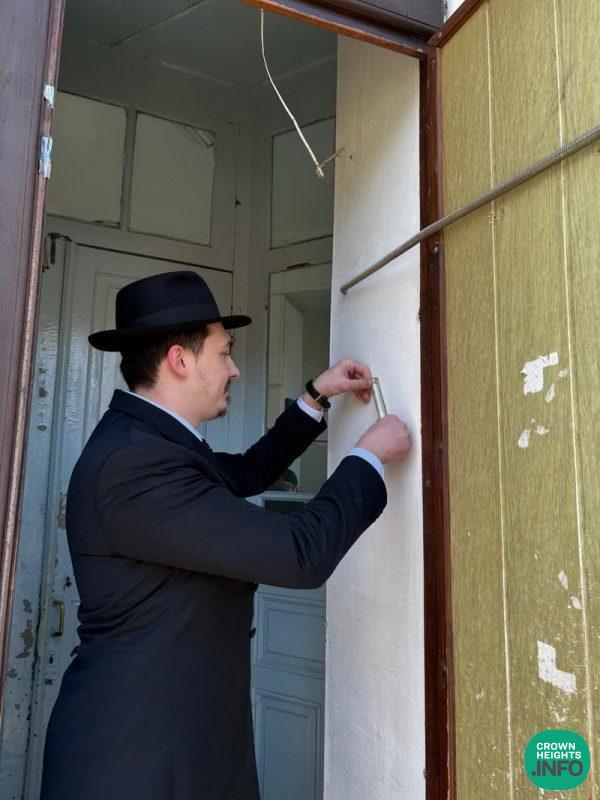
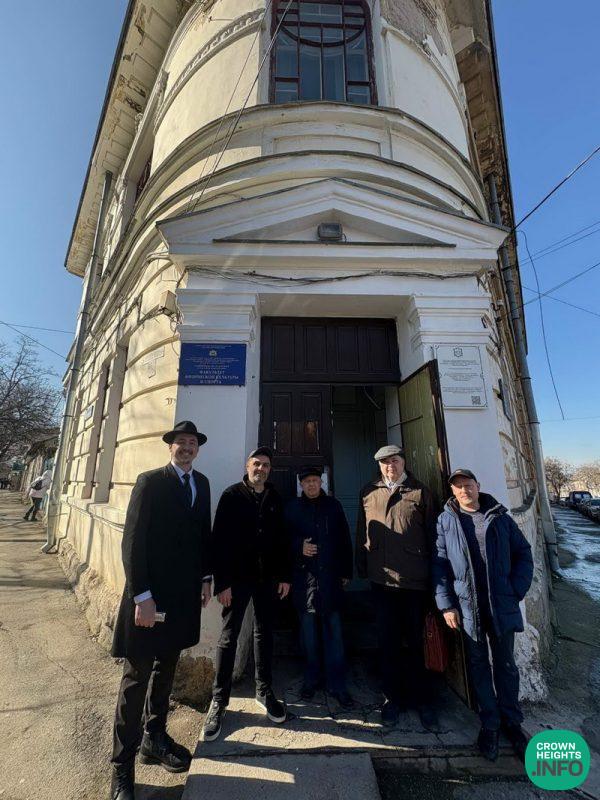
A moment of great Kidush Hashem was recorded this week in the city of Simferopol on the Crimean peninsula. This moment brings a painful and hopeful cycle to a full circle, when in a very impressive ceremony, an elegant mezuzah was affixed to the main entrance of the “Talmud Torah” building. The building was returned to the local Jewish community, thanks to Mr. Putins’s personal involvement, in light of a request from the Chief Rabbi of Russia, HaGaon Rabbi Berel Lazar Shlita, at one of their meetings in the Kremlin in Moscow.
The moving event was not just the transfer of real estate, but an act of spiritual triumph, a symbol of Hashem’s protection and the return of the Shechina, which symbolize more than anything the return of Jewish ownership to a place intended to raise generations of God-fearing people. Its establishment was a clear declaration: in the place where they tried to sever Jewish life, the Holy Torah will once again flourish. “This is a living bridge between the glorious and bloody past and the promising future,” the community said.
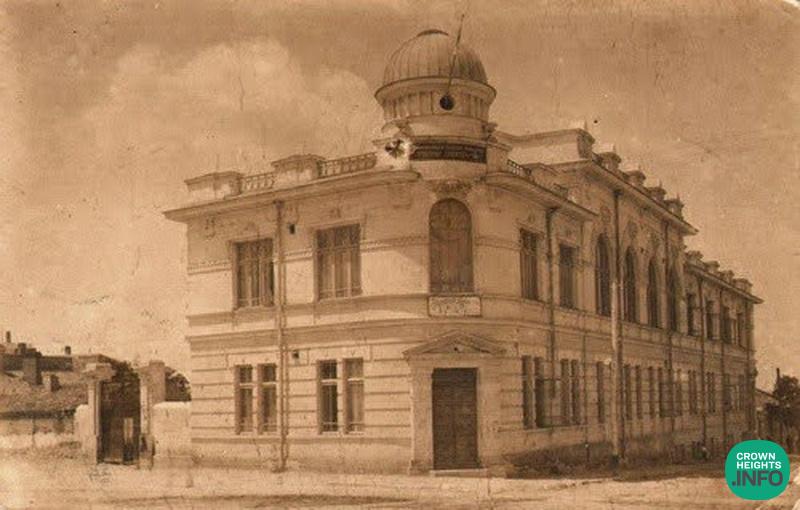
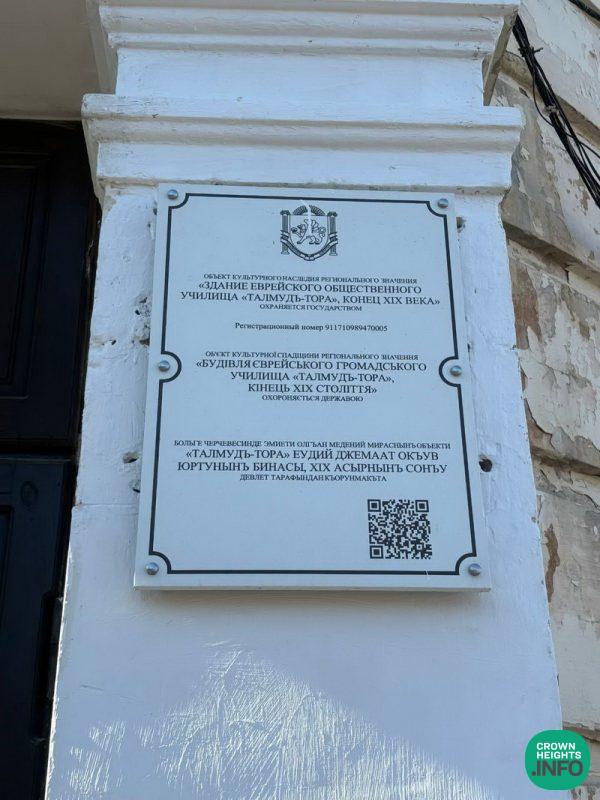
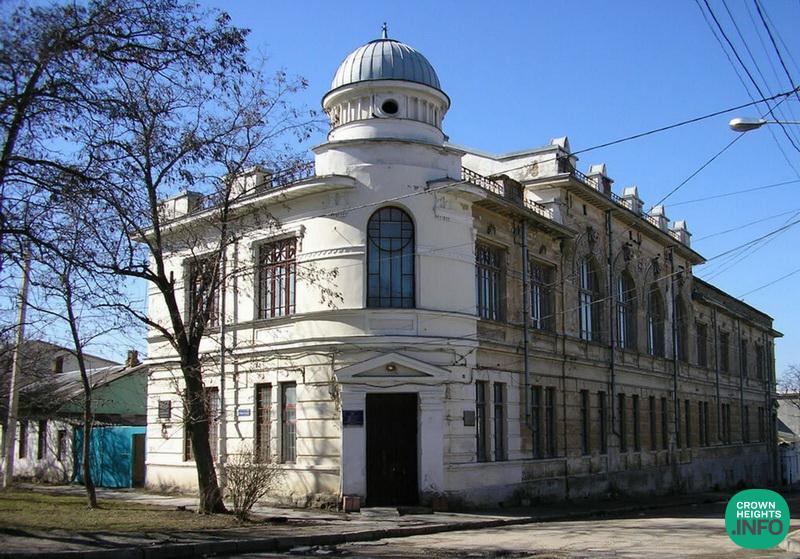
The history of the building takes us back to the golden age of the community. According to the documentation in the “Simferopol City Information Book for 1911”, it was decided at that time to unite three Torah schools into one central institution. The building, built between 1913-1915 with generous funds from community members, surpassed all the shuls in the city in its beauty, and reflected the importance of Torah education in the eyes of the community.
The structure of the Talmud-Torah was carefully designed to transmit the seriousness and importance of learning: The first floor was entirely dedicated to classrooms, while the second floor contained a large, bright, and spacious hall, designed for joint learning and gatherings, alongside the teachers’ rooms and the educational staff offices. But painfully, the voice of Torah was silenced from its walls just two years after its inauguration.
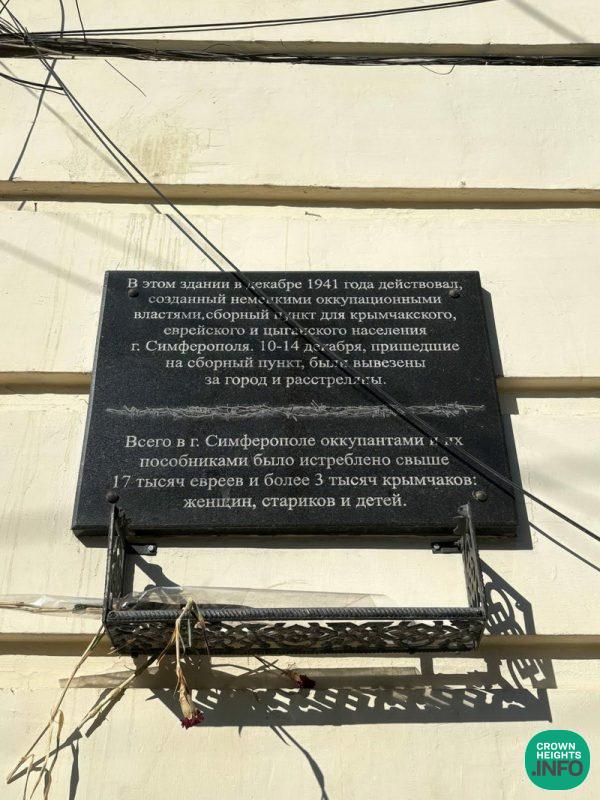
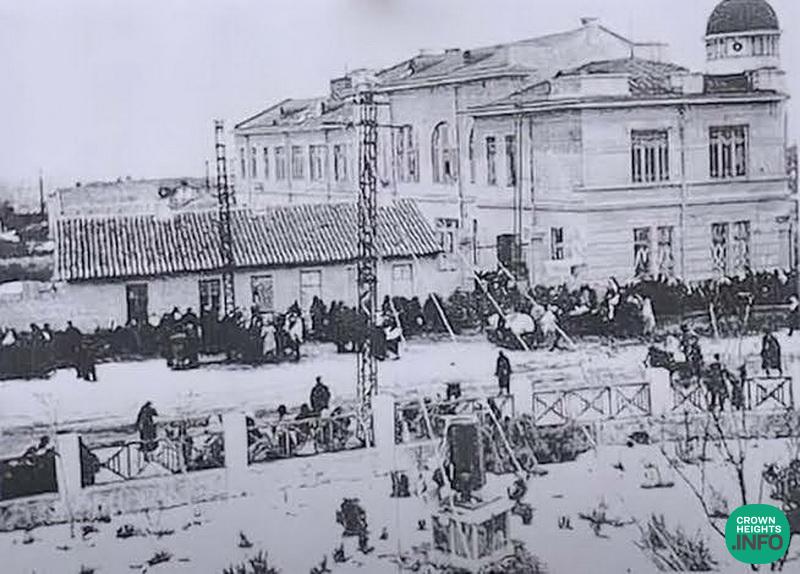
The building’s history is steeped in the blood of Kedoshim. In the month of Kislev 5702, the Torah Hall became the Valley of Death. With the Nazi occupation of the city, the building became one of the collection points for the city’s Jews. Over 4,000 Jews were brutally crammed into the building, where they were held for days without food or water in horrific conditions.
From there they were led, along with about 14,000 of their brothers and sisters, to the murder pits about ten kilometers away, where their souls went up to the heavens in a storm.
A commemorative plaque placed on the wall of the building in the year 5769 serves as a silent witness to their sacrifice.
The mezuzah was affixed by Rabbi Aviel Kolpakov, a graduate of the “Tomchei Temimim” yeshiva in Moscow. Now, with the return of the building’s key and the affixing of the mezuzah, the community is moving forward with a comprehensive plan to breathe life into the silent building. The community plans to fill the space with rich Jewish content, including: educational programs and classes for children and adults to instill the Jewish heritage, courses in the study of the Holy Tongue, Jewish history and Torah and Chassidus lectures. Also planned are spaces to serve as a community meeting place, for gatherings and Jewish cultural events, as well as establishing a center for mutual aid, support and assistance to community members in need.
The Jewish community in Simferopol extends heartfelt thanks to the President of the Federation of Jewish Communities in the FSU, Rabbi Alexander Boroda, to the community’s Chairman, Mr. Aharon Cirulnikov, and to everyone who stood by their side in the long struggle to return the property. The community promises that the building will once again become a magnet for Torah and Yiddishkeit, as its founders envisioned over a century ago.
Photos: Mevaser Tov Moscow