
Guided by Hashgacha Pratis: How Two U.S. Military Veterans Laid Tefillin for the First Time and Celebrated Their Bar Mitzvahs
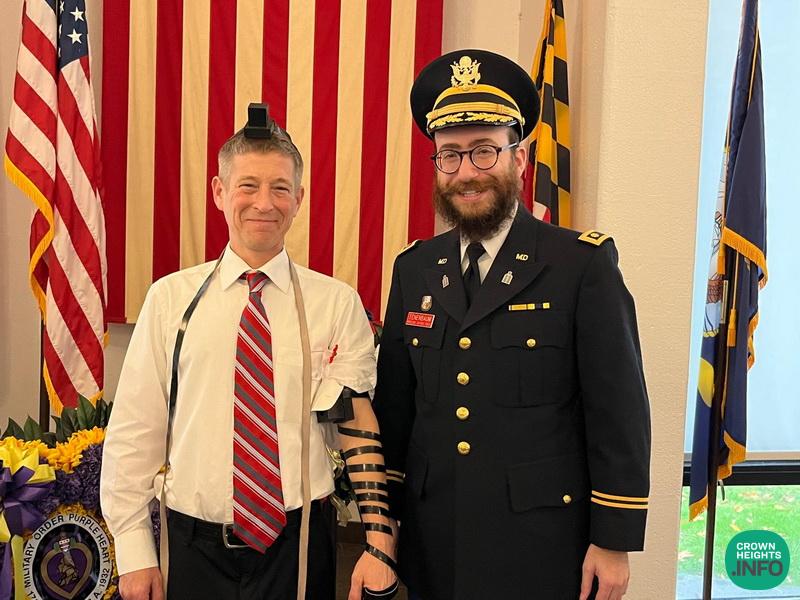
Rabbi Chesky Tenenbaum, Shliach and Chaplain in Baltimore, Maryland and director of the Jewish Uniformed Service Association of Maryland-Chabad (JUSA), shares the remarkable hashgacha pratis that led to two U.S. military veterans to lay Teffilin for the first time and celebrate their Bar Mitzvahs!
I usually serve as a chaplain at the Baltimore location of the Department of Veterans Affairs Hospital. This past Friday, however, hashgacha pratis had other plans. Another chaplain asked me to travel to a different VA facility to offer the opening and closing prayers at a Martin Luther King Jr. program. It was a location I had not visited in a few months, and ordinarily, I would not have been there at all.
That morning, before the program began, I felt a quiet nudge to review the patient list. I wanted to see if there were any Jewish veterans who might appreciate a visit. Almost immediately, one name stood out—a Jewish veteran receiving hospice care. Without hesitation, I made my way to his room.
As I approached, a woman standing outside looked at me and asked, “Are you the rabbi?” I said yes, and she introduced herself as the veteran’s sister-in-law. She told me that her husband, the veteran’s brother, would be arriving shortly.
Moments later, his brother walked in. We began to talk, and he shared that he was an 80-year-old Vietnam War veteran. He explained that although he had not been actively connected to Judaism for many years, life had taken him on a spiritual journey that led him to become a chaplain in another faith. When I gently asked if he had ever had a bar mitzvah, he smiled and said yes—he had even read from the Torah. But when I asked if he had ever put on tefillin, he paused and admitted that he never had not even on the day of his bar mitzvah.
I told him that I had tefillin with me and asked if he would like to put them on now almost as if time itself was giving him a second opportunity to do so in the merit of his brother’s healing. He thought quietly for a moment, then nodded and said yes.
We entered his brother’s room together. As I helped him place the tefillin on his arm and head, I explained that we would recite the Shema. I began softly, “Shema Yisrael…” and he answered, “Hashem Elokeinu, Hashem Echad.” As the words left his lips, his eyes filled with tears. In that sacred moment, it was clear that his pintele yid had been gently awakened.
When we finished, I turned to the patient and said, “You should know your brother just had his bar mitzvah today. This was the first time he ever put on tefillin, and he did it for you, in the merit of your complete recovery.” He was visibly moved.
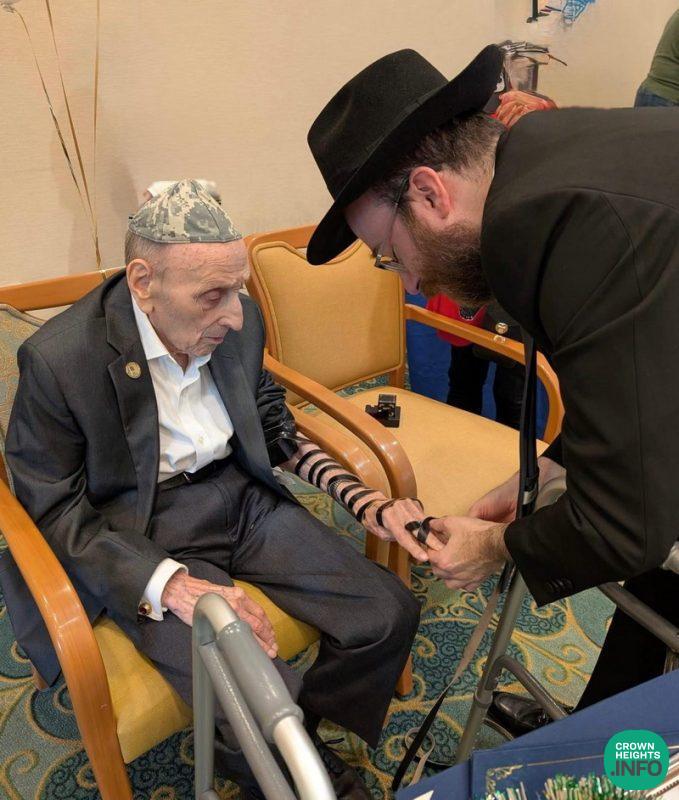
I then asked the patient if he, too, would like to put on tefillin. He agreed. With care and reverence, I helped him wrap them, and once again we said the Shema together. To his own surprise, the words flowed naturally from his memory, despite the many years that had passed. He shared that this may have been his first time ever putting on tefillin. The moment was filled with quiet holiness. I spoke with him about the Shema, the Tefillin, and the Vidui, about how these prayers connect the soul, especially at such meaningful times.
As I finished unwrapping the tefillin, the veteran’s nephew walked into the room and said, almost in disbelief, “Tefillin? I haven’t put them on since my bar mitzvah.” I asked if he would like to put them on now as well, in the merit of his uncle’s health. Without hesitation, he said yes. Together, we wrapped the tefillin, and he even remembered some of the blessings. Three generations, three souls, reunited through one mitzvah.
Only later did the full weight of the moment settle in. I was never meant to be at that VA facility that day. But because of an MLK program, a simple request from a colleague, and what can only be described as Hashgacha Pratis that I was guided there.