
Teaching the Neshama Language: Why Social-Emotional Literacy Belongs at Home and at School
by: Chana Kaiman, LCSW-RPT, – Education and School Relations Lead, The Bereishis Foundation
A child stands in the doorway, shoes half on, body tense, eyes filling with tears. The morning has barely begun, yet something already feels too much. A parent offers logic and reassurance, but the child cannot respond. Words are unavailable. The body has already taken over the conversation.
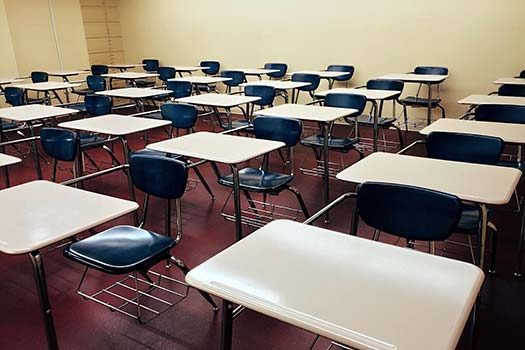
Across town, a teacher watches a student crumple his paper and slide beneath his desk. Later, the behavior will be described as avoidance or defiance. But in the moment, what is visible is something quieter and more vulnerable; child flooded by an inner experience he does not yet know how to name.
When children cannot speak their inner world, they act it out.
Chassidus teaches that behavior is never the whole story. Every child carries a Divine spark wrapped in emotion, sensation, and longing. The Alter Rebbe explains that the middos, the emotional life of a person, serve as the bridge between understanding and action. What a child does flows from what they feel, and what they feel depends on whether their inner world has been recognized and guided.
When emotions remain unnamed, they do not disappear. They lead. Anger rushes forward. Fear pulls inward. Shame shuts the system down. Chassidus does not seek to eliminate these emotions; it seeks to refine them. This refinement begins not with control, but with awareness and compassion. Social-emotional literacy is, in this sense, avodat hanefesh, the work of learning how to live with one’s inner world rather than being ruled by it.
Modern neuroscience gives language to what Chassidus has always known. Polyvagal theory teaches that the nervous system determines whether a child is available for learning, relationship, and growth. A regulated body allows for curiosity and reflection. A dysregulated body moves into survival. In that state, language, logic, and moral instruction are unreachable.
Regulation is not a reward for good behavior; it is the foundation that makes growth possible.
Chassidus describes this through the relationship between the animal soul and the G-dly soul. When the nefesh habehamis is overwhelmed, the nefesh Elokis cannot lead. Before reflection, there must be yishuv hadaata settling of the inner world. This is why telling a dysregulated child to “calm down” or “use their words” so often fails. The words are not missing because the child is unwilling. They are missing because the system is flooded.
Science deepens this understanding by reminding us that all behavior is purposeful. Children are always moving toward belonging and significance. When they lack the emotional tools to meet those needs directly, they reach for them indirectly. How? Through power struggles, withdrawal, or siezing control. These behaviors are not signs of defiance. They are misdirected attempts at connection.
Every behavior is a message; the question is whether we know how to listen.
Chassidus speaks to this longing through the idea that every Neshama seeks a place where it is seen and valued. When children feel understood, cooperation follows naturally. When they feel unseen or misunderstood, they protect themselves. Social-emotional literacy gives children a different path. It teaches them how to name what they feel, how to ask for help without shame, and how to repair relationships without losing dignity. In Chassidic language, this is the sweetening of gevurah that transforms intensity into strength.
This learning cannot be confined to one environment. A child does not leave their nervous system, their emotions, or their soul at the school door. When social-emotional literacy is practiced at school but dismissed at home, children learn that their inner world is only welcome in certain places. When it is modeled at home but unsupported at school, children learn to fragment parts of themselves. Chassidus teaches achdus; wholeness and integration. Growth requires consistency.
The goal of social-emotional literacy is not perfect behavior. It is refinement. Chassidus does not demand flawlessness; it honors avodah; the ongoing work of noticing, repairing, and returning.
We are not raising children to never struggle; we are raising them to know what to do when they do.
A Glimpse of What This Looks Like
At home, a child slams a door and shouts, “I hate everyone.” Instead of correcting the words, the parent pauses. They notice the tight shoulders, the shallow breathing. They sit nearby and say, quietly, “Something really big just happened inside you.” The child doesn’t respond right away, but their body softens. Later, the words come. What began as rage reveals itself as disappointment and fear. No lecture was needed, only space for the inner world to unfold.
In a classroom, a student refuses to start his work and mutters that he’s “bad at everything.” Rather than pushing for compliance, the teacher kneels beside him and names what she sees. “This feels overwhelming. Let’s take one breath together.” The student stays. The work still feels hard, but he no longer feels alone in it. Learning becomes possible again.
In both moments, no behavior was excused, and no dignity was lost. The child was guided, not shamed. The nervous system was calmed, not overridden. The soul was given language.
When we teach social-emotional literacy at home and at school, we are not just shaping behavior. We are teaching children how to live with their inner world, how to stay connected when things feel hard, and how to grow without fear of themselves.
And when a child finally finds the words for what once exploded through tears or silence, something sacred happens.
The soul has learned to speak.
About the Author
Chana Kaiman, LCSW-RPT, is a Licensed Clinical Social Worker and Registered Play
Therapist specializing in child, adolescent, and family therapy. Chana has advanced training in:
Child-Centered Play Therapy, Filial Play, Adlerian play therapy, Trauma-informed care, and Internal Family Systems (IFS). Her clinical work integrates neuroscience and somatics with a deeply Torah-rooted approach to emotional wellness.
Chana is the Education and School Relations Lead at the Bereishis Foundation, where she develops educator training and parent programming that weave contemporary mental health practices with Chinuch-based perspectives on the inner world of the child.
Her private practice in Brooklyn supports children struggling with anxiety, learning challenges, trauma, behavioral concerns, and low self-esteem. Known for creating a warm, relational space grounded in safety and curiosity, Chana helps children befriend their inner parts and grow into confident leaders of their emotional world.
At Bereishis, we are bringing this work into schools and communities. If you believe in this mission and want to empower more children, we invite you to get involved and partner with us for educator coaching, parent workshops, and child-centered Torah-based resources.
Chana can be reached at: Chanakaiman@gmail.com | 740-673-0440
To support the work of the Bereishis Foundation, or to bring this approach to your school or community, please visit: https://www.bereishisfoundation.org/








Very well said 👏
❤️
❤️❤️❤️
Spot on
An
Why is this not talked about more within our community?
Rosie
Doing God’s work!!
MY
Too late for my kids
BH this is being finally done